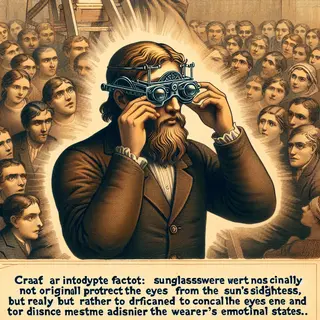
Purpose of Early Sunglasses Was Not to Block Sunlight
The Inuit invented the first sunglasses from walrus ivory, while modern UV-protective and fashionable sunglasses evolved over centuries, with key developments in Rome and 18th-century Europe.

Discover strange, surprising, and little-known facts from science, history, nature, and beyond.
 History
The Inuit invented the first sunglasses from walrus ivory, while modern UV-protective and fashionable sunglasses evolved over centuries, with key developments in Rome and 18th-century Europe.
 History
Safety glass, widely used in car windshields today, was an accidental discovery by French chemist Édouard Bénédictus in 1903.
 History
In the Iranian Plateau, there exists an ancient tradition of using pigeons to produce fertilizer.
 History
Approximately 74,000 years ago, a super eruption from Mount Toba occurred in present-day Indonesia. Its impact was so profound that it nearly caused the extinction of the human race.
 History
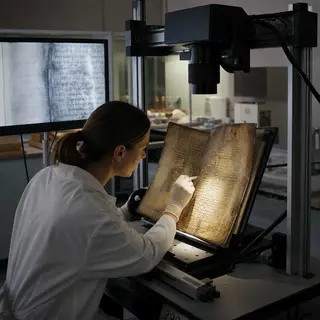
Medieval scribes scraped parchment clean to reuse it, unknowingly preserving ancient texts beneath. Modern imaging technology is now recovering lost works of Archimedes, Cicero, and others from these layered manuscripts.
 History
Paisley Caves in Oregon revealed 14,300-year-old human DNA from coprolites, challenging theories of early North American migration and predating the Clovis culture.
 History
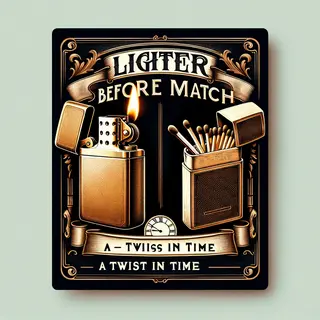
Though it seems counter-intuitive, the invention of the lighter predates the familiar friction match by several decades.
 History
One of the earliest forms of modern toothbrushes was actually made using animal hair.
 History
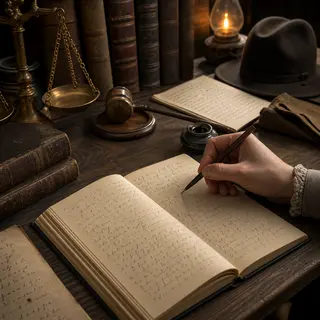
Long before digital recording, shorthand systems encoded speech at the speed of thought — shaping law, literature, and espionage across centuries, yet today teetering on the edge of extinction.
 History
A 1,000-year-old Anglo-Saxon eye remedy, dismissed for centuries as superstition, turned out to be a clinically effective antibiotic treatment — and nobody can fully explain why it works.
 History
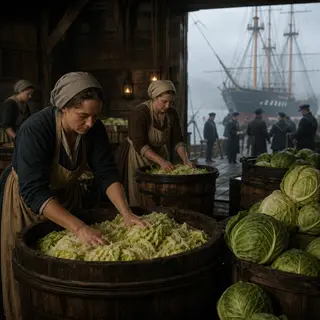
How an obscure biochemical reaction in fermenting cabbage — and the women who industrialized it — quietly prevented scurvy across naval history long before vitamin C was named.
 History
How a laboratory mistake and government miscommunication led to a nationwide food crisis just before Thanksgiving, devastating an entire industry overnight.
 History
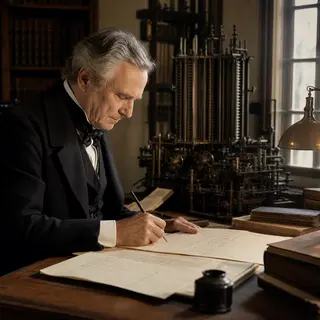
Long before digital encryption, Augusta Ada Lovelace's contemporary Charles Babbage quietly cracked the Vigenère cipher — a feat he never published, leaving the credit to a Prussian officer for nearly a century.
 History
Cerro Rico, a mountainous region in Bolivia, produced so much silver that it financed the Spanish Empire and had a global economic impact.
 History
Discover a forgotten medieval community that excelled in sustainable living techniques that are awe-inspiring even in modern times.
 History
Explore the haunting, yet fascinating world beneath Paris, known as the Catacombs. Delve into their history, purpose, and the eerie stories surrounding this subterranean ossuary.
 History
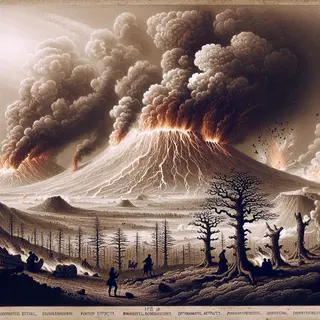
The 1783 eruption of the Icelandic volcano Laki had profound and far-reaching effects, both environmentally and socially, which are not widely known.
 History
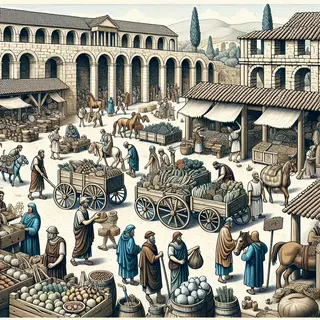
How the Roman Empire developed sophisticated systems to feed millions of urban citizens centuries before modern transportation.
 History
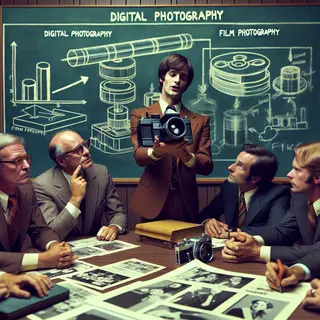
The digital camera was initially invented by an engineer at Eastman Kodak in 1975, but the company made a decision against it due to the fear of this invention undermining the photographic film industry.
 History
Before modern roads and motorized transport, communities across Europe maintained secret, sacred routes dedicated solely to carrying the dead to distant burial grounds — routes governed by strange laws, folklore, and spatial logic that still shape landscapes today.
 History
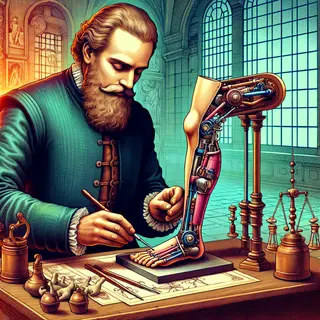
The first artificial body part was a false leg, designed by Ambroise Pare in 16th Century.
 History
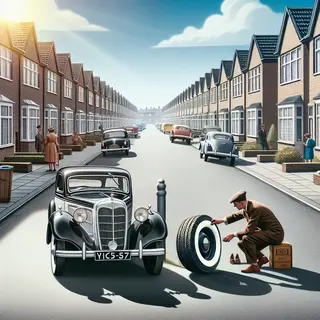
Whitewall tires, commonly associated with classic cars, were not designed for style but for practical reasons.
 History
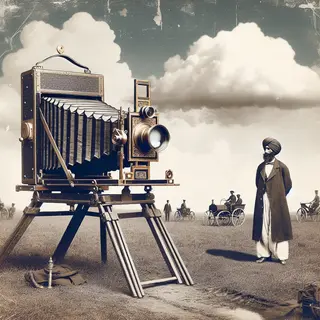
The very first camera took about eight hours to take a single photograph.
 History
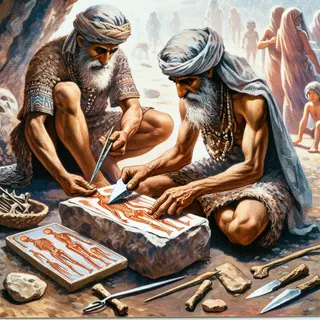
Surgical tools have been in use since ancient times, the oldest surgical tool is believed to be from 25,000 BC.
No spam. Just strange, useful, and fascinating knowledge.
We only use your email for site updates.
 YouTube
 Rumble