

Resilient mold species aboard the International Space Station are not merely surviving microgravity and radiation — they are adapting, evolving, and potentially degrading the station's very infrastructure.
The remarkable story of passive cavity resonator surveillance devices used by Soviet intelligence during the Cold War to spy on Western embassies.
An exploration of how negative beliefs and expectations can cause real physical symptoms and worsen health outcomes.
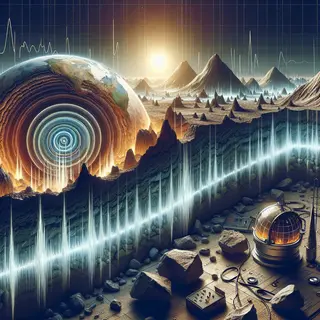
How a massive natural disaster reshaped European philosophy, religion, and the science of seismology.
The discovery and significance of the Gömböc, a unique homogeneous shape with exactly one stable and one unstable equilibrium point.
How certain frog species survive being completely frozen during winter months through remarkable biochemical adaptations.
How 19th century families preserved the memory of deceased loved ones through an unsettling photographic practice that reflected period attitudes toward death.
An exploration of the deadliest wildfire in American history that occurred simultaneously with the Great Chicago Fire but claimed far more lives.
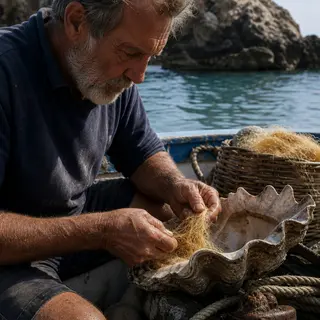
How intricately crafted shell beads served as both sacred record-keeping systems and international treaties among Native American nations
How Dutch artist Theo Jansen creates autonomous wind-powered 'animals' that roam beaches and challenge our understanding of artificial life.
How bacteria communicate using light at the quantum level, challenging our understanding of microbial intelligence and biological quantum effects.
How quantum particles retain 'memory' of previous states even after measurement, challenging our understanding of quantum collapse and information preservation.
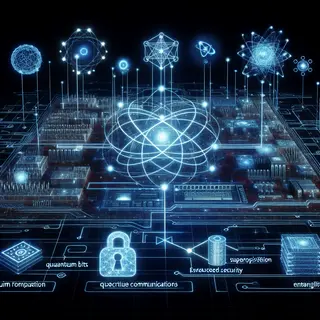
How leaf litter decomposition processes exhibit quantum computational properties that could inspire next-generation sustainable computing architectures.
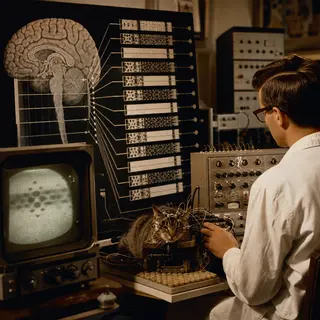
How certain parasites manipulate neural systems to control host behavior, revealing evolutionary arms races and challenging our understanding of free will.
How 4,000-year-old Babylonian clay tablets contain computational methods that anticipated modern algorithms by millennia.
How advanced computational methods are enabling researchers to recover lost historical information from degraded artifacts and reconstruct ancient sounds and languages once thought irretrievable.
How microscopic biological communities within ancient manuscripts reveal environmental history and preservation challenges
How scientists are harnessing fungal networks to create sustainable biological computing systems
How mycologists and quantum physicists are collaborating to create eco-friendly diagnostic tools from mushroom enzymes
How researchers are harnessing bacterial intelligence to create living machines that can navigate complex environments
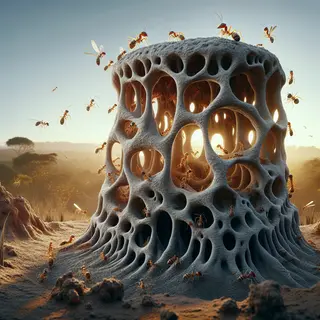
How researchers are using mycelium networks to create self-healing, carbon-negative building materials that could transform urban infrastructure.
Recent discoveries reveal how bacteria communicate to coordinate behaviors, with implications for agriculture, medicine, and technology.
How researchers are reconstructing the soundscapes of historical sites using advanced acoustic modeling and AI
Recent research reveals that flatworms maintain body plan information in bioelectric networks that function independently from DNA and genes.
Researchers have developed a novel biometric authentication system based on bat echolocation patterns that could revolutionize wireless device security.
Many of our articles come with a video companion. Sit back and explore.
No spam. Just strange, useful, and fascinating knowledge.
We only use your email for site updates.