The Ancient City in Turkey Where Spears Were Invented
In the mountainous regions of present-day Turkey lies a city with significant archaeological discoveries, including some of the oldest known spears dating back to prehistoric times.

Discover strange, surprising, and little-known facts from science, history, nature, and beyond.
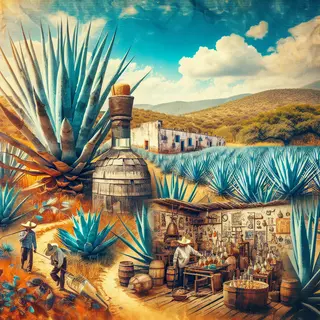
Tequila, the popular alcoholic beverage, is uniquely tied to a very specific plant, the Blue Agave, and its history is riddled with fascinating intricacies.
Read Article → History
In the mountainous regions of present-day Turkey lies a city with significant archaeological discoveries, including some of the oldest known spears dating back to prehistoric times.
 Environment
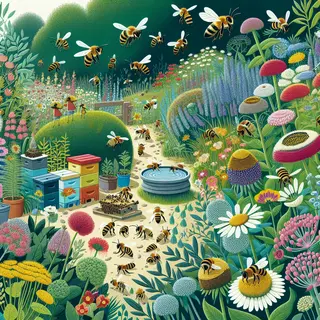
A sustainable method to prevent colony collapse in bees.
 History
The Codex Gigas, or the Devil's Bible, is one of the most significant extant medieval manuscripts created in the early 13th century.
 Nature
Selaginella lepidophylla, also known as the 'Resurrection Plant,' can revive itself from a desiccated state when watered.
 Space
SpaceWhile one might think space is utterly silent, scientists have discovered that the sun emits mysterious acoustic waves akin to chirping sounds.
 Food
FoodDiscover the ancient secret of perfectly preserved honey found in Siberian permafrost.
 Environment
The Great Pacific Garbage Patch was discovered by accident, providing a modern-day environmental lesson.
 Nature
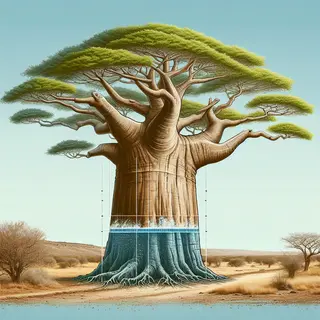
Baobab trees, native to Africa, can store thousands of liters of water inside their trunks.
 Nature
Barite rose rocks are peculiar, reddish-brown formations unique to Oklahoma.
 Culture
Tadelakt is an ancient Moroccan technique for creating a waterproof, decorative lime plaster finish, typically found in traditional hammams and luxurious bathrooms.
 Food
FoodSoy sauce, now common worldwide, was originally created by accident over 2,500 years ago in China.
 Mysteries
Only about 2% of the population in certain parts of the world hears a low-frequency hum, often described as a droning sound.
 Oddities
A remote island in Argentina filled with abandoned toys discovered by accident has a compelling story.
 Food
FoodYou can reuse coffee grounds to cultivate gourmet mushrooms with minimal effort.
 Animals
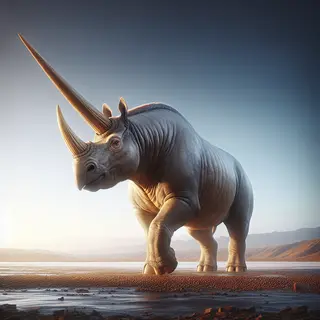
The Elasmotherium, often dubbed the 'Siberian Unicorn,' was a real prehistoric animal that roamed the earth around 2.6 million to 29,000 years ago. Not widely known, this mammal had a large single horn and was a surprising relative of modern-day rhinoceroses.
 Environment
Certain invasive species once thought to harm ecosystems are now playing a surprising role in coral reef restoration.
 Records
There exists a unique book in Myanmar that's entirely made of marble.
 Engineering
Discover how a unique material made from ice and wood pulp could have changed naval warfare during WWII.
 Nature
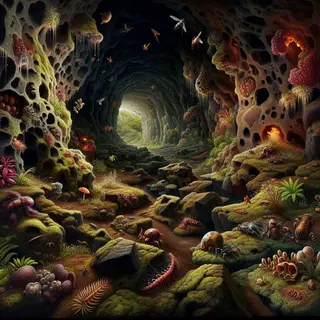
Lava tubes in Hawaii house a unique and diverse ecosystem.
 Arts
ArtsDiscover the distinctive wood properties that make Stradivarius violins unparalleled in quality.
 History
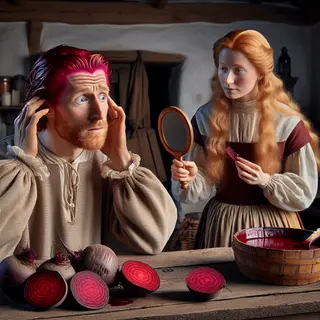
In the 1600s, people used beet juice as a natural dye for red hair.
 Animals
Tardigrades, or water bears, can survive in space for days.
 History
Discover how a chance observation led to the creation of one of the most iconic decorative items of the 20th century: the lava lamp.
 Oddities
In 2011, a Russian man ordered an entire train online, creating international headlines and ultimately showcasing the vast capabilities of e-commerce.
Many of our articles come with a video companion. Sit back and explore.




No spam. Just strange, useful, and fascinating knowledge.
We only use your email for site updates.
 Rumble