
The Dynamic Complexity of Kombucha: a Misunderstood Brew
Long before kombucha became a wellness trend, a complex symbiotic microbial community called SCOBY was quietly transforming tea into a biochemically active drink with a history spanning more than two millennia — and scientists are only now untangling what it actually does.
 Watch on YouTube
 Watch on Rumble
Introduction
Kombucha is frequently described as a fermented tea produced by a symbiotic culture of bacteria and yeast, commonly abbreviated as SCOBY. But this description, while accurate, dramatically understates the biological complexity of what is actually happening inside a fermentation vessel. The SCOBY is not a single organism, nor a stable partnership between two. It is a dynamic, self-organizing microbial community whose composition shifts with temperature, tea type, sugar concentration, and even the mineral content of local water. Metagenomic studies published in the journal Food Microbiology between 2019 and 2023 identified more than 200 distinct microbial taxa capable of participating in kombucha fermentation, though any given batch typically contains between 10 and 30 dominant species.
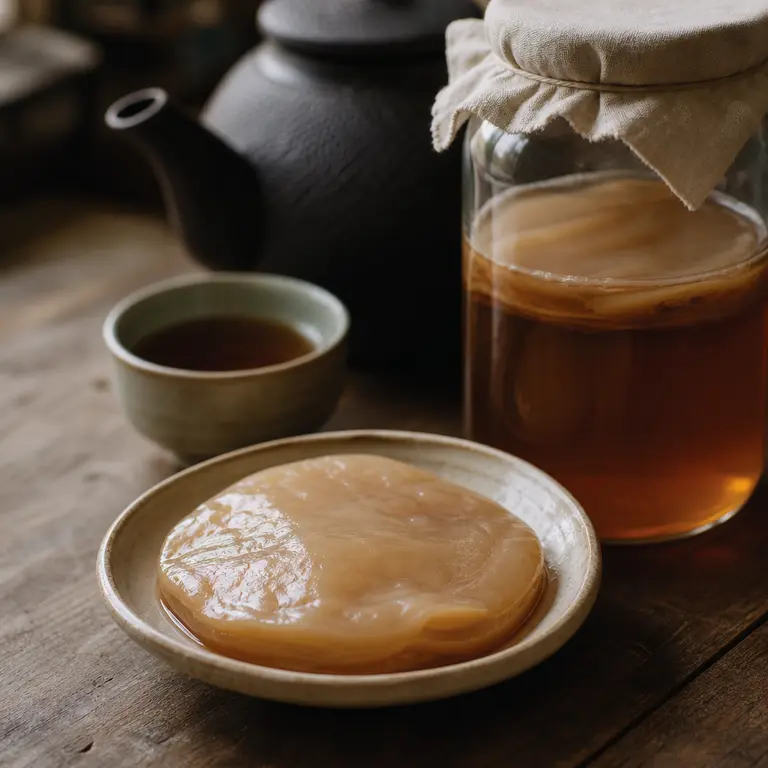
The structure that floats on the surface of the brew, often called the mother or pellicle, is a biofilm composed primarily of bacterial cellulose secreted by Komagataeibacter xylinus, formerly classified as Gluconacetobacter xylinus. This cellulose mat is not incidental packaging. It functions as a scaffold that regulates oxygen exposure for the microbial community beneath it, creating a gradient of aerobic and anaerobic zones that allows both oxygen-dependent acetic acid bacteria and oxygen-sensitive yeasts to coexist in the same vessel. The architecture is, in effect, a self-built microhabitat, a feature that has attracted considerable interest from biofilm engineers and synthetic biology researchers. What begins as a jar of sweetened tea becomes, within days, a stratified biological system that manages its own internal chemistry with a degree of precision that continues to surprise researchers who study it closely.
A History Obscured by Geography and Translation
The earliest credible historical references to kombucha-like preparations appear in Chinese texts from the Qin dynasty, around 221 BCE, where a fermented tea drink was reportedly used for digestive complaints and described as a remedy for immortality, a phrase that, in classical Chinese medical literature, typically referred to longevity and vitality rather than literal deathlessness. The drink is thought to have traveled westward along trade routes, appearing in records from Manchuria and later from Russia and Eastern Europe, where it was known as tea kvass or chainy grib, meaning tea mushroom, a misnomer that persists because the floating cellulose pellicle superficially resembles a fungal growth.
The word kombucha itself is a source of persistent etymological confusion. In Japanese, konbu-cha refers to a completely different drink made from kelp, not fermented tea. The fermented preparation most Westerners call kombucha is known in Japan as kocha kinoko, meaning red tea mushroom. The name kombucha appears to have entered European languages through a transliteration error or deliberate rebranding at some point in the 20th century, and it has remained attached to the fermented tea preparation ever since. The actual origin of the fermented tea tradition most likely lies in northeastern China or Siberia, where wild yeasts and acetic acid bacteria were abundant and tea cultivation intersected with long-standing fermentation practices.
The drink reached Western Europe through Russian and German channels in the late 19th century, and by the 1950s, it had developed a devoted following in Germany and Switzerland, where it was promoted as a folk remedy for arthritis, hypertension, and cancer. These claims were largely anecdotal and remain scientifically unsupported in their stronger forms, but they drew enough attention to prompt the first wave of European biochemical analysis. What is striking about this geographic diffusion is how consistently the beverage was adopted into existing folk medicine frameworks rather than studied as a novel preparation. Each culture that encountered it interpreted the SCOBY through the lens of its own medical tradition, which contributed to a fragmented and often contradictory body of historical documentation that researchers are still working to reconcile today.
What the Chemistry Actually Shows
Modern analytical chemistry has identified dozens of bioactive compounds produced during kombucha fermentation. The most significant include acetic acid, gluconic acid, glucuronic acid, L-lactic acid, various B vitamins, and a range of organic acids that collectively lower the pH of the finished beverage to between 2.5 and 3.5. The tea substrate itself contributes polyphenols, including catechins and theaflavins, which interact with fermentation byproducts in ways that are still being characterized. The specific profile of these compounds varies considerably depending on the tea variety used, the fermentation temperature, the brewing duration, and the particular microbial composition of the SCOBY at any given time, meaning that two batches produced from the same starter culture under slightly different conditions can yield measurably different chemical outputs.
Glucuronic acid has received particular attention because it plays a role in hepatic detoxification in mammals, binding to lipophilic compounds in the liver to make them water-soluble for excretion. Some researchers proposed in the 1990s that dietary glucuronic acid from kombucha might augment this process, a hypothesis that circulated widely in popular health literature. Subsequent pharmacokinetic research, however, demonstrated that orally ingested glucuronic acid is poorly absorbed in the gut and does not meaningfully raise systemic glucuronic acid levels. The claims about liver detoxification, while biologically plausible in principle, have not been substantiated by controlled clinical trials as of 2024. This pattern, in which a genuine biochemical mechanism is identified but extrapolating to dietary benefit proves more complicated than initially assumed, is a recurring theme in kombucha research and reflects broader challenges in translating in vitro chemistry into clinical outcomes.
More consistent evidence from cell culture and animal studies supports the antimicrobial activity of kombucha against pathogens, including Helicobacter pylori, Staphylococcus aureus, and Candida albicans. A 2021 study in Scientific Reports demonstrated that the acetic acid content alone does not account for the full antimicrobial effect, suggesting that other compounds, possibly bacteriocins produced by lactic acid bacteria in the SCOBY, contribute independently. A randomized controlled pilot trial conducted at the University of California, Davis, and published in 2023 found that daily kombucha consumption over four weeks produced measurable reductions in fasting blood glucose in adults with type 2 diabetes, though the sample size was small and the mechanisms remain unclear. These results are preliminary but scientifically credible enough to have generated a second wave of interest in kombucha from clinical researchers who had previously dismissed the beverage as a wellness trend without empirical foundation.
The Industrial and Biotechnological Frontier
Beyond its role as a beverage, the bacterial cellulose produced by Komagataeibacter species during kombucha fermentation has attracted significant investment from materials scientists. Bacterial cellulose is chemically identical to plant cellulose but is produced as a highly pure, ultrafine nanofiber network with exceptional tensile strength, water retention capacity, and biocompatibility. It has been investigated as a wound dressing material, a scaffold for tissue engineering, a substrate for flexible electronics, and a replacement for synthetic plastics in food packaging. The nanofiber structure of bacterial cellulose gives it a surface area and mechanical properties that plant-derived cellulose cannot easily replicate, which is why the material has attracted interest from engineers working on problems unrelated to fermentation or food science.
Several biotechnology companies, including Nanollose in Australia and Polybion in Mexico, have developed proprietary processes for producing bacterial cellulose from fermentation waste streams, effectively industrializing the same biochemical machinery that operates in a kombucha jar. The global bacterial cellulose market was valued at approximately 320 million US dollars in 2022 and is projected to exceed 700 million dollars by 2030, according to market analysis published by Grand View Research. The SCOBY, in this context, is not merely a fermentation curiosity but a biological factory whose outputs are finding applications in medicine, electronics, and sustainable materials. Polybion, in particular, has developed a leather substitute from bacterial cellulose grown on mango waste, a product that has attracted attention from fashion brands seeking alternatives to both animal leather and petroleum-based synthetic materials.
The microbial ecology of kombucha has also become a model system for studying how complex communities self-organize and maintain stability under changing conditions. Research groups at MIT and ETH Zurich have used kombucha SCOBYs as tractable experimental platforms for synthetic ecology, engineering modified microbial communities into the biofilm to produce novel compounds or to test theories about microbial competition and cooperation. The accessibility of the system, requiring only tea, sugar, and a starter culture, makes it unusually democratic as a research tool, and several open-source science communities have begun distributing characterized SCOBY strains for reproducible experimentation. This accessibility has created an unusual convergence between professional research institutions and amateur fermentation communities, with citizen scientists occasionally generating observations that inform formal laboratory investigations.
Safety, Contamination, and Regulatory Ambiguity
Despite its long history and generally favorable safety profile, kombucha is not without documented risks. Because home fermentation is common and the SCOBY is an open microbial community, contamination by opportunistic pathogens is possible under poor sanitation conditions. Several case reports in the medical literature, including a widely cited 1995 report in the Annals of Internal Medicine, documented severe acidosis and liver toxicity in individuals who consumed large quantities of home-brewed kombucha, though causation was difficult to establish definitively, and the reports have not been replicated at scale. The consensus among food safety researchers is that properly prepared kombucha, with a pH below 3.0, is self-protective against most bacterial contaminants because few pathogens can survive in a sufficiently acidic environment, but this protection depends on the fermentation proceeding correctly from the start.
The alcohol content of kombucha is a persistent regulatory complication. Fermentation naturally produces ethanol, and if the beverage is bottled while still active, continued fermentation can raise alcohol levels above the 0.5 percent threshold that defines non-alcoholic beverages in the United States and European Union. Several commercial brands were recalled between 2010 and 2015 after exceeding this threshold on retail shelves. Manufacturers have since developed cold-chain management and pasteurization protocols to control alcohol content, though pasteurization eliminates the live microbial cultures that many consumers consider the product's primary benefit. This tension between safety compliance and product integrity remains unresolved and continues to shape how manufacturers formulate and market their products across different regulatory environments.
The regulatory status of kombucha remains ambiguous in many jurisdictions. It is sold as a food product rather than a dietary supplement in most countries, which limits the health claims manufacturers can legally make and exempts the product from the more rigorous efficacy and safety testing required for pharmaceuticals. This regulatory gap has allowed a wide range of unsubstantiated therapeutic claims to circulate in marketing materials, a situation that public health researchers have noted with concern even as the scientific investigation of the beverage’s genuine bioactive properties continues to advance. The challenge for regulators is that kombucha occupies a genuinely intermediate category, more biologically active than most foods but less characterized than most medicines, and existing regulatory frameworks were not designed with that kind of complexity in mind.
Conclusion
What makes kombucha scientifically interesting is not any single dramatic property but the accumulation of genuine complexity that reveals itself the closer one looks. A drink that began as a folk remedy in ancient China has, over the course of two millennia, become a beverage with a disputed name, a contested history, a partially understood chemistry, a growing body of clinical evidence, and a second life as a source of industrial biomaterials. The SCOBY that floats at the surface of a fermentation jar is, depending on who is examining it, a probiotic culture, a biofilm engineering model, a nanocellulose factory, and a regulatory puzzle. None of these descriptions is complete on its own, and that is precisely the point. The living membrane that nobody named correctly turns out to be one of the more instructive examples of how much biological complexity can be contained in something that most people encounter only as a slightly sour drink at the back of a refrigerator.
Sources & Further Reading
- Villarreal-Soto, S.A., Beaufort, S., Bouajila, J., Souchard, J.P., Taillandier, P. Understanding Kombucha Tea Fermentation: A Review. Journal of Food Science, 2018. https://doi.org/10.1111/1750-3841.14068
- Morton, J.T., et al. Kombucha consumption reduces hyperglycemia in adults with type 2 diabetes: a randomized controlled pilot study. Frontiers in Nutrition, 2023. https://doi.org/10.3389/fnut.2023.1190248
- Reva, O.N., et al. Microbial community composition and functional diversity of kombucha. Food Microbiology, 2021.
- Grand View Research. Bacterial Cellulose Market Size, Share and Trends Analysis Report. 2023. https://www.grandviewresearch.com/industry-analysis/bacterial-cellulose-market