Innovative Technique: Advanced Methods in Antenna Suturing
A medical technique where wounds are stitched using the antennas of beetles instead of traditional materials.

Discover strange, surprising, and little-known facts from science, history, nature, and beyond.

How a century-old industrial incendiary reaction is now being repurposed to date ancient iron artifacts and rewrite the timeline of early metallurgy.
Read Article →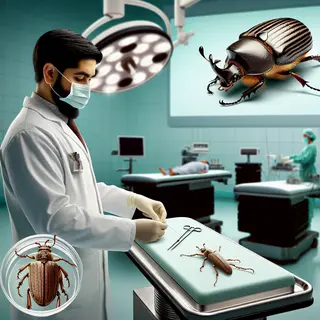 Health
A medical technique where wounds are stitched using the antennas of beetles instead of traditional materials.
 History
Despite common beliefs, the discovery of Penicillin by Alexander Fleming in 1928 was quite unsystematic and majorly a product of unanticipated circumstances.
 Science
Teixobactin is a recently discovered antibiotic, found as a result of an innovative method of culturing bacteria from soil.
 Food
FoodCasu Marzu is a type of cheese from Sardinia, Italy known for being infested with live insect larvae, usually made from sheep milk.
 Culture
In Oaxaca, Mexico, there is an annual event known as 'La Noche de Los Rabanos', or 'Night of the Radishes'. It features elaborate scenes carved from radishes.
 Nature
Once considered the most isolated tree on Earth, the Tree of Ténéré stood alone for decades in the heart of the Sahara Desert.
 Space
SpaceMoonquakes are caused because the Moon's surface is shrinking like a grape due to cooling of an ocean of molten rock beneath its surface.
 Nature
It may sound hard to believe, but certain types of rocks, specifically gypsum rocks, can grow and lengthen over time in the right conditions.
 History
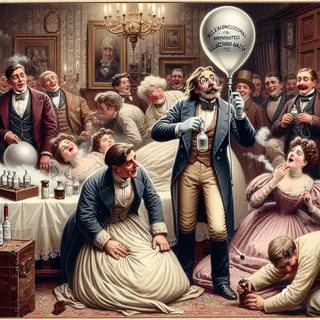
A medical doctor in the 19th century discovered the anesthetic properties of nitrous oxide, quite accidentally during a party.
 Science
Microchimerism is a phenomenon where an individual's body harbors cells or genetic material from another individual, typically the mother or a sibling.
 Nature
Different types of sand can create different musical notes when they are made to slip down a slope.
 Engineering
A scale that was accidentally invented to measure the local gravitation in a place using a bridge.
 Science
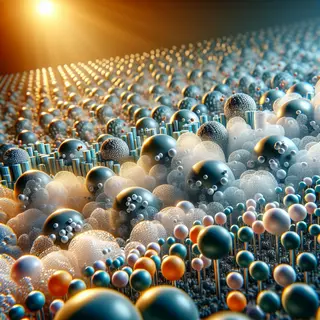
Hydrogen, one of the smallest molecules, can permeate many materials, including those that are completely impervious to other gases. This phenomenon is known as Hydrogen Permeability.
 Science
Researchers accidentally discovered that high-density form of polyethylene plastic can block out nearly all heat radiation.
 History
16th-century astronomer Tycho Brahe wore a prosthetic silver nose after losing part of his real one in a duel.
 History
Far from its present use for fitness, treadmills were initially used as punishment in prisons during the 19th century.
 Animals
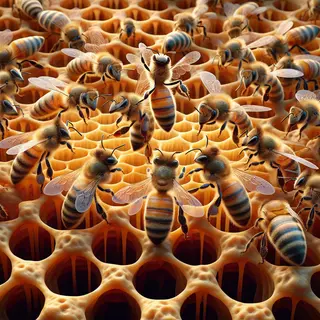
Bees do a waggle dance in order to communicate precise coordinates of food sources.
 Mysteries
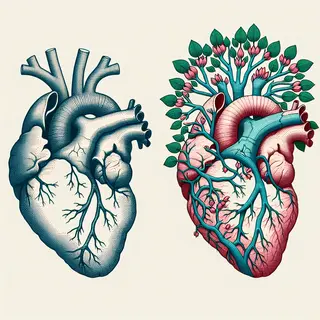
Despite our hearts’ anatomical differences from the symbolic heart drawings we use, scientists have found a plant that accurately resembles a heart diagram.
 Animals
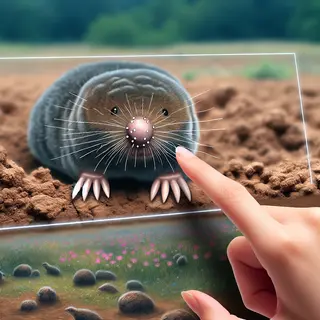
Did you know the star-nosed mole has one of the quickest and most sensitive touch responses in the animal kingdom?
 Animals
Many species of marine life such as squids, shrimp, and other deep-sea creatures have the natural ability to produce light internally (bioluminescence) to attract mates or deter predators.
 History
Gustave Eiffel had a private apartment on the top of the famous tower he engineered and built in Paris.
 Animals
The Bermuda fireworm, Odontosyllis enopla, is known for its bioluminescent mating displays that occur after the full moon.
 History
Purple dye was accidentally discovered by ancient Phoenicians.
 History
During the Cold War, the United States secretly built and operated a city underneath Greenland's ice cap to house nuclear missiles. The plan was known as 'Project Iceworm'.
Many of our articles come with a video companion. Sit back and explore.

No spam. Just strange, useful, and fascinating knowledge.
We only use your email for site updates.