
Aerobatic Algae: Skyward Tango of Microbial Marvels
Certain species of algae known as diatoms can move in a complex, choreographed 'dance' patterns in water.
Introduction
Diatoms are among the most abundant and consequential organisms on Earth, yet most people have never heard of them. These single-celled algae are encased in intricate shells made of glass — or more precisely, silicon dioxide — and they float almost invisibly within bodies of water ranging from vast ocean expanses to roadside puddles and Antarctic ice sheets. They are so small that millions can fit within a single drop of water, and yet their collective influence on the planet is staggering. Diatoms generate approximately 20 percent of all the oxygen in Earth’s atmosphere. That means roughly every fifth breath you draw owes its existence to these silent, spinning, glass-armored microorganisms drifting through the world’s waters. And as scientists have recently discovered, they do not simply drift — they dance.
The story of diatoms is one of biology, physics, geology, and ecology converging in a single microscopic organism. From their role in feeding marine ecosystems to their surprising light-driven choreography, diatoms represent one of nature’s most elegant examples of complexity hidden at a scale invisible to the naked eye. Understanding them better is not merely an exercise in scientific curiosity. It is increasingly urgent, as these tiny organisms sit at the very foundation of processes that regulate the climate, feed the ocean, and keep the atmosphere breathable.
Biological Significance
Diatoms have fascinated biologists since the invention of the microscope, and for good reason. Their shells, called frustules, are among the most geometrically precise structures found in the natural world. Each frustule is composed of two overlapping halves, much like a petri dish, and its surfaces are etched with patterns of pores, ribs, and channels that are unique to each of the estimated 100,000 or more species. These patterns are so consistent and so fine that diatom frustules were historically used to test the resolving power of optical microscopes. Their beauty is not merely decorative — the structural complexity of the frustule serves functional purposes, including filtering nutrients, managing light absorption, and providing mechanical strength far beyond what their fragile glass composition might suggest.
As single-celled photosynthetic organisms, diatoms are classified as phytoplankton, and they form the base of aquatic food webs across the globe. Zooplankton consume them, fish consume the zooplankton, and the energy harvested from sunlight by diatoms ultimately flows upward through entire marine ecosystems. Without diatoms, the productivity of the world’s oceans would collapse in ways that would be catastrophic for both marine life and human food supplies.
Their role in the carbon cycle is equally significant. Through photosynthesis, diatoms absorb carbon dioxide from the surrounding water, which is continuously replenished by the atmosphere. When diatoms die, their frustules — along with the organic carbon locked inside them — sink to the ocean floor in a process scientists call the biological pump. Over millions of years, this process has sequestered enormous quantities of carbon in marine sediments, contributing to the formation of diatomite, a soft sedimentary rock made almost entirely of fossilized diatom shells. Diatomite deposits, some hundreds of meters thick, are mined today for use in filtration systems, insulation, and even toothpaste. The chalk cliffs of Dover contain diatom remains. The deep geological record of these organisms stretches back at least 180 million years, and their accumulated shells have quietly shaped the chemistry of the ocean and the composition of the atmosphere across geological time.
The Discovery of the Diatom Dance
For all their well-documented ecological importance, diatoms concealed a remarkable secret for centuries: they move in ways that defy easy explanation. While it has long been known that some diatom species are capable of motility — gliding along surfaces using a mucilage secretion system — a far stranger form of movement was observed more recently. When illuminated with light, certain diatom species begin to perform what researchers have described, with some justification, as a dance.
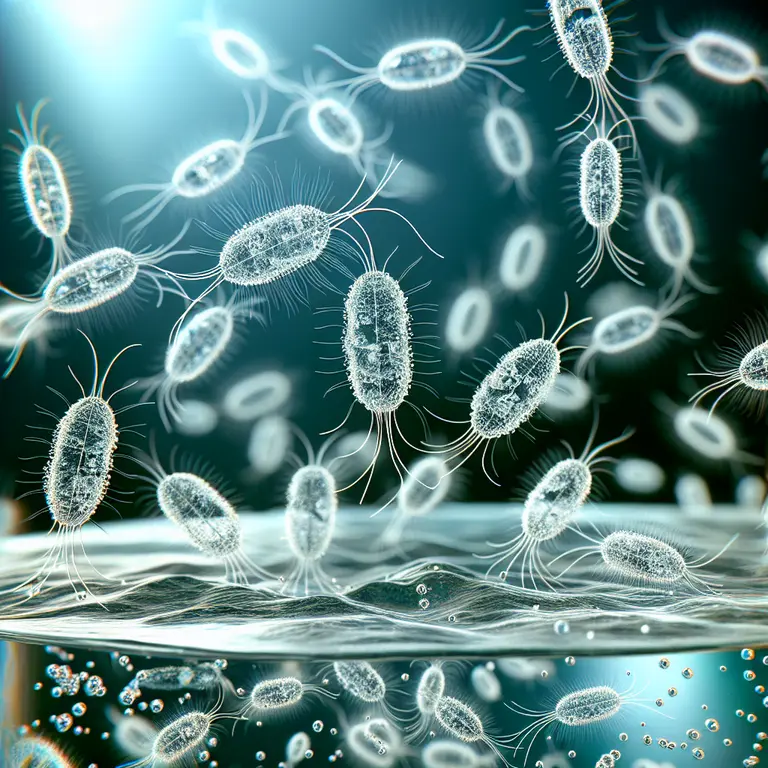
The behavior is striking. Under a microscope and in the presence of light, individual diatoms begin to oscillate, zigzag, spiral, and make sudden reversals of direction. The movement is not random. It follows discernible rhythms and patterns, with cells spiraling upward, pausing, then reversing course in a manner that has drawn comparisons to a tango. The motion is precise enough to suggest that something systematic and mechanistic is driving it, not mere passive drift or Brownian motion — the random jostling caused by molecules in the surrounding fluid.
The discovery attracted serious scientific attention because it raised a fundamental question: how does a single-celled organism with no nervous system, no muscles, and no flagella produce such coordinated and rhythmic motion in response to light? The answer, when it came, turned out to involve physics as much as biology.
The Mechanism Behind the Dance
The explanation for diatom dancing emerged from research that required simultaneous expertise in fluid dynamics, thermodynamics, and cell biology. Scientists, including researchers affiliated with institutions studying microscale fluid behavior, determined that the mechanism behind the dance involves an interplay among light, heat, and gravity operating at scales almost unimaginably small.
When light strikes a diatom’s siliceous frustule, not all wavelengths pass through or are reflected. Some are absorbed and converted into heat, causing localized temperature increases at specific points on the organism’s surface. This is known as the photothermal effect, and while it may sound subtle, at the microscale it produces consequences that are anything but. The slight warming of the water immediately surrounding the heated region of the frustule creates a local density difference, since warmer water is less dense than cooler water. This density difference drives a small but measurable convective current — a miniature thermal plume rising from the warmer region and cooler fluid flowing in to replace it.
This thermal convection acts as an engine, generating forces that push and rotate the diatom through the surrounding fluid. The direction and intensity of the movement depend on where the light hits the cell and how the frustule’s geometry focuses and absorbs that light — factors that change continuously as the cell rotates. This creates a feedback loop in which the cell’s rotation changes its orientation to the light source, which changes the heating pattern, which changes the convective forces, which changes the rotation. The result is the spiraling, oscillating, reversing motion that observers have compared to a dance.
An additional layer of complexity comes from the diatom’s own metabolic activity. As a photosynthetic organism, a diatom accumulates sugars and other photosynthates during periods of active light absorption. These compounds are denser than water, and their accumulation alters the cell's overall buoyancy. As the cell’s internal composition shifts between states of higher and lower density relative to the surrounding water, its tendency to sink or rise changes accordingly. This alternating buoyancy, combined with the thermally driven convective forces, produces the full repertoire of the diatom’s characteristic movements.
Ecological Importance of the Dance
The diatom dance is not merely a curiosity. It serves a precise and important ecological function that helps explain how these organisms manage to dominate aquatic environments even under challenging conditions. The euphotic zone — the layer of water shallow enough for sunlight to penetrate sufficiently for photosynthesis — is where diatoms must remain to survive and reproduce. But this zone is also subject to turbulence, stratification, and nutrient depletion. Staying within it while also accessing nutrients requires a degree of positional control that passive floating cannot provide.
The light-driven dancing behavior allows diatoms to regulate their vertical position in the water column with remarkable effectiveness. By rising toward light when photosynthesis is active and sinking slightly when internal density increases, they naturally oscillate within the optimal zone for growth. This also brings them into contact with nutrient gradients at different depths, allowing them to mine dissolved minerals and compounds more efficiently than if they remained stationary. The spiraling motion increases the volume of water the cell sweeps through, improving the rate at which nutrients encounter the cell surface and are absorbed.
This mechanism helps explain why diatoms are so successful in nutrient-limited environments, where competing phytoplankton struggle to maintain sufficient access to both light and dissolved nutrients. Their ability to exploit the physics of their own light absorption as a propulsion system gives them an advantage that is entirely passive from an energy standpoint — they use heat they would generate anyway to move in ways that improve their survival.
Conclusion
The discovery of diatom dancing is a reminder that the natural world continues to yield profound surprises even in organisms that have been studied for centuries. What appears at first glance to be a simple, transparent speck of glass drifting in a pond turns out to be a sophisticated system that converts light into motion, regulates its own buoyancy, and positions itself within the water column using principles drawn from thermodynamics and fluid mechanics. These are not behaviors engineered by a brain or a nervous system — they emerge from the geometry of a glass shell, the physics of heat transfer, and the chemistry of photosynthesis interacting in a space smaller than a human hair.
Diatoms remind us that significance is not proportional to size. They have been shaping the chemistry of the atmosphere and the productivity of the ocean for nearly 200 million years. They feed ecosystems, sequester carbon, and produce the oxygen in one of every five breaths drawn by every living creature on land. And now we know they do all of this while dancing — not through any intention, but through the elegant and inevitable expression of physical law at the microscopic scale. In a world that increasingly demands our attention toward the large and the loud, the diatom offers a quieter lesson: that the most consequential forces in nature are often the ones we cannot see.