
The Silent Influence: Toxoplasma Gondii's Grip on Humanity
Toxoplasma gondii, a single-celled parasite infecting roughly one-third of all humans, silently alters brain chemistry, risk tolerance, and possibly human culture itself — with implications far beyond its infamous connection to cats.
 Watch on YouTube
 Watch on Rumble
Introduction
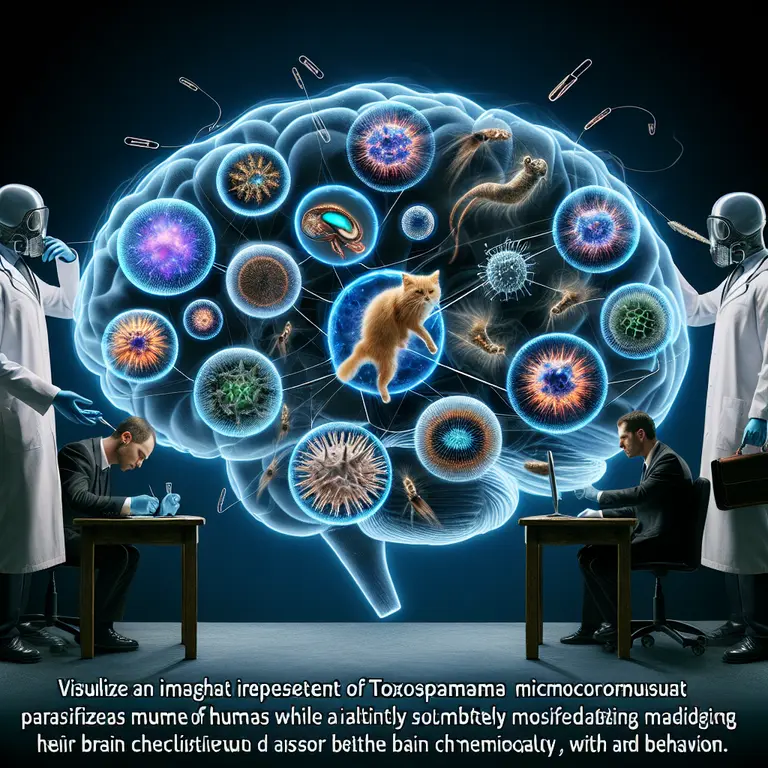
Somewhere between 30 and 50 percent of the global human population currently carries a single-celled parasite called Toxoplasma gondii in their brain tissue, most of them entirely unaware of its presence. The organism, a protozoan belonging to the same phylum as the malaria parasite, is typically acquired through contact with infected cat feces, consumption of undercooked meat, or maternal transmission during pregnancy. In immunocompetent adults, the initial infection usually produces mild flu-like symptoms before the parasite retreats into a latent phase, forming microscopic cysts primarily in the brain and muscle tissue. There it persists, potentially for the entire lifetime of the host, in a state long assumed to be biologically inert.
That assumption has been systematically dismantled over the past two decades by a growing body of neurological and behavioral research that paints a far more unsettling picture. What was once dismissed as a medically trivial infection, relevant only to immunocompromised patients and pregnant women, has become the subject of serious inquiry in psychiatry, behavioral neuroscience, and even cultural anthropology. The story of Toxoplasma gondii is, in many respects, the story of how biology complicates the boundaries we draw around concepts like agency, personality, and free will. It raises an uncomfortable question that most people carrying the parasite will never think to ask: how much of what feels like a personal disposition might be the expression of a microscopic tenant with its own reproductive agenda?
How the Parasite Rewires Its Hosts
The parasite’s ultimate reproductive goal is to complete its life cycle in a feline gut, the only environment in which it can sexually reproduce. To accomplish this, Toxoplasma has evolved a remarkable and deeply specific neurological trick: it rewires the fear response of intermediate hosts, primarily rodents, so that the smell of cat urine triggers attraction rather than terror. This manipulation is not metaphorical. Infected rats and mice show measurable reductions in amygdala activation in response to feline odors, along with increased dopamine production and activation of circuits normally associated with sexual arousal. The parasite effectively converts a predator’s scent into an aphrodisiac, making infected rodents fatally reckless in exactly the way that benefits Toxoplasma’s reproductive interests.
The mechanism involves the parasite’s direct injection of an enzyme called tyrosine hydroxylase into host neurons, hijacking dopamine synthesis at the molecular level. This is not a blunt chemical intrusion but a targeted biochemical intervention, one that leaves other aspects of rodent behavior largely intact while surgically modifying the specific fear circuitry relevant to feline predation. The precision of this manipulation is what makes it so biologically remarkable. Evolution does not typically produce such elegant specificity by accident. The implication is that Toxoplasma has been refining this neurological strategy across millions of years of co-evolution with mammalian nervous systems, which raises an immediate and unsettling follow-up question: what, if anything, does it do to the human brain it now inhabits in such enormous numbers?
The answer begins with the observation that human brains are not structurally dissimilar to rodent brains in the regions that Toxoplasma preferentially colonizes. The amygdala, dopaminergic reward circuits, and hippocampus are ancient structures conserved across mammalian lineages. When the parasite forms cysts in human neural tissue, it does not encounter a fundamentally alien architecture. It encounters a variation on the same hardware it has been manipulating for a very long time.
The Human Behavioral Fingerprint
The question of whether Toxoplasma causes detectable behavioral changes in humans has generated significant scientific controversy and a substantial body of peer-reviewed research. Czech parasitologist Jaroslav Flegr has spent more than three decades studying latent toxoplasmosis in human populations, publishing findings that suggest infected individuals show statistically measurable differences in personality profiles, reaction times, and risk-taking behavior compared to uninfected controls. Men with latent infection tend to score higher on measures of suspicion and jealousy while showing decreased novelty-seeking. Infected women, by contrast, tend toward higher warmth and rule-consciousness. These sex-differentiated effects mirror the dimorphic behavioral changes observed in rodents and are thought to reflect differences in how male and female brains metabolize the excess dopamine the parasite stimulates.
Perhaps the most striking human data concerns traffic accidents. Multiple independent studies conducted in the Czech Republic, Turkey, and Mexico found that Toxoplasma-positive individuals are statistically between 2 and 6 times more likely to be involved in road traffic accidents than seronegative controls, with the effect size correlating with the duration of infection. A 2009 military study in the Czech Republic examined 3,890 conscripts and found that infected soldiers had significantly slower reaction times on standardized tests, a deficit consistent with the parasite’s documented disruption of dopaminergic signaling. Flegr has provocatively estimated that latent toxoplasmosis may account for more annual traffic fatalities in some countries than alcohol, a claim that, if even partially accurate, reframes the parasite as a significant and largely unacknowledged public health burden.
It is worth pausing on the methodological challenges embedded in this research. Establishing causation between latent Toxoplasma infection and behavioral outcomes in humans is considerably more difficult than in controlled rodent experiments. Human subjects cannot be ethically infected for experimental purposes, and observational studies must contend with the possibility that people with certain pre-existing personality traits or behavioral tendencies are simply more likely to acquire the infection in the first place, through dietary habits, occupational exposure, or risk-taking that predates the infection itself. Flegr and others have attempted to address this through longitudinal designs and careful statistical controls, but the field remains genuinely contested, and replication across independent research groups has been uneven. What can be said with confidence is that the association between latent toxoplasmosis and measurable human behavioral differences is robust enough to warrant serious scientific attention rather than dismissal.
Psychiatric Implications and the Schizophrenia Link
The neuropsychiatric dimension of Toxoplasma research has attracted considerable attention from mainstream psychiatry. A meta-analysis published in Schizophrenia Bulletin in 2012, aggregating data from 38 studies, found that individuals with schizophrenia are approximately 2.7 times more likely to test positive for Toxoplasma antibodies than healthy controls. The association has been replicated in populations across North America, Europe, and Asia, and is now considered one of the more robust environmental correlates of schizophrenia identified to date. The biological plausibility is not difficult to construct: the parasite elevates dopamine in neural circuits that are already hyperactive in schizophrenia, and it produces an enzyme called kynurenine aminotransferase, which generates kynurenic acid, a compound found at elevated levels in the brains of schizophrenic patients and known to antagonize glutamate receptors involved in cognition and sensory gating.
Importantly, the Toxoplasma-schizophrenia link does not imply that the parasite causes schizophrenia in all or even most cases. Schizophrenia is a complex disorder with genetic, developmental, and environmental contributors, and Toxoplasma appears to function as one of several possible biological triggers in genetically susceptible individuals. Researchers at Johns Hopkins University have found that children born to mothers who were Toxoplasma-positive during pregnancy show elevated rates of psychotic symptoms by early adulthood, suggesting that prenatal exposure during critical neurodevelopmental windows may be particularly consequential. The blood-brain barrier is not fully formed in the developing fetus, and the neural architecture being laid down during gestation may be especially vulnerable to the dopaminergic and glutamatergic disruptions the parasite is known to cause.
The implications for prenatal care guidelines, which already recommend that pregnant women avoid handling cat litter, are being actively debated. Some researchers have proposed expanding routine Toxoplasma screening during pregnancy in countries where it remains uncommon, including the United States. Others argue that the evidence base, while suggestive, does not yet justify the cost and potential anxiety associated with widespread screening programs. The debate itself is instructive: it illustrates how a parasite that most physicians still classify as clinically silent in healthy adults is quietly forcing a reassessment of assumptions that have gone unchallenged for decades.
Evolutionary Scale and Cultural Speculation
The most ambitious and most contested extension of Toxoplasma research concerns whether the parasite’s aggregate behavioral effects on human populations might leave detectable signatures at the level of culture itself. Flegr and colleagues published a 2016 analysis in the Proceedings of the Royal Society B examining national Toxoplasma seroprevalence rates in relation to cultural indices derived from the widely used framework for comparing national cultures developed by the sociologist Geert Hofstede. They reported that nations with higher infection rates tended to score lower on uncertainty avoidance, a measure of cultural tolerance for ambiguity and risk, and higher on masculine cultural values. The authors were careful to note that the correlational analysis could not establish causation and that many confounding variables, including climate, diet, and urbanization patterns, simultaneously influence both infection rates and cultural metrics.
Nevertheless, the hypothesis that a parasite with a demonstrated capacity to alter individual risk perception and dopamine metabolism might, across millions of infected individuals over generations, nudge population-level behavioral distributions in statistically detectable directions is not inherently absurd. It belongs to a broader emerging field sometimes called neuroparasitology, which examines how parasitic organisms manipulate host nervous systems to serve their own reproductive ends. The field has documented extraordinary examples across the animal kingdom, from the Ophiocordyceps fungus that compels carpenter ants to climb vegetation and clamp down before the fungus erupts from their heads, to the Gordian worm that drives crickets to drown themselves in water so the worm can complete its aquatic reproductive cycle.
What makes Toxoplasma uniquely fascinating in this context is the sheer scale of its human reservoir and the cognitive complexity of the host it inhabits. Unlike the ant or the cricket, the human host builds cities, writes laws, conducts scientific research, and attempts to measure its own behavior with instruments of its own invention. The parasite is not operating on a simple reflex architecture but on a nervous system capable of self-reflection, cultural transmission, and the kind of long-horizon planning that has reshaped the planet. Whether Toxoplasma’s effects on that system are strong enough to matter at the civilizational scale is a question that cannot currently be answered with confidence. But the fact that it can be asked in good scientific faith, and that credible researchers are pursuing it with rigorous methods, says something important about how much remains unknown about the biological substrates of human behavior.
Conclusion
Toxoplasma gondii occupies a peculiar position in the landscape of modern biology. It is simultaneously one of the most prevalent parasitic infections on Earth and one of the most neglected in terms of public awareness and clinical attention. It has been present in human populations for thousands of years, shaping the neural environment of an enormous fraction of our species across every generation, yet its behavioral effects were not seriously investigated until the final decades of the twentieth century. The emerging picture, still incomplete and still contested, suggests that the boundary between parasite and host is considerably more porous than the traditional model of latent infection implies.
For most people carrying Toxoplasma gondii right now, the infection will never cause a diagnosable illness. It will not announce itself. It will simply persist in its cysts, metabolically active in ways that remain only partially understood, for decades or perhaps for the remainder of the host’s life. Whether it is subtly tilting personality assessments, marginally slowing reaction times, incrementally shifting the probability of a psychiatric diagnosis, or doing nothing detectable at all depends on factors that science has not yet fully mapped. What is certain is that the assumption of biological inertness that defined the clinical consensus for most of the twentieth century is no longer defensible. A passenger in a third of all human brains is not, it turns out, simply along for the ride.