
Xenobots Anthrobots: Redefining Biology and Engineering
Scientists have engineered the world's first living robots from frog embryo cells, blurring the boundary between organism and machine in ways that challenge fundamental definitions of life itself.
 Watch on YouTube
 Watch on Rumble
When Biology Became Engineering
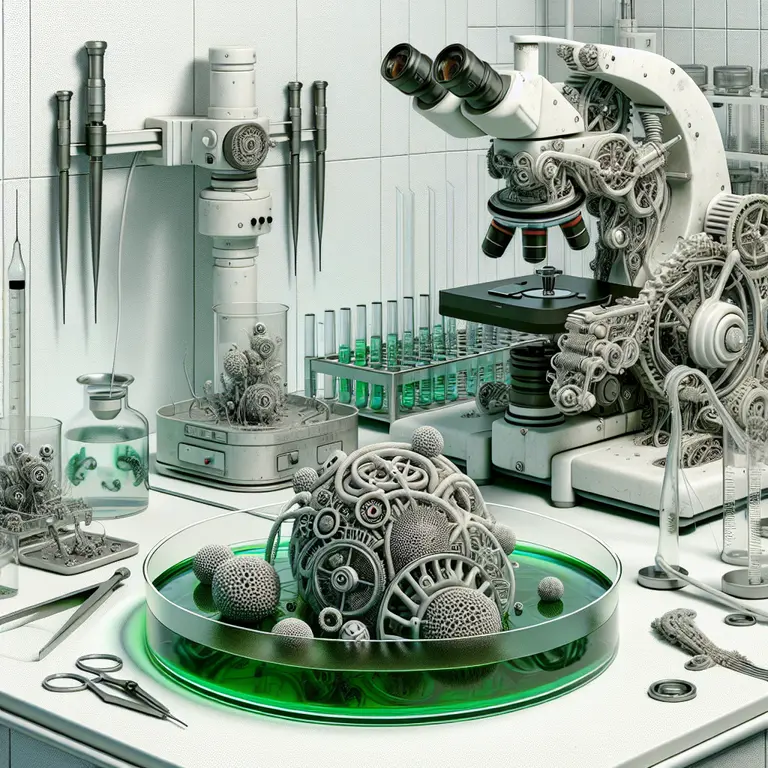
In 2020, a team of researchers at the University of Vermont and Tufts University announced something that defied easy categorization: they had built tiny living machines from the stem cells of African clawed frogs (Xenopus laevis). These constructs, roughly 0.5 to 1 millimeter across, were not robots in any conventional sense. They had no metal, no circuits, no code running on silicon. Yet they moved with purpose, navigated mazes, pushed pellets across surfaces, and in some configurations, self-healed after being cut. The researchers named them xenobots, after the frog species that supplied the raw material.
What made the achievement stranger still was how the xenobots were designed. The team used an evolutionary algorithm running on a supercomputer to simulate thousands of possible body configurations, testing virtual shapes against a target behavior such as locomotion. The algorithm selected the most effective forms through a process modeled on natural selection, except compressed into hours rather than millennia. Researchers then manually assembled real frog cells into those winning configurations using microsurgery tools finer than a human hair.
The announcement landed at an unusual intersection of fields. Biologists, roboticists, ethicists, and philosophers of mind all found something in the xenobot story that concerned or excited them, often simultaneously. The reason was not simply that the technology was novel, but that it resisted the conceptual vocabulary everyone brought to it. Calling xenobots robots implied mechanisms they lacked. Calling them organisms implied an evolutionary history they did not have. They occupied a category that did not previously exist, and that absence of category turned out to be as significant as anything the constructs could physically do.
The Biology Beneath the Machine
Xenobots are built primarily from two cell types: skin cells, which provide structural scaffolding, and cardiac muscle cells, which contract rhythmically and generate movement. No genetic modification is involved. The cells are simply repositioned into novel geometries that they would never occupy inside a living frog. Once assembled, they behave according to their intrinsic biological programming, but that programming produces emergent behaviors that no frog has ever exhibited.
This distinction between genetic identity and functional identity is one of the more philosophically unsettling aspects of xenobot research. Every cell in a xenobot carries the full genome of Xenopus laevis, encoding instructions for building a frog. Yet the construct those cells form has never existed in evolutionary history and shares no behavioral repertoire with its donor species. The cells have not changed. The arrangement has. That arrangement alone is sufficient to produce an entirely new class of behavior, which suggests that the geometry of a body carries information just as surely as the sequence of a genome does.
The xenobots carry their own energy supply in the form of lipid and protein stores inherited from embryonic cells, which gives them a functional lifespan of roughly 7 to 10 days before they break down into harmless organic matter. They require no external power source, produce no persistent waste, and cannot reproduce in their original engineered form. At least, that was the understanding until 2021.
In a follow-up study published in the Proceedings of the National Academy of Sciences, the same research group discovered that xenobots could replicate, but through a mechanism never before observed in any known organism. When placed in a dish containing loose frog stem cells, xenobots gathered those cells into clusters using a behavior the researchers described as Pac-Man-like locomotion. Those clusters then developed into new xenobots capable of repeating the process. This form of kinematic self-replication, in which a body physically assembles copies of itself from surrounding material rather than growing or dividing, had been theorized in the robotics literature but had never been observed in biology. The mathematician John von Neumann had sketched theoretical self-replicating machines in the 1940s, but he imagined them as mechanical constructs. The fact that biology arrived at a version of his concept through nothing more than repositioned frog cells was not something his framework had anticipated.
Implications Beyond the Laboratory
The potential applications proposed by researchers range from the plausible to the speculative, but even the conservative possibilities are striking. Xenobots or their successors could theoretically be designed to navigate the human circulatory system and deliver drugs to specific tissues, to seek out and break down microplastic particles in aquatic environments, or to clear arterial plaque with mechanical precision. Their biodegradability sidesteps one of the persistent problems with synthetic medical devices: the potential to trigger immune responses or require surgical removal.
The microplastic application deserves particular attention, given the scale of the problem it might address. Microplastics have been detected in human blood, lung tissue, and placentas, and conventional filtration technologies struggle at the scales involved. A living construct capable of chemotaxis, meaning movement guided by chemical gradients, could in principle be engineered to seek out specific polymer types in aquatic environments and aggregate them for removal. No such device exists in deployable form today, but the xenobot research program has demonstrated that target-seeking behavior is achievable in cell-based constructs without genetic engineering, thereby reducing one of the major regulatory and biosafety obstacles a project of this kind would otherwise face.
Researchers have also explored whether xenobot-like constructs could serve as models for understanding how cells make collective decisions. When individual cells aggregate into a body, they somehow coordinate behavior without a central nervous system directing traffic. Xenobots offer a simplified, controllable system for probing coordination mechanisms that remain poorly understood even in conventional developmental biology. The biologist Michael Levin, one of the principal researchers behind the xenobot and anthrobot projects, has argued that this collective cellular intelligence represents a layer of biological computation that sits between genetics and cognition, and that understanding it may be as consequential for medicine as the sequencing of the human genome was a generation ago.
The ethical dimensions have attracted serious philosophical attention. Xenobots are not alive in the way a frog is alive, yet they are not inert in the way a machine is inert. They metabolize, respond to their environment, and under certain conditions propagate. Several bioethicists have argued that existing regulatory frameworks for medical devices, genetically modified organisms, and synthetic biology each fail to capture what xenobots actually are, leaving a conceptual and legal gap that may widen as the technology advances. The United States Food and Drug Administration, for instance, regulates devices and biologics through separate pathways that assume a clear distinction between the two categories. Xenobots do not fit cleanly into either pathway, and the absence of a designated regulatory home is not merely an administrative inconvenience. It means that the safety and oversight questions surrounding these constructs remain largely unanswered for now.
The Frontier of Anthrobots
In 2023, researchers at Tufts University and Harvard’s Wyss Institute extended the concept further by creating anthrobots, analogous constructs built not from frog cells but from human lung cells. Anthrobots demonstrated spontaneous self-assembly, forming multicellular structures without the microsurgical assembly process required for xenobots. More unexpectedly, when placed near scratched neurons in a laboratory dish, anthrobots promoted healing in the damaged nerve tissue, a behavior that emerged without deliberate programming.
The spontaneous self-assembly aspect is worth dwelling on. Xenobots required painstaking manual construction by researchers working under microscopes with tools drawn from microsurgery. Anthrobots organized themselves. The cells, given appropriate conditions, produced a functional multicellular structure through processes that the researchers did not fully direct and do not yet fully understand. This suggests that as the field matures, the bottleneck may shift from construction to interpretation, from asking how to build these things to asking why they do what they do once built.
This result has not yet been replicated at a clinical scale, and the mechanisms driving the neural repair effect remain under investigation. But it suggests that living machines built from human cells might interact with human tissue in ways that purely synthetic devices cannot, potentially opening therapeutic avenues that current medicine has no tools to pursue. Spinal cord injuries, neurodegenerative diseases, and stroke damage all involve neural tissue that the adult human body repairs poorly or not at all. If anthrobots or their descendants can stimulate repair in damaged neural environments, the implications for those conditions would be profound, though the distance between a laboratory dish and a functioning clinical therapy remains considerable.
Conclusion
The line between a medical device and a living intervention, already blurred by xenobots, becomes genuinely difficult to locate when the machine is made of you. That difficulty is not a problem to be resolved so much as a signal that the categories themselves need revision. Biology and engineering have historically been treated as separate disciplines, with distinct vocabularies, institutions, and ethical traditions. Xenobots and anthrobots suggest that the boundary between them is more permeable than either field has assumed.
What the research ultimately demonstrates is that life, at the cellular level, contains more latent possibilities than the evolutionary history of any given species has expressed. Frog cells have been frog cells for hundreds of millions of years, shaped by selection pressures that had nothing to do with navigating laboratory mazes or replicating through kinematic assembly. Yet those behaviors were always available in the cellular machinery, waiting for a geometry that would unlock them. The implications of that availability for medicine, environmental technology, and how we understand the nature of living systems are only beginning to come into focus.