
The Incredible Snail That Wears Armor Made of Iron
The scaly-foot snail forges metal armor using deep-sea hydrothermal chemistry
 Watch on YouTube
 Watch on Rumble
Deep in the Indian Ocean, where crushing pressure and scalding hydrothermal vents create an environment more alien than familiar, lives perhaps the most metallically armored creature on Earth—and it’s a snail.
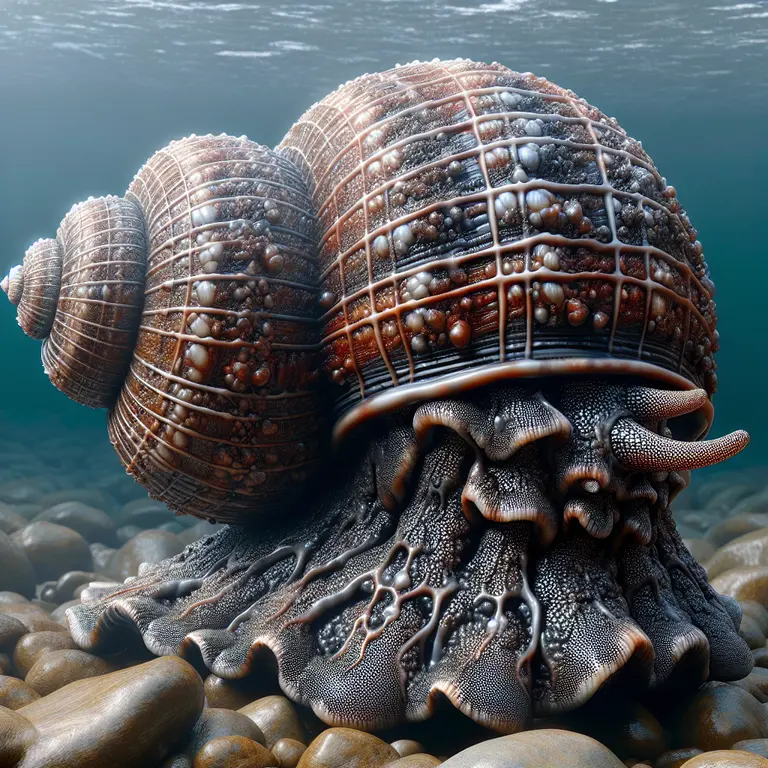
The scaly-foot gastropod (Chrysomallon squamiferum), discovered only in 2001, is the only known animal in the world that incorporates iron into its skeleton. While many animals use calcium or silica to build protective structures, this snail has evolved to harness the iron-rich environment of hydrothermal vents to create actual metal armor. This remarkable adaptation represents one of the most unusual evolutionary developments on our planet, challenging our understanding of biological materials and inspiring new directions in biomimetic engineering.
The Discovery of a Metallic Marvel
The scaly-foot snail was first discovered during a deep-sea expedition to the Kairei hydrothermal field in the Indian Ocean, approximately 2,500 meters below sea level. Japanese researchers aboard the submersible Shinkai 6500 observed these unusual gastropods clustering around black smoker chimneys—towering mineral formations where superheated, mineral-rich water erupts from the ocean floor.
What initially appeared as just another deep-sea mollusk quickly revealed itself to be something extraordinary. The snail’s habitat lies in a narrow band where near-boiling vent water (up to 350°C) meets near-freezing deep-sea water (about 2°C), creating a precarious zone where life can survive despite extreme temperature fluctuations. In this harsh chemical soup rich in toxic metals like copper, zinc, and iron, the scaly-foot snail doesn’t merely survive—it thrives by incorporating these seemingly hostile elements into its biology.
Since its initial discovery, researchers have identified only three known populations of the scaly-foot gastropod, each in separate hydrothermal vent fields in the Indian Ocean. Interestingly, while all three populations display the distinctive scaled foot, only two produce the iron-sulfide plating, suggesting this remarkable trait may be environmentally influenced rather than genetically fixed.
How a Snail Becomes Iron Man
The snail’s foot is covered with scales made of iron sulfide—the same minerals that form the metallic ore pyrite (fool’s gold). This isn’t just iron-enriched tissue; these are genuine metal plates that the snail synthesizes through a complex biomineralization process:
The snail absorbs iron sulfides from the mineral-rich waters around hydrothermal vents. Special cells in its foot process these minerals through a biochemical pathway that remains partially mysterious to scientists. The iron sulfides are layered into a composite material with organic compounds, creating a structure unlike anything else in the animal kingdom. The resulting scales form a three-layered structure with exceptional mechanical properties that engineers struggle to replicate.
This metal shell isn’t just decorative—it’s a sophisticated defense mechanism. The outer iron sulfide layer is brittle but hard, while a middle organic layer absorbs mechanical energy, and an inner calcified layer provides structural support. This multilayer arrangement creates armor that’s remarkably resistant to crushing and predator attacks.
The scales themselves measure just 1-2 millimeters across but contain a microstructure of iron sulfide granules approximately 20-50 nanometers in diameter. This precise arrangement at multiple scales—from nano to micro to macro—is what gives the material its extraordinary properties. When attacked, the outer layer cracks in a controlled manner, dissipating energy while the middle layer prevents catastrophic failure, a phenomenon materials scientists call “graceful failure,” which is highly desirable in protective systems.
The Surprising Cross-Disciplinary Implications
What makes this discovery truly mind-bending extends beyond zoology into materials science and engineering. The snail’s shell structure represents a biological solution to problems that have long challenged human engineers.
Military researchers have studied the scaly-foot snail’s armor to inspire new designs for body armor and vehicle protection. The U.S. Office of Naval Research has funded investigations into how the snail’s three-layered defense system might inform next-generation protective materials that are simultaneously lightweight and impact-resistant. Unlike traditional armor that relies on thickness and weight for protection, the snail’s design achieves remarkable strength through structural arrangement rather than bulk.
In architectural engineering, the layered composite structure offers insights for creating buildings resistant to impacts and pressure. The snail’s ability to distribute force across different material interfaces has implications for earthquake-resistant construction and protective barriers. Some experimental building materials now incorporate layered structures inspired by this biological design.
The field of nanotechnology stands to benefit perhaps most significantly. The snail’s ability to precisely control mineralization at microscopic scales provides a blueprint for synthesizing novel materials under ambient conditions. While human manufacturing typically requires extreme temperatures, pressures, and environmentally problematic chemicals to create high-performance materials, the snail accomplishes similar feats at normal sea pressure and relatively low temperatures through biochemical processes.
Evolutionary Enigmas and Biological Mysteries
The evolutionary pathway that led to iron-plated snails raises fascinating questions about adaptation and convergence. No other mollusks—or any animals—have developed metal armor, suggesting this adaptation arose independently in response to the unique pressures of hydrothermal vent environments.
One leading hypothesis is that the iron sulfide armor evolved primarily as protection against predators such as the Brachyuran crab, which inhabits the same vent systems. However, alternative theories suggest the metal plating may serve additional functions. The iron sulfide could help detoxify the metal-rich environment, provide thermal regulation in the temperature-volatile habitat, or even support symbiotic relationships with the chemosynthetic bacteria that colonize the snail’s scales.
Perhaps most intriguing is the snail’s unusual digestive system. Unlike most gastropods, the scaly-foot snail lacks a digestive tract entirely. Instead, it hosts symbiotic bacteria in an enlarged esophageal gland that convert the chemicals from hydrothermal vents into nutrients—essentially farming its food internally. This radical anatomical adaptation, combined with its metal armor, makes the scaly-foot snail one of the most highly specialized creatures on Earth.
Why These Challenges Our Assumptions
The scaly-foot snail contradicts several common assumptions about biology and evolution. We tend to think of metals as toxic to living organisms, yet this creature has evolved to incorporate iron as a structural material. The conventional wisdom that only humans can create metal structures is demonstrably false. We often assume extreme environments harbor only simple, primitive life forms—yet this snail exhibits one of the most sophisticated material engineering feats in the animal kingdom.
Perhaps most surprisingly, this revolutionary biological innovation wasn’t discovered until the 21st century, reminding us how much remains unknown in Earth’s most extreme environments. The scaly-foot snail stands as a humbling example of how nature’s engineering can still surpass human technology, having evolved solutions to material science problems we’re only beginning to understand.
As climate change and deep-sea mining threaten hydrothermal vent ecosystems, the scaly-foot snail has already been listed as endangered on the IUCN Red List—potentially losing a biological marvel before we’ve fully unraveled its secrets. The iron snail reminds us that sometimes the most extraordinary innovations on our planet remain hidden in its most inaccessible corners, waiting to revolutionize our understanding of what biology can achieve.