
Hummingbirds' Unique Mushroom Scent: A Biochemical Marvel
The unexpected chemical connection between hummingbirds and fungi
 Watch on YouTube
 Watch on Rumble
Why Hummingbirds Smell Like Fresh Mushrooms
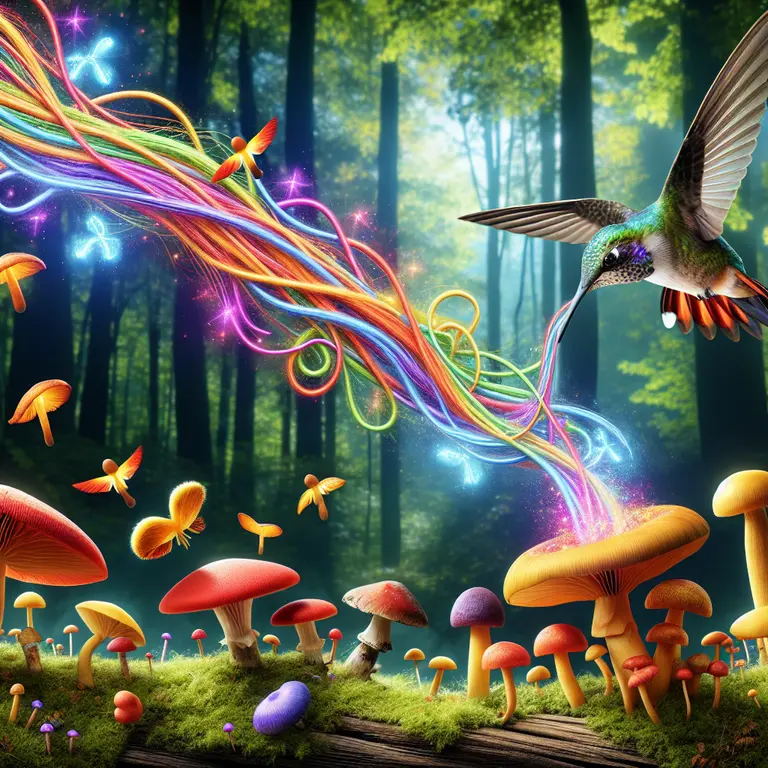
If you’ve ever held a hummingbird—perhaps while helping an injured one or during scientific research—you might have noticed something peculiar: many species emit a distinct mushroom-like aroma. This isn’t your imagination playing tricks. Ruby-throated, Anna’s, and several other hummingbird species actually do smell like fresh mushrooms, a fact that puzzled ornithologists for decades.
The diminutive hummingbird, already remarkable for its iridescent plumage and extraordinary flight capabilities, harbors yet another biological curiosity in its biochemistry. This unexpected olfactory signature represents one of nature’s more unusual cross-kingdom connections, linking the avian and fungal worlds through shared chemistry. The phenomenon reveals how evolution can independently develop similar solutions in vastly different organisms, and how these parallel developments can serve entirely different biological purposes.
The Fungal Connection
In 2009, researchers finally identified the source: hummingbirds produce 1-octen-3-ol, the same volatile compound that gives mushrooms their characteristic earthy scent. This chemical, sometimes called “mushroom alcohol,” is primarily known as a fungal metabolite—not something typically associated with birds.
What makes this truly surprising is that hummingbirds are the only known birds to naturally produce this compound in significant quantities. The scent is particularly strong around their preen glands, which they use to maintain their feathers. When hummingbirds engage in preening behavior, using their bills to distribute oils from these specialized glands across their feathers, they effectively coat themselves in this fungal-mimicking compound.
The discovery came about almost accidentally during a broader study of avian preen gland secretions. Researchers were cataloging the chemical compositions of various bird species’ preening oils when they detected the unusual signature in hummingbird samples. Initial gas chromatography-mass spectrometry analyses were so unexpected that the tests were repeated multiple times to confirm the finding wasn’t contamination or experimental error.
Further investigation revealed that the compound is synthesized directly within the preen gland tissue via a previously unknown biochemical pathway in vertebrates. While fungi produce 1-octen-3-ol by oxidizing linoleic acid, hummingbirds appear to have evolved an entirely different enzymatic pathway to generate the same end product, a remarkable case of convergent biochemical evolution.
Evolutionary Advantage
Why would the world’s smallest birds evolve to smell like fungi? The leading theory involves insect deterrence. 1-octen-3-ol acts as a powerful repellent against certain mites and parasites that typically plague birds. For hummingbirds, whose metabolisms run at extraordinary rates (their hearts can beat over 1,200 times per minute), even minor parasitic infestations could be catastrophically energy-draining.
Interestingly, this mushroom compound serves the opposite function in the fungal world—it actually attracts insects to help spread spores. Evolution has essentially repurposed a fungal attractant into an avian repellent.
The specific parasites affected by this chemical include feather mites and certain avian lice, which can compromise flight efficiency and increase energy expenditure during the hummingbird’s already demanding lifestyle. Laboratory tests have demonstrated that these ectoparasites show significant aversion to surfaces treated with 1-octen-3-ol at concentrations matching those found in hummingbird preen oil.
Additionally, some researchers hypothesize that the compound may play a role in the birds’ remarkable territorial behaviors. Hummingbirds are notoriously aggressive in defending feeding territories, and the distinctive scent might serve as an olfactory marker that helps individuals recognize territorial boundaries. This would complement their already sophisticated visual and auditory territorial signals, adding another sensory dimension to their complex social interactions.
Cross-Disciplinary Implications
This discovery has sparked collaboration between ornithologists and mycologists, two fields that rarely intersect. It’s also influencing biomimetic research in pest control, as scientists explore how this natural chemical might be used in agriculture without synthetic pesticides.
Even more fascinating, entomologists studying mosquito behavior have found that the same compound helps female mosquitoes locate mammals for blood meals—yet somehow doesn’t make hummingbirds more attractive to these insects. This paradox suggests the birds have developed additional chemical defenses that mask or neutralize this potential side effect.
The compound’s dual nature—attractant in one context, repellent in another—has drawn attention from chemical ecologists studying semiochemicals (chemicals that mediate interactions between organisms). The hummingbird’s biochemical innovation demonstrates how the same molecule can transmit entirely different messages depending on its ecological context and the sensory apparatus of the receiver.
Pharmaceutical researchers have also taken an interest in the hummingbird-fungal connection. The antimicrobial properties of 1-octen-3-ol and related compounds are being investigated for potential applications in human medicine, particularly against resistant skin pathogens. The fact that hummingbirds have evolved to produce this compound in a vertebrate system makes it particularly interesting for biomedical applications.
Sensory Ecology and Avian Olfaction
The mushroom-scented hummingbird also challenges long-held assumptions about birds’ sense of smell. Historically, birds were thought to have poor olfactory capabilities compared to those of mammals, but recent research has revealed sophisticated avian olfactory systems and behaviors across many species.
Hummingbirds themselves were once considered almost entirely visual and tactile in their sensory orientation. The discovery that they produce such a distinctive olfactory signature suggests they may be more attuned to chemical cues than previously recognized. Recent behavioral experiments indicate that hummingbirds can distinguish between feeders with different olfactory cues, even when visual cues are identical.
This research area intersects with broader questions about how different sensory modalities—vision, olfaction, audition, and touch—integrate in avian cognition and behavior. The hummingbird’s mushroom scent may represent just one element of a complex multi-sensory communication system that we are only beginning to decode.
Why This Matters
The mushroom-scented hummingbird challenges our assumptions about evolutionary boundaries between kingdoms of life. It reminds us that nature frequently develops similar biochemical solutions across vastly different organisms, and that our sensory experiences of the natural world—even something as simple as what a bird smells like—can reveal unexpected connections across the tree of life.
This phenomenon exemplifies the value of interdisciplinary research in biology. Without collaboration between ornithologists, mycologists, and biochemists, this curious connection might never have been fully understood. It also highlights how much remains unknown about even well-studied animal groups, such as birds, especially their chemical ecology.
For conservation biologists, understanding these specialized biochemical adaptations underscores the importance of preserving not just species but the intricate ecological relationships they maintain. As climate change and habitat loss threaten hummingbird populations worldwide, we risk losing not only these remarkable birds but also the opportunity to fully understand their unique adaptations and what they might teach us about biochemistry, evolution, and ecological interconnectedness.