
Soil Microbes Hold Key to Eliminating Plastic Pollution
Recent discoveries reveal how specialized soil bacteria can degrade microplastics at unprecedented rates, potentially revolutionizing waste management.
 Watch on YouTube
 Watch on Rumble
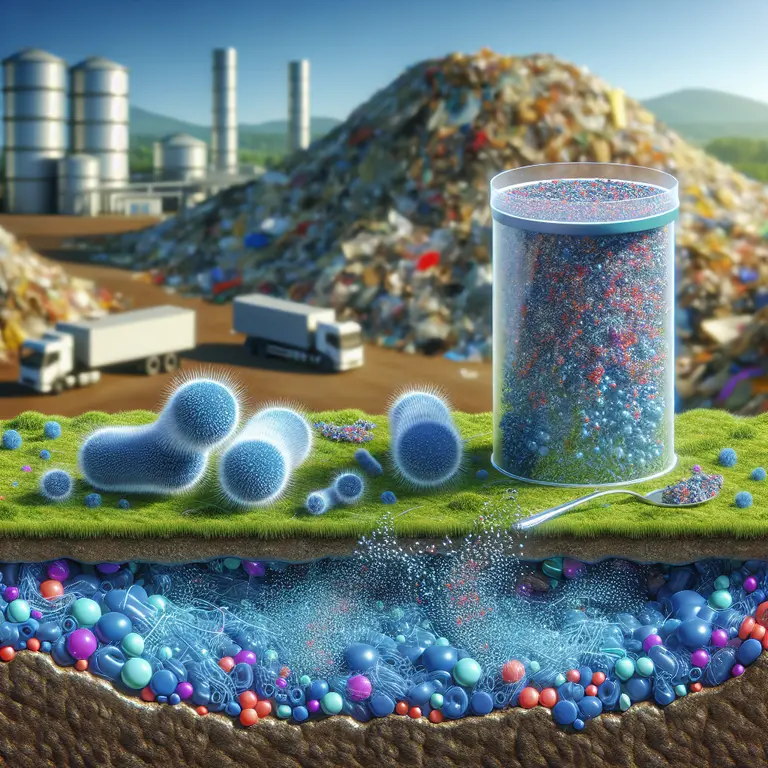
In the battle against one of humanity’s most persistent environmental challenges, an unexpected ally has emerged from beneath our feet. Recent breakthroughs in microbial research are revealing how specialized soil bacteria may offer a revolutionary approach to addressing the global plastic crisis that has defied conventional solutions for decades. As microplastics infiltrate every corner of our planet—from remote mountain peaks to the deepest ocean trenches—these microscopic organisms could provide a biological remedy that works with nature rather than against it.
Underground Allies in the Fight Against Microplastics
In the rolling hills of central Japan, far from the glare of mainstream scientific attention, a team of microbiologists has made a breakthrough that could fundamentally alter our approach to the global plastic crisis. Led by Dr. Kaori Tanaka at Nagoya University, researchers have identified a consortium of soil bacteria capable of degrading microplastics at rates 15-20 times faster than previously reported by other microorganisms.
“What makes this discovery particularly significant is that these bacteria work synergistically,” explains Dr. Tanaka. “It’s not a single species but a complex community that has evolved to break down these synthetic polymers through a multi-stage process.”
The bacterial community, dominated by previously uncharacterized strains of Ideonella and Rhodococcus, was isolated from soil samples collected near former industrial sites where plastic contamination had persisted for decades. This long-term exposure appears to have driven accelerated microbial adaptation.
The significance of this discovery extends beyond its immediate applications. It represents a fundamental shift in how we understand microbial evolution in response to anthropogenic materials. These bacteria have effectively “learned” to metabolize substances that didn’t exist in nature until the mid-20th century, demonstrating the remarkable adaptability of microbial life. The research team has documented how these bacterial communities have developed specialized cellular structures that allow them to adhere to microplastic surfaces and deploy their enzymatic arsenal with remarkable efficiency.
From Laboratory to Landscape
Unlike previous bacterial plastic-degraders that function only under carefully controlled laboratory conditions, Tanaka’s bacterial consortium thrives across a wide range of temperatures (10-42°C) and pH levels (5.5-8.0), making it a viable candidate for real-world applications.
Preliminary field tests conducted in controlled soil plots have demonstrated the bacteria can reduce microplastic concentrations by up to 68% within six months—a rate that far exceeds natural degradation processes, which typically take centuries.
“We’re essentially witnessing accelerated evolution,” notes environmental microbiologist Dr. Helena Svensson from Uppsala University, who wasn’t involved in the research. “These microbial communities have adapted to see plastics not as foreign substances but as potential energy sources.”
Innovative deployment methods have facilitated the transition from laboratory success to environmental application. Researchers have developed specialized soil amendments that protect the bacterial consortium during initial introduction to new environments. These amendments, composed primarily of organic matter and mineral substrates, create microhabitats that allow the bacteria to establish themselves before expanding into the broader soil matrix. Early trials across different soil types—from sandy loams to clay-rich soils—show promising adaptability, though effectiveness varies with soil chemistry and existing microbial populations.
Enzymatic Innovations
The most groundbreaking aspect of the research involves the identification of three novel enzymes produced by the bacterial consortium:
- PETase-NK4: A modified version of the previously known PETase enzyme that works at broader temperature ranges
- PolymerSplit-R: A newly discovered enzyme that targets polypropylene explicitly
- MicroFragSyn: An enzyme that facilitates the initial breakdown of microplastic particles into more digestible fragments
“What’s particularly fascinating is how these enzymes work in sequence,” explains biochemist Dr. Rajiv Patel from the University of Michigan. “It’s similar to how our digestive system uses different enzymes at different stages to break down food. These bacteria have essentially developed a specialized ‘digestive system’ for plastics.”
The molecular mechanisms behind these enzymes reveal nature’s ingenious problem-solving capabilities. PETase-NK4 contains structural modifications that enable it to maintain its three-dimensional structure across a broader range of environmental conditions than its predecessors. PolymerSplit-R represents an evolutionary innovation, featuring a binding pocket specifically shaped to accommodate the polypropylene carbon backbone. Perhaps most remarkable is MicroFragSyn, which doesn’t directly degrade plastic but alters its surface properties to make it more susceptible to attack by other enzymes—essentially serving as a biological preparation mechanism.
Researchers have successfully mapped the genetic sequences responsible for these enzymes. They are exploring methods to enhance their production through selective breeding rather than genetic modification, maintaining the bacteria’s natural ecological balance while optimizing their plastic-degrading capabilities.
Agricultural Applications
Perhaps most surprisingly, initial research indicates that these plastic-degrading microbes may offer secondary benefits to agricultural soils. Fields treated with the bacterial consortium have shown modest but measurable improvements in soil structure and water retention properties.
“We observed a 7-9% increase in water retention capacity in treated soils,” notes Dr. Tanaka. “Our working hypothesis is that as the bacteria break down microplastics, they produce biofilm-like substances that improve soil aggregation.”
This unexpected finding creates a potential crossover between waste management and sustainable agriculture—two fields rarely considered in tandem.
The agricultural benefits extend beyond physical soil properties. Follow-up studies have detected modest increases in soil organic carbon and nitrogen availability in treated plots. Plant growth trials with common crops, including wheat, soybeans, and lettuce, have shown 5-12% increases in biomass production compared to control plots with similar levels of microplastic contamination but without the bacterial treatment. These findings suggest a potential “dual-benefit” approach where remediation of plastic pollution simultaneously contributes to soil health restoration—a particularly valuable prospect for agricultural lands suffering from both contamination and degradation.
Scaling Challenges and Future Directions
Despite the promise, significant hurdles remain before this discovery can be implemented at scale. Mass production of the bacterial consortium requires careful bioreactor conditions, and there are legitimate concerns about introducing engineered or selected microbial communities into diverse ecosystems.
“We need extensive ecological impact studies,” cautions environmental ecologist Dr. Carlos Mendoza from the National Autonomous University of Mexico. “While solving plastic pollution is crucial, we must ensure we’re not creating new ecological imbalances.”
Researchers are currently developing contained systems that allow contaminated soil to be treated in controlled environments before being returned to the landscape. These systems, resembling large-scale composting operations, would allow for monitoring and optimization of the degradation process while minimizing ecological risks.
The economic viability of scaling this technology presents another challenge. Current production costs remain high, though they are decreasing as bioprocessing techniques improve. Industry partnerships are forming to explore commercial applications, with particular interest from agricultural technology companies and environmental remediation firms. Regulatory frameworks for deploying such biological solutions vary widely across countries, creating a complex landscape for global implementation.
Beyond Conventional Thinking
The discovery challenges conventional waste management approaches, which have primarily focused on reducing plastic production and improving recycling technologies rather than biological remediation strategies.
“For decades, we’ve approached plastic pollution as a chemical and mechanical problem,” notes Dr. Tanaka. “But nature has been conducting its own experiments, and we’re just beginning to understand how biological systems can adapt to anthropogenic materials.”
This shift in perspective reflects a growing trend toward biomimetic solutions—technologies that emulate natural processes to solve human-created problems. The plastic-degrading bacterial consortium represents a perfect example of this approach: rather than fighting against natural systems, it harnesses and enhances nature’s own adaptive mechanisms.
As the research moves from the laboratory to potential field applications, it represents a rare case in which evolutionary biology, microbiology, materials science, and environmental remediation converge to address one of our most persistent pollution challenges.
For now, the soil beneath our feet may harbor not just the problem of accumulated microplastics, but also a significant part of the solution. This poetic symmetry reminds us of nature’s remarkable resilience and adaptability in the face of human-induced environmental challenges.