
Bacterial Quorum Sensing: Nature's Social Network Revolution
How bacteria's chemical communication systems are inspiring new approaches to antibiotic resistance and biofilm management
 Watch on YouTube
 Watch on Rumble
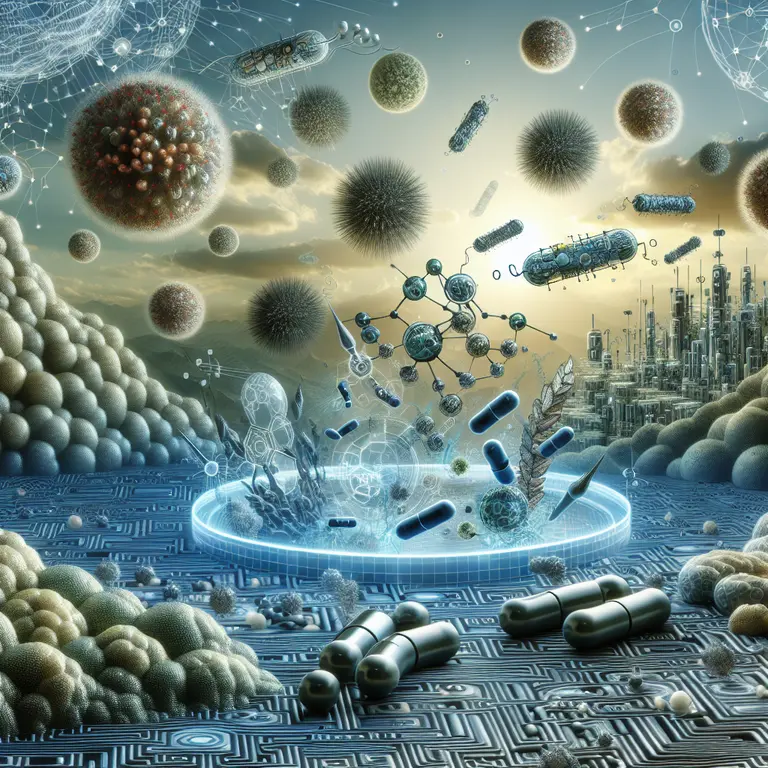
In the microscopic world beneath our feet and on our skin, bacteria are engaged in sophisticated social networking that rivals our digital platforms in complexity. Recent breakthroughs in understanding bacterial “quorum sensing” are revolutionizing approaches to one of medicine’s most pressing challenges: antibiotic resistance. This invisible communication system, operating since the dawn of life itself, represents one of evolution’s most successful innovations—allowing single-celled organisms to function in coordination with multicellular life forms through chemical conversations that science is only beginning to decode.
The Chemical Internet of Bacteria
Unlike humans, who communicate through speech and text, bacteria release and detect chemical signals called autoinducers. When bacterial populations reach critical densities, these molecular messages trigger coordinated group behaviors—from bioluminescence in marine bacteria to virulence in pathogens. This phenomenon, discovered in the 1970s but only recently decoded in detail, represents one of nature’s oldest social networks, operating for billions of years.
“It’s a fundamental misunderstanding to view bacteria as solitary organisms,” explains Dr. Bonnie Bassler of Princeton University, whose pioneering work earned her the 2023 Nobel Prize in Chemistry. “They’re constantly talking to each other, counting themselves, and making group decisions.”
The mechanics of this communication are astonishingly precise. Most bacteria produce species-specific autoinducers that function like private languages, allowing them to determine the concentration of their own kind. Additionally, many species produce and recognize a universal autoinducer called AI-2, which functions as a cross-species lingua franca, enabling bacteria to sense the total microbial population in their environment. This dual communication system allows bacteria to make nuanced decisions about when to compete, cooperate, or conserve resources.
Recent computational models from the University of California, San Diego, have demonstrated that these quorum-sensing networks incorporate sophisticated feedback loops that filter out environmental noise, allowing bacterial communities to make remarkably accurate population assessments even in turbulent environments. This signal processing capability rivals engineered systems, despite operating through relatively simple molecular interactions.
Eavesdropping on Bacterial Conversations
Researchers at the University of Copenhagen published findings last month in Nature Microbiology demonstrating how Pseudomonas aeruginosa—a dangerous pathogen particularly problematic in hospital settings—uses at least three overlapping chemical languages to coordinate the construction of antibiotic-resistant biofilms.
The Danish team’s breakthrough lies in identifying specific molecules that can effectively “jam” this bacterial communication without directly killing the bacteria. This approach, called quorum quenching, represents a radical departure from traditional antibiotics.
“Traditional antibiotics create evolutionary pressure for resistance,” notes lead researcher Dr. Tim Tolker-Nielsen. “By merely disrupting communication rather than killing bacteria, we potentially create interventions that bacteria cannot easily evolve resistance against.”
The complexity of these communication systems continues to surprise researchers. The Copenhagen team discovered that P. aeruginosa doesn’t simply count its own numbers—it actively monitors the efficiency of its communication system. When the bacterium detects that its signals aren’t being received correctly, it switches to alternative communication channels or increases signal production, demonstrating an adaptive intelligence previously unrecognized in prokaryotic organisms.
Similar communication systems have been identified in numerous pathogens, including Staphylococcus aureus, Escherichia coli, and Vibrio cholerae, suggesting that quorum-sensing inhibition could provide a broad-spectrum approach to combating bacterial infections without the evolutionary pressure that drives resistance to conventional antibiotics.
From Ocean Depths to Medical Applications
In a fascinating cross-disciplinary connection, marine ecologists studying coral reef ecosystems have identified over 20 natural quorum-sensing inhibitors produced by seaweeds and corals to prevent bacterial colonization. These compounds are now being synthesized and tested against human pathogens.
The Australian Institute of Marine Science has partnered with pharmaceutical researchers to develop coral-derived compounds into potential treatments for chronic wound infections, where bacterial biofilms pose a significant challenge to healing.
The marine environment, with its ancient evolutionary arms race between bacteria and sessile organisms, such as corals, has proven to be a rich source of quorum-inhibiting compounds. The red alga Delisea pulchra produces halogenated furanones that specifically disrupt bacterial communication systems without toxic effects on eukaryotic cells. These compounds have shown promise in preventing biofilm formation in laboratory settings, potentially offering solutions for medical device coatings that resist bacterial colonization.
Clinical trials at Massachusetts General Hospital are currently evaluating a synthetic derivative of these marine compounds for treating diabetic foot ulcers, which are chronic wounds particularly susceptible to biofilm-forming bacteria. Preliminary results suggest that these quorum-quenching treatments, when combined with conventional wound care, significantly accelerate healing rates compared to standard therapies alone.
Engineering Applications Beyond Medicine
The implications extend far beyond healthcare. Engineers at MIT have developed “bacterial circuit boards”—genetically modified bacteria with customized quorum-sensing systems that can detect environmental toxins at concentrations far below what mechanical sensors can identify.
In Sweden, a startup called BioCircuit Technologies has developed self-healing concrete that contains engineered bacteria, which remain dormant until structural cracks appear. When damage occurs, bacteria detect the change in their environment, activate through quorum sensing, and produce limestone to repair the cracks—potentially revolutionizing infrastructure maintenance.
Environmental remediation represents another promising application. Researchers at the Chinese Academy of Sciences have engineered bacterial consortia with synthetic quorum-sensing circuits that coordinate the degradation of persistent organic pollutants. These bacterial communities can effectively “divide labor” through quorum-mediated gene expression, with different subpopulations expressing complementary enzymes necessary to break down complex contaminants, such as polychlorinated biphenyls (PCBs).
Agricultural scientists are exploring quorum-sensing inhibitors as alternatives to traditional pesticides. Many plant pathogens rely on quorum sensing to coordinate virulence, and disrupting these communication systems could provide targeted crop protection without the ecological impacts associated with broad-spectrum antimicrobials.
The Philosophical Dimension
This research challenges fundamental assumptions about individuality and the nature of communication. Bacteria, once considered the epitome of simple life, demonstrate remarkably sophisticated social behaviors that blur the line between individual and collective.
“When we observe quorum sensing, we’re witnessing a kind of distributed intelligence,” suggests Dr. Pamela Lyon, a philosopher of science at Flinders University. “It raises profound questions about what constitutes an individual organism versus a collective entity.”
As we grapple with our own digital social networks and their impacts on human behavior, bacterial communication systems—operating successfully for billions of years—may offer unexpected insights into sustainable communication models.
The emergent properties of bacterial communities challenge reductionist approaches to biology that focus exclusively on genes and individual cells. These microbial networks demonstrate how simple chemical signals, when integrated across populations, can generate complex adaptive behaviors without centralized control—a principle with potential implications for understanding other complex systems from neural networks to human societies.
Future Directions
Researchers are now investigating whether similar chemical communication systems exist between bacteria and human cells, potentially explaining certain aspects of our microbiome’s influence on health. Preliminary evidence suggests that certain gut bacteria can detect and respond to human stress hormones, producing compounds that influence our nervous system.
As antibiotic resistance continues to threaten global health, these microscopic social networks may hold the key to a new generation of medicines that work with nature’s communication systems rather than against them—turning bacterial sociability into a medical advantage.
The emerging field of microbiome engineering aims to leverage our understanding of bacterial communication to design beneficial microbial communities with enhanced stability and functionality. By incorporating synthetic quorum-sensing circuits into probiotic bacteria, researchers aim to develop therapeutic microbes that can detect specific disease conditions and respond with targeted interventions, thereby creating living diagnostics and drug delivery systems within the human body.
As our understanding of bacterial communication continues to evolve, we may find that these ancient social networks hold solutions to some of our most pressing challenges, from antibiotic resistance to environmental remediation. The bacteria beneath our feet have been perfecting their communication systems for billions of years—and we’re only beginning to learn their languages.