
Revolutionary Quantum Imaging in Medicine and Beyond
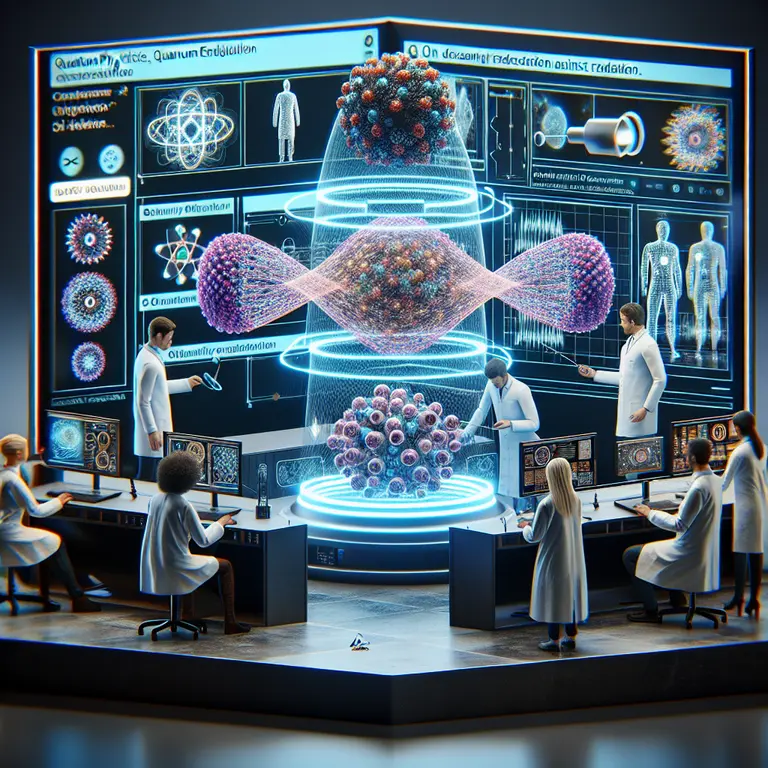
Scientists have developed a revolutionary imaging technique using quantum entanglement to detect cellular abnormalities without radiation exposure.
 Watch on YouTube
 Watch on Rumble
Quantum Entanglement Enables New Medical Imaging Breakthrough
In a groundbreaking development at the intersection of quantum physics and medical diagnostics, researchers at the University of Science and Technology of China (USTC) have successfully demonstrated a novel imaging technique that harnesses quantum entanglement to detect cellular abnormalities with unprecedented precision—all without exposing patients to harmful radiation. This innovation represents a paradigm shift in medical imaging, potentially revolutionizing how diseases are detected and diagnosed at their earliest stages, while simultaneously opening unexpected applications across multiple scientific disciplines.
The Quantum Advantage in Medicine
The technique, termed Quantum Biological Imaging (QBI), represents the first practical medical application of quantum entanglement—a phenomenon Albert Einstein famously described as “spooky action at a distance.” While quantum entanglement has been extensively explored in computing and cryptography, its application in medical imaging has mainly remained theoretical until now.
“What makes this approach revolutionary is that we’re not sending any probing particles through the tissue at all,” explains Dr. Mei Zhang, lead physicist on the project. “Instead, we’re using entangled photon pairs where only one photon interacts with the tissue while its entangled partner is measured, revealing information about cellular structures at the quantum level.”
The fundamental advantage of QBI over conventional imaging methods lies in its non-invasive nature. Traditional medical imaging techniques like X-rays, CT scans, and even MRIs involve directing energy through body tissues, which can cause cellular damage at high doses or with repeated exposure. QBI circumvents this limitation entirely by leveraging quantum mechanical properties to gather information without direct tissue interaction.
Furthermore, the quantum approach provides sensitivity to biochemical properties that conventional imaging cannot detect. The entangled photons can reveal subtle changes in molecular structures and electromagnetic properties of cells that precede visible anatomical changes. This quantum-level sensitivity enables the detection of disease biomarkers that would remain invisible to traditional imaging technologies, potentially shifting the entire paradigm of disease detection from anatomical to molecular identification.
How It Works: Ghost Imaging with a Quantum Twist
The technique builds on quantum ghost imaging, in which pairs of entangled photons are split: one photon (the “signal” photon) is directed toward the object being imaged, while a camera detects the other (the “idler” photon). Counterintuitively, the idler photon—which never interacts with the object—contains information about the object when measured in correlation with the signal photon.
The USTC team enhanced this approach by developing specialized quantum sensors that can detect subtle changes in the quantum state of photons after their entangled partners interact with biological tissue. These quantum correlations reveal information about cellular structures at resolutions approaching 10 nanometers—far beyond the resolution of conventional imaging technologies.
The technical implementation involves a sophisticated apparatus utilizing spontaneous parametric down-conversion (SPDC) to generate entangled photon pairs. A nonlinear crystal splits a single high-energy photon into two lower-energy entangled photons. The system then directs one photon toward the biological sample while the other travels to a specialized quantum detector array. Advanced quantum tomography algorithms analyze the correlations between measurements of both photons, reconstructing detailed information about the sample’s quantum properties.
What distinguishes QBI from earlier quantum imaging experiments is the novel quantum sensor design, which can detect not only the presence and position of photons but also subtle phase changes and quantum coherence properties that correspond to specific molecular interactions. These quantum signatures provide a new dimension of contrast in biological imaging that was previously inaccessible.
Clinical Implications: Beyond Radiation-Free Imaging
Dr. Sophia Nakamura, a medical oncologist not involved in the research, notes that the implications extend far beyond simply eliminating radiation exposure.
“What’s truly exciting is the potential to detect abnormalities at the molecular level before they form visible tumors,” Nakamura explains. “Early tests suggest QBI can identify specific quantum signatures of precancerous cells months or potentially years before conventional imaging would detect anything unusual.”
In preliminary trials with breast tissue samples, the quantum imaging technique identified abnormal cellular patterns with 97% accuracy compared to traditional biopsy results. More remarkably, in 23% of samples previously classified as usual by conventional methods, QBI detected subtle quantum signatures that later developed into malignancies within an 18-month follow-up period.
The clinical significance extends beyond cancer detection. Researchers have identified distinct quantum signatures associated with neurodegenerative conditions like Alzheimer’s disease, where protein misfolding creates unique quantum fingerprints detectable months before clinical symptoms appear. Similarly, early experiments suggest QBI can differentiate between bacterial and viral infections based on their distinct quantum interactions, potentially reducing unnecessary antibiotic prescriptions.
Another promising application involves monitoring treatment response at the cellular level. Current methods often require weeks or months to determine if cancer therapies are effective. QBI can detect quantum-level changes in tumor cells within days of treatment initiation, enabling rapid therapeutic adjustments and personalized medicine.
Unexpected Archaeological Applications
In a surprising cross-disciplinary development, archaeologists have already begun adapting the technology to examine ancient organic materials without damaging fragile artifacts. A team at the University of Copenhagen successfully used a modified version of the quantum imaging system to examine the contents of a sealed 2,300-year-old Egyptian papyrus scroll without unrolling it.
“We could clearly distinguish ink patterns from the papyrus material based on their quantum signatures,” says archaeologist Dr. Henrik Svensson. “This technology might revolutionize how we study ancient texts and artifacts that are too fragile to handle physically.”
The archaeological applications have expanded to include the analysis of ancient biological materials, in which QBI has revealed previously undetectable organic compounds in fossilized specimens. In one remarkable case, researchers identified preserved protein structures in a 75-million-year-old dinosaur fossil, providing new insights into prehistoric biochemistry and evolution. The non-destructive nature of quantum imaging preserves these irreplaceable specimens while enabling previously inaccessible data extraction.
Challenges and Future Directions
Despite its promise, QBI faces significant hurdles before clinical adoption. The current system requires cryogenic cooling and complex quantum-state preparation, limiting its use to specialized research facilities.
However, Dr. Zhang remains optimistic: “We’re already working on room-temperature quantum sensors based on nitrogen-vacancy centers in diamond that could make this technology portable within five years. The intersection of quantum physics and medicine is just beginning to be explored.”
Additional challenges include standardizing quantum measurement protocols across different biological tissues and developing comprehensive databases of quantum signatures associated with specific pathologies. The computational requirements for processing quantum-correlation data remain substantial, though advances in quantum computing may eventually address this limitation.
The research team has published their findings in the journal Nature Quantum Information. It has begun collaborations with medical centers in Singapore, Germany, and Canada to develop clinical prototypes for specific diagnostic applications.
As this technology develops, it represents a powerful example of how the most abstract realms of theoretical physics can yield practical benefits in seemingly unrelated fields—potentially transforming our approach to disease detection and treatment in the coming decade. The convergence of quantum physics and medicine illustrates how cross-disciplinary research continues to unlock unexpected innovations that challenge our understanding of what’s possible in modern science.