
Decoding Alzheimer’s: The Gut Microbiome-Brain Connection
How gut microbiome research is revolutionizing our understanding of neurodegenerative diseases and opening unexpected treatment pathways.
 Watch on YouTube
 Watch on Rumble
In the shadowy world between neuroscience and microbiology, researchers have uncovered an unexpected alliance that may reshape our understanding of Alzheimer’s disease. Recent findings suggest that the trillions of microorganisms inhabiting our digestive systems—collectively known as the gut microbiome—may hold crucial keys to both the progression and potential treatment of neurodegenerative conditions. This emerging field represents one of the most promising frontiers in Alzheimer’s research, challenging traditional brain-centered approaches and opening new therapeutic possibilities that few scientists could have anticipated even a decade ago.
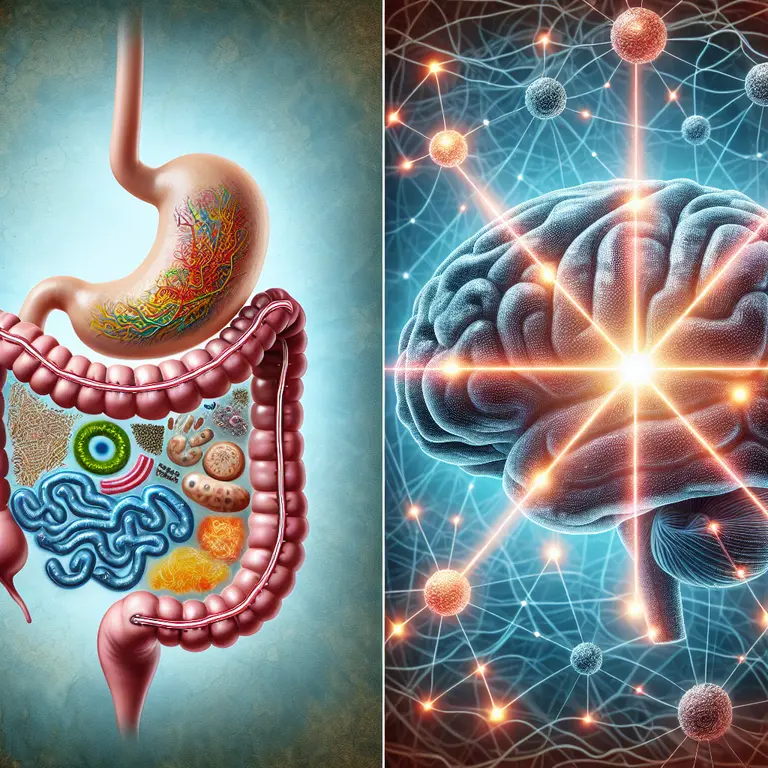
The Gut-Brain Highway
While the connection between gut health and mental well-being has gained widespread attention, the specific mechanisms linking intestinal bacteria to brain pathology remain largely unknown to the public. A groundbreaking study published in the Journal of Neuroscience Research last month identified several bacterial species whose presence—or absence—correlates strongly with amyloid plaque formation, the hallmark of Alzheimer’s disease.
“We’ve identified specific strains of Bacteroides fragilis that appear to modulate neuroinflammation through the vagus nerve,” explains Dr. Elena Verbitsky, lead researcher at the Institute for Microbial Neuroscience. “These bacteria produce metabolites that can cross the blood-brain barrier and influence microglial cell function.”
Microglial cells, the brain’s immune defenders, typically clear harmful proteins. When compromised, they fail to remove the toxic beta-amyloid proteins that accumulate in Alzheimer’s patients.
The vagus nerve, often called the “wandering nerve,” serves as a direct communication channel between the gut and brain. Recent research has demonstrated that bacterial signals can travel this neural highway, triggering cascades of inflammatory responses in the central nervous system. What makes this pathway particularly significant is its bidirectionality—brain states can influence gut function, and gut conditions can, in turn, alter brain activity.
Animal studies have shown that severing the vagus nerve prevents specific gut-derived inflammatory signals from reaching the brain, protecting against neuroinflammation in mouse models of Alzheimer’s disease. This finding suggests that bacterial signals don’t rely solely on bloodborne metabolites but can transmit information directly through neural pathways.
The Surprising Metabolite Connection
Perhaps most surprising is the discovery of propionic acid—a short-chain fatty acid produced by certain gut bacteria—which appears to regulate the expression of genes involved in amyloid processing. Patients with Alzheimer’s typically show dramatically reduced levels of this compound.
“What makes this finding particularly compelling is that propionic acid levels can be influenced through dietary intervention,” notes nutritional neurologist Dr. Marcus Hwang, who wasn’t involved in the research. “This opens a potential avenue for prevention that doesn’t rely on pharmaceutical approaches.”
The metabolite story extends beyond propionic acid. Researchers have identified over thirty bacterial metabolites that demonstrate neuroprotective properties. Among these, butyrate has emerged as particularly significant. This short-chain fatty acid serves as an energy source for colon cells. Additionally, it functions as a histone deacetylase inhibitor, which means it can influence the expression of specific genes in brain cells.
Studies from the University of Wisconsin have demonstrated that butyrate-producing bacteria are significantly depleted in Alzheimer’s patients compared to age-matched controls. When these bacteria were restored in mouse models, researchers observed reduced amyloid plaque formation and improved cognitive performance in maze tests, suggesting that bacterial metabolites may directly influence the disease’s progression.
Archaeological Evidence Adds Historical Dimension
In a fascinating cross-disciplinary connection, archaeologists analyzing preserved human remains from medieval European monasteries have found significant differences in gut microbiome composition between populations with varying rates of dementia-like symptoms, as documented in medical texts from the period.
“The monastic communities that consumed fermented foods daily showed markedly different bacterial signatures in their preserved intestinal remains,” explains bioarchaeologist Dr. Sophia Lindstrom. “Their medical records also indicate lower rates of memory-related ailments in old age.”
This archaeological evidence provides a unique temporal perspective on the gut-brain relationship. The Benedictine monasteries of 12th-century Germany, famous for their meticulous medical documentation, recorded significantly fewer cases of “memory sickness” among elderly monks compared to the general population. Modern analysis of preserved intestinal contents from monastery burial sites reveals abundant Lactobacillus and Bifidobacterium species—bacteria now known for their anti-inflammatory properties.
The medieval monastic diet, rich in fermented vegetables, cheeses, and beverages such as kombucha (then known as “tea fungus”), appears to have unintentionally cultivated a neuroprotective gut ecosystem. This historical evidence suggests that the gut-brain connection has likely been influencing human cognitive health for centuries, if not millennia, long before science could identify the mechanisms involved.
From Lab to Plate: The Emerging Field of Psychobiotics
This research has accelerated development in the nascent field of psychobiotics—the study of how microorganisms might be harnessed to influence mental health. Several clinical trials are now testing whether specific bacterial formulations can slow cognitive decline in early-stage Alzheimer’s patients.
The most promising approach combines targeted probiotic supplementation with prebiotics—special dietary fibers that nourish beneficial bacteria. Early results suggest this combination may reduce neuroinflammation markers by up to 32% in some patients.
The term “psychobiotics” was coined only in 2013, yet the field has expanded exponentially. Current clinical trials are investigating formulations containing specific strains of Lactobacillus plantarum, Bifidobacterium longum, and Faecalibacterium prausnitzii—all of which have been identified as potentially neuroprotective. These bacteria appear to influence neurotransmitter production, reduce systemic inflammation, and enhance the integrity of the intestinal barrier, preventing inflammatory molecules from entering circulation.
One particularly innovative approach involves “bacterial transplantation”—the transfer of gut bacteria from young, healthy donors to elderly patients exhibiting early cognitive decline. A pilot study at the University of California found that such transplants improved cognitive test scores by an average of 15% over a six-month period. However, researchers caution that larger studies are needed to confirm these preliminary findings.
Challenges and Controversies
Despite these promising developments, the field faces significant challenges. The gut microbiome varies significantly between individuals and populations, making it challenging to develop standardized treatments. Additionally, some researchers question whether microbiome changes cause neurodegeneration or merely result from it.
“We need longitudinal studies that track microbiome composition decades before symptoms appear,” argues neurologist Dr. James Chen. “Only then can we establish causality with confidence.”
The technical challenges are equally daunting. Maintaining viable colonies of beneficial bacteria in the competitive human gut ecosystem requires sophisticated delivery systems. Many promising bacterial strains prove difficult to cultivate in laboratory conditions, which limits their commercial development. Furthermore, regulatory frameworks for microbial therapeutics remain underdeveloped, creating uncertainty for pharmaceutical companies considering investment in this novel approach.
Perhaps most concerning is the rise of unregulated “brain health” probiotics marketed directly to consumers without sufficient evidence of efficacy. These products often lack standardization and quality control, which can potentially undermine legitimate research in the field.
The Broader Implications
Beyond Alzheimer’s, this research has implications for other neurological conditions. Preliminary evidence suggests similar gut-brain connections in Parkinson’s disease, multiple sclerosis, and even certain forms of depression.
The findings also challenge conventional medical specialization. “We can no longer treat the brain in isolation from the gut, or vice versa,” says Dr. Verbitsky. “The future of neurodegenerative treatment may lie in gastroenterology as much as neurology.”
This paradigm shift extends to medical education, where some progressive institutions have begun integrating microbiome science across traditionally separate disciplines. The University of California, San Diego, has recently established the first Center for Microbiome Innovation, focusing explicitly on neurological applications, by bringing together experts from neurology, microbiology, nutrition, and computational biology.
As this research progresses, it offers hope that addressing Alzheimer’s disease might eventually begin not with brain scans, but with something as seemingly distant as a stool sample—a humbling reminder of how interconnected our bodily systems truly are, and how solutions to our most vexing medical mysteries might come from the most unexpected places.