
The Forgotten Pollinators: How Beetles Shape Our World
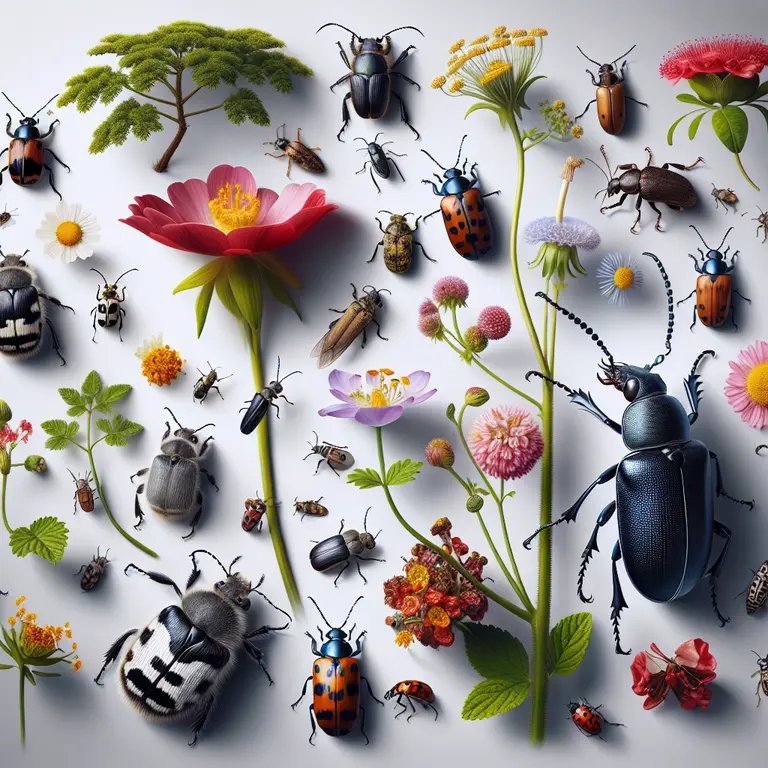
While bees get all the press, beetles have been pollinating plants for over 200 million years, playing a crucial but overlooked role in global ecosystems.
 Watch on YouTube
 Watch on Rumble
The Silent Majority in Pollination
When most people think of pollinators, honeybees immediately come to mind—followed perhaps by butterflies or hummingbirds. Yet in the grand theater of plant reproduction, beetles represent the unsung heroes: the oldest, most numerous, and in many ecosystems, the most important pollinators on Earth.
Recent research from the University of California’s Entomology Department has revealed that beetles are responsible for pollinating nearly 90% of the world’s ancient flowering plant species. Unlike the precision pollination of bees, beetles employ what ecologists call “mess and soil pollination”—a primitive but remarkably effective approach that predates bees by over 150 million years.
“Beetles were pollinating plants when dinosaurs roamed the Earth, and they’re still at it today,” explains Dr. Elaine Fong, lead researcher on the study. “Their ecological importance has been dramatically underestimated.”
With over 400,000 described species, Coleoptera (the beetle order) represents nearly 40% of all known insect species and about 25% of all known animal life forms on the planet. Their sheer diversity and abundance make them ecological powerhouses; yet, their pollination services remain largely unrecognized in both the scientific literature and public consciousness. While bees have evolved specialized structures, such as pollen baskets, to transport pollen efficiently, beetles rely on their entire bodies, which are often covered with tiny hairs that inadvertently collect and transfer pollen as they feed and move between flowers.
The Scent of Evolution
Perhaps most fascinating is the co-evolutionary relationship between beetles and their host plants. Unlike bee-pollinated flowers that often display bright colors, beetle-pollinated plants frequently emit strong, fermented fragrances that humans typically find unpleasant. The corpse flower (Amorphophallus titanum), for instance, produces a scent reminiscent of rotting flesh specifically to attract carrion beetles.
This olfactory communication represents one of the earliest forms of plant-insect signaling, with molecular evidence suggesting these scent compounds have remained remarkably consistent for over 100 million years—a testament to evolutionary success.
The morphological adaptations of beetle-pollinated flowers are equally revealing. These plants typically exhibit robust structures capable of withstanding the less-than-gentle feeding behaviors of beetles, which often chew on petals and other floral tissues while consuming pollen. Many such flowers feature bowl or dish-shaped structures that serve as landing platforms, with reproductive organs positioned to maximize contact during the beetles’ movements. The magnolia family (Magnoliaceae), among the earliest flowering plants to evolve, exemplifies these adaptations perfectly with their sturdy, primitive blossoms designed to accommodate beetle visitors.
Temperature regulation represents another fascinating adaptation in this ancient partnership. Several beetle-pollinated plants, including particular philodendron species, can generate heat through metabolic processes—a phenomenon known as thermogenesis. This heating serves multiple functions: volatilizing scent compounds to attract beetles from greater distances, providing a warm microclimate for beetle mating, and rewarding pollinators with thermal energy during cool nights. Some plants can maintain internal temperatures up to 15°C above ambient conditions, creating tropical microclimates that beetles find irresistible.
Global Food Security Implications
The implications extend far beyond ecological curiosity. A recent economic analysis from the International Agronomic Institute estimates that beetle pollination directly contributes to approximately 12% of global food production—valued at roughly $34 billion annually—yet receives less than 0.5% of conservation funding directed toward pollinators.
Cacao, the source of chocolate, depends primarily on tiny midges and beetles for pollination. Similarly, many tropical fruits rely heavily on beetle pollination, creating an unexpected link between entomology and global food markets.
In Southeast Asian durian orchards, large dynastid beetles play a crucial role as pollinators for this economically significant crop. The durian fruit, with its notorious odor and spiky exterior, commands premium prices in international markets and constitutes a multi-billion-dollar industry. Recent declines in beetle populations in Malaysia and Indonesia have prompted some farmers to resort to costly hand-pollination techniques, underscoring the economic vulnerability created by our dependence on these often-overlooked pollinators.
Similarly, palm oil production—a controversial yet economically vital industry across tropical regions—relies heavily on weevils (a type of beetle) for pollination. The oil palm weevil Elaeidobius kamerunicus was deliberately introduced to Malaysia from West Africa in the 1980s, resulting in yield increases of 20-30% virtually overnight. This single beetle species effectively underwrites a significant portion of the global palm oil market, valued at approximately $60 billion annually.
Climate Change and Beetle Behavior
Climate tracking data from the Southern Hemisphere has revealed concerning shifts in beetle pollination patterns. As temperatures rise, the synchronization between beetle life cycles and flowering periods has begun to decouple in several key agricultural regions.
“We’re seeing temporal mismatches of up to three weeks in some Australian ecosystems,” notes climate biologist Dr. Marcus Chen. “When beetles emerge before or after their host plants flower, both species suffer.”
This phenological disruption poses particular challenges for specialist beetle pollinators with narrow host ranges. Unlike generalist pollinators that can switch between plant species, many beetles have evolved alongside specific plant partners over millions of years, developing precise physiological and behavioral adaptations that enable them to interact effectively with their chosen partners. The jewel beetle Julodimorpha bakewelli, for instance, pollinates specific Australian orchids through a remarkable mimicry system—the flowers produce compounds chemically identical to the beetle’s female sex pheromones. When climate change disrupts the timing of these intricate relationships, the consequences ripple throughout entire ecosystems.
Compounding these challenges, rising temperatures directly affect beetle metabolism and development rates. Laboratory studies demonstrate that even slight temperature increases can significantly alter the life cycles of beetles, potentially creating cascading effects through plant-pollinator networks. Some beetle species show promising adaptive capacity, while others appear more vulnerable to thermal stress—creating winners and losers in the climate lottery.
Archaeological Connections
Intriguingly, archaeologists have recently discovered evidence that ancient Egyptian agricultural practices may have intentionally managed beetle populations. Hieroglyphic records from the Middle Kingdom period (approximately 2000 BCE) appear to describe specialized farming techniques that encouraged the cultivation of sacred scarab beetles, suggesting an early understanding of their agricultural importance.
This finding challenges the conventional narrative that pollinator management began with beekeeping, potentially pushing back human manipulation of pollination systems by nearly a millennium.
Excavations at Neolithic sites in the Fertile Crescent have yielded further evidence of early human awareness of beetle pollination. Pollen analysis from storage vessels at Tell Brak in northern Mesopotamia (circa 3500 BCE) shows disproportionate quantities of beetle-pollinated plant species, suggesting deliberate selection and cultivation. These discoveries hint at a sophisticated ecological understanding among early agricultural societies that has been largely overlooked in archaeological narratives focused on cereal cultivation.
Conservation Challenges
Despite their importance, beetle pollinators face multiple threats. Habitat fragmentation, pesticide use, and introduced pathogens affect beetles just as they do bees, but with far less public awareness or conservation effort.
“The public responds to fuzzy bees with big eyes,” explains conservation psychologist Dr. Sarah Williams. “Beetles don’t trigger the same protective instinct, which creates a blind spot in conservation funding and policy.”
As climate change accelerates and habitat loss continues, researchers argue that a more holistic approach to pollinator conservation—one that includes the full diversity of pollination systems—is urgently needed.
For now, these ancient pollinators continue their work largely unnoticed, maintaining ecological systems that long predate human agriculture and will likely continue long after our current agricultural practices have been forgotten.
In the words of renowned entomologist E.O. Wilson: “If all mankind were to disappear, the world would regenerate back to the rich state of equilibrium that existed ten thousand years ago. If insects were to vanish, the environment would collapse into chaos.”
Perhaps no insect group exemplifies this truth more than the humble beetle—the forgotten pollinator that helped shape our world.