Discovering the Unique Beauty of the Antarctic Snow Cherry
A type of cherry named 'Antarctic Snow' that only blooms in winter with freezing temperatures.

Discover strange, surprising, and little-known facts from science, history, nature, and beyond.

Deer antlers are the fastest-growing tissue in the mammalian kingdom and the only known case of complete organ regeneration in adult mammals — a biological anomaly now driving serious cancer and regenerative medicine research.
Read Article → Nature
A type of cherry named 'Antarctic Snow' that only blooms in winter with freezing temperatures.
 History
Even though Philo Farnsworth is credited with inventing the first fully functional all-electronic image pickup device, the image dissector, it was Vladimir Zworykin who is often referred to as the 'father of television.
 Food
FoodStingless bees, native to Central and South America, produce honey that the ancient Mayas called 'food of the gods.' Distinguished by its superior medicinal properties compared to regular honey, it is lesser-known due to its rarity and production challenges.
 Engineering
A house that produces as much or more energy than it consumes, virtually reducing the energy bill to zero.
 Science
In 1851, Jean Bernard Leon Foucault, a French physicist, experimentally demonstrated the rotation of the Earth through his pendulum, which became known as Foucault’s pendulum.
 Animals
Quite oddly, wombats, found in Australia, excrete cubical feces instead of the typical round or oval-shaped feces we associate with most animals.
 History
In 1912, Harry Brearley of the UK discovered a way to make stainless steel, but his discovery was overlooked and forgotten.
 Science
Vantablack is the darkest material on earth, absorbing 99.995% of light.
 Animals
Contrary to popular belief, not all spiders survive solely on insects. Some species have a surprisingly varied diet that includes plants, nectar and even fish.
 Space
SpaceCosmic rays, high-energy protons and atomic nuclei which move through space at nearly the speed of light originate from outside our Solar System, yet the origins of these particles are a mystery not well known to many.
 Animals
Snakes possess an extraordinary ability to detect forthcoming earthquakes up to five days in advance.
 Nature
The naturally occurring glass fields in the Libyan desert, Libya.
 Science
Your household smoke detector is slightly radioactive.
 Arts
ArtsThe premiere of Igor Stravinsky's ballet 'The Rite of Spring' in 1913 reportedly caused a riot.
 Science
Sir Charles Vernon Boys, a British physicist, accidentally invented invisible glass while trying to create ultra-thin fibers known as 'spun quartz.'
 Food
FoodPopsicles, a favorite summer treat for many, were accidentally invented by an 11-year-old boy named Frank Epperson in 1905.
 Health
Lachanophobia is an incredibly rare and lesser-known specific phobia that involves a dread or fear of vegetables.
 Nature
Certain sand dunes around the world are known to emit a musical hum, a phenomenon referred to as 'singing sand'.
 Animals
The Etruscan shrew (Suncus etruscus), also known as the Etruscan pygmy shrew or the white-toothed pygmy shrew, is the smallest known mammal by mass.
 Health
Burning sage, a traditional practice known as 'smudging', has been found to cleanse specific types of bacteria in the air.
 Nature
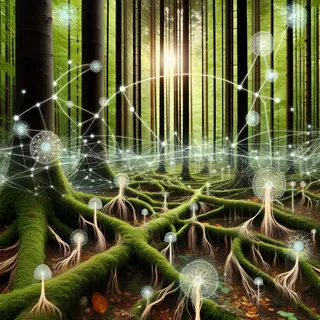
Scientific studies have found that trees in a forest can 'talk' to each other through a network of latticed fungi buried in the soil. This process is known as 'Wood Wide Web'.
 Mysteries
Sea water is generally perceived as being blue, but did you know that in some parts of the world the sea appears to be purple? This is particularly notable in the oceans surrounding Antarctica.
 Society
A tribe in North Sentinel Island, which belongs to the Andaman Islands of India, has remained isolated from the rest of the world for thousands of years. They are among the last tribes to resist contact with the outside world.
 Science
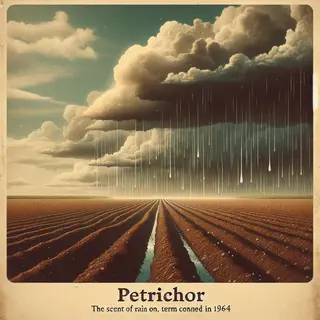
The scent produced when rain falls on dry soil is known as Petrichor. This term was coined in the year 1964.
Many of our articles come with a video companion. Sit back and explore.



No spam. Just strange, useful, and fascinating knowledge.
We only use your email for site updates.