
Kabootar-Khanas: The Ingenious Pigeon Towers of Iran
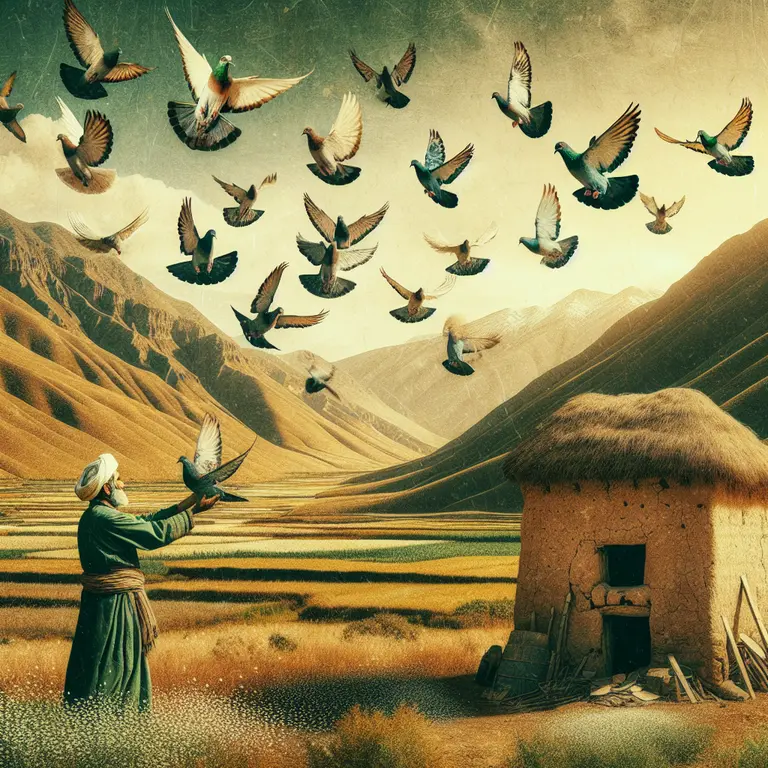
In the Iranian Plateau, there exists an ancient tradition of using pigeons to produce fertilizer.
 Watch on YouTube
 Watch on Rumble
Iran’s Forgotten Pigeon Towers: Architecture, Agriculture, and a Vanishing Legacy
For centuries, the landscape of Iran’s central plateau was punctuated by tall, cylindrical towers rising from the flat earth like sentinels of a forgotten world. These were not watchtowers or minarets, but homes for tens of thousands of pigeons, built with deliberate precision and maintained with careful attention. Known as Kabootar-Khanas, meaning “pigeon houses” in Persian, these structures represent one of the most inventive and underappreciated intersections of architecture and agriculture in human history. Their story spans medieval ingenuity, ecological awareness, and the slow erosion of traditional knowledge under the weight of industrial modernity. Understanding them fully requires looking not just at the towers themselves, but at the civilization that built them and the agricultural logic that made them indispensable.
Historical Significance: A Legacy Rooted in Agriculture
The use of Kabootar-Khanas in Iran dates back to the medieval period, with many historians tracing their widespread construction to somewhere between the tenth and sixteenth centuries. These towers were primarily concentrated on the central plateau, particularly around the city of Isfahan, which served as a major agricultural hub and, at various points, the imperial capital of Persia. In a region where the soil was fertile enough to support intensive farming yet natural sources of enrichment were often scarce, farmers needed reliable, renewable ways to maintain their land's productivity across generations.
The guano produced by the pigeons housed in the Kabootar-Khanas was essential for maintaining soil fertility and boosting crop yields, particularly when chemical fertilizers were entirely unknown, and organic alternatives were limited. Manure from cattle and sheep was available but insufficient for the scale of farming practiced around major population centers. Pigeon guano, by contrast, was extraordinarily concentrated in nutrients and could be harvested in large quantities from a single tower without requiring the land or feed resources that livestock demanded.
These towers were not just practical structures; they symbolized the deep connection between farming communities and sustainable agricultural practices. The reliance on pigeon guano highlights the innovative ways in which ancient Iranian farmers adapted to their environment, ensuring the productivity of their lands and the survival of their communities across centuries of variable climate and political upheaval. The towers were often constructed and maintained by landowners as investments in long-term agricultural output, and their presence near a field was considered a reliable indicator of prosperous, well-managed farming.
Architectural Marvel: Design and Functionality in Harmony
Kabootar-Khanas are architectural marvels, typically constructed from mud brick and designed with the simultaneous needs of thousands of birds and the aesthetic sensibilities of Persian craftsmen in mind. These towers often stood between fifteen and twenty meters tall and could have a base diameter of up to twelve meters, making them among the most substantial vernacular structures in the region. Some estimates suggest that a single large tower could house anywhere from two thousand to ten thousand pigeons at a time, which gives a sense of the scale of planning and construction involved.
The towers featured small, round holes near the tops that allowed pigeons to enter and exit freely, while perforated walls and carefully designed ventilation channels kept the interiors cool and prevented the buildup of ammonia from accumulated guano. Predator deterrence was built directly into the architecture, with smooth exterior surfaces and strategically placed barriers that prevented snakes and rodents from climbing inside. The interior was lined with hundreds, if not thousands, of recessed niches arranged in concentric rings from floor to ceiling, creating individual compartments where pigeons could nest, roost, and breed under conditions that maximized their comfort and reproductive productivity.
The exterior of Kabootar-Khanas often displayed elaborate brickwork patterns, geometric arrangements that served both a structural and decorative purpose. These designs were not purely ornamental additions applied after the fact but were integrated into the construction itself, reflecting the broader Persian architectural tradition in which functionality and artistic expression were understood as complementary rather than competing values. The same sensibility that produced the intricate tilework of Isfahan’s great mosques was applied, at a different scale and with different materials, to the humble pigeon tower standing in a field outside the city.
Agricultural Aid: The Importance of Pigeon Guano
The primary purpose of the Kabootar-Khana was the production of pigeon guano, and the agricultural chemistry behind this purpose is worth examining in some detail. Pigeon guano is exceptionally rich in nitrogen, phosphorus, and potassium, the three macronutrients that modern synthetic fertilizers are engineered to deliver. In fact, pigeon guano contains these nutrients in concentrations significantly higher than those found in the manure of most other domesticated animals, making it one of the most potent organic fertilizers available to pre-industrial farmers anywhere in the world.
A well-maintained pigeon tower could produce approximately one ton of guano annually, and this material was carefully collected, dried, and applied to surrounding fields at intervals that allowed the soil to absorb its benefits without becoming chemically overwhelmed. The guano collected from Kabootar-Khanas was particularly beneficial for crops like melons, cucumbers, and other warm-season vegetables commonly grown in the fields surrounding Isfahan. Historical accounts suggest that the melons of the Isfahan region were renowned across the Islamic world for their sweetness and size, a reputation almost certainly linked to the quality of the fertilizer applied to the soil in which they grew.
The economic logic of the Kabootar-Khana was also remarkably efficient by the standards of any era. The pigeons required no special feed, foraging instead across the surrounding countryside and returning to the tower to roost. The farmer or landowner who maintained the tower essentially received a continuous supply of high-quality fertilizer at very little ongoing cost, in exchange for the initial construction investment and periodic maintenance. This made the towers not just agricultural tools but capital assets, and they were sometimes treated as such in legal documents and inheritance records from the period.
Cultural Importance: A Symbol of Sustainable Agriculture
Kabootar-Khanas are more than architectural curiosities; they are symbols of Iran’s long-standing engagement with what we would now call sustainable agriculture. These towers played a vital role in ensuring food security for rural populations long before the advent of modern fertilizers, and they did so without depleting the soil, polluting waterways, or requiring the importation of external resources. In this sense, they represent a model of agricultural self-sufficiency that has become increasingly relevant in contemporary discussions about ecological farming and food system resilience.
The importance of Kabootar-Khanas extends well beyond their agricultural function. They represent a form of cultural heritage that is distinct from the grand monuments and religious sites that typically attract international attention. While they may not be as widely recognized as Iran’s great mosques or ancient palaces, Kabootar-Khanas arguably had a more direct and sustained impact on the daily lives of the people who depended on them. They were embedded in the rhythms of rural life in a way that few other structures were, connected to the planting seasons, the harvest cycles, and the economic fortunes of farming families across multiple generations.
Decline and Preservation: Efforts to Safeguard a Vanishing Heritage
With the proliferation of modern chemical fertilizers in the twentieth century, the use of Kabootar-Khanas gradually diminished to the point of near extinction. As industrial agriculture took hold across Iran, these traditional structures were increasingly abandoned, falling into disrepair as farmers turned to synthetic alternatives that were cheaper, faster-acting, and easier to apply at scale. The shift toward industrialized farming, while dramatically boosting yields in the short term, came at the expense of traditional practices that had maintained soil health and ecological balance over centuries.
The abandonment of Kabootar-Khanas reflects a broader and deeply troubling trend of marginalizing traditional agricultural knowledge in favor of modern technologies whose long-term consequences were not fully understood at the time of their adoption. The environmental costs of chemical fertilizer dependency, including soil degradation, water contamination, and the collapse of beneficial insect populations, have since become well documented, lending a certain retrospective irony to the disappearance of systems like the Kabootar-Khana that produced comparable results without any of those side effects.
In recent years, there has been a growing recognition within Iran of the need to preserve and restore these structures as valuable cultural heritage sites. Ongoing conservation projects, supported by both governmental bodies and independent cultural organizations, aim to stabilize surviving towers and document their construction techniques before that knowledge is lost entirely. These efforts seek not only to preserve physical structures but to provide educational opportunities and inspire future generations to appreciate the sustainable practices of their ancestors.
Conclusion
Kabootar-Khanas, Iran’s traditional pigeon towers, stand as remarkable evidence of what human ingenuity can achieve when it works in concert with natural systems rather than against them. These structures, once essential to the fertility of the land and the prosperity of the farming communities that surrounded them, now stand as symbols of a mode of living that the modern world has largely set aside. Their elegance lies not only in their architecture but in the completeness of the system they represent, one in which birds, soil, crops, and human communities existed in a relationship of genuine mutual benefit.
By safeguarding the legacy of Kabootar-Khanas, we preserve more than old buildings. We maintain access to a body of practical knowledge about sustainable land management that took centuries to develop, and that remains genuinely instructive today. As the agricultural world grapples with the consequences of chemical dependency and the urgent need for more ecologically sound farming systems, the quiet wisdom encoded in these towers deserves more than historical appreciation. It deserves serious attention.