Patagonian Mara: The Rodent That Resembles Many Animals
The Patagonian Mara is a unique rodent with kangaroo-like legs, deer-like heads, and rabbit-like ears, thriving in Argentina's grasslands and known for monogamous pairs.

Discover strange, surprising, and little-known facts from science, history, nature, and beyond.

How a century-old industrial incendiary reaction is now being repurposed to date ancient iron artifacts and rewrite the timeline of early metallurgy.
Read Article →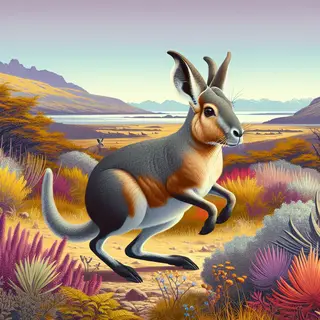 Animals
The Patagonian Mara is a unique rodent with kangaroo-like legs, deer-like heads, and rabbit-like ears, thriving in Argentina's grasslands and known for monogamous pairs.
 Mysteries
Ball lightning is a rare and mysterious weather phenomenon that appears as luminous, spherical objects which vary from pea-sized to several meters in diameter. This phenomena is vastly unexplained by science.
 Animals
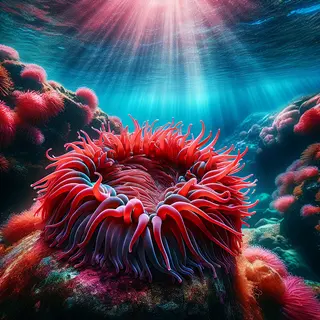
The Actinia equina, more commonly referred to as the 'sea tomato', is an intriguing marine creature with around 192 tentacles!
 Nature
The iconic Tunnel Tree, over 1,000 years old, known for its vehicle-sized tunnel, toppled in a January 2017 storm. Carved in the 1880s, it symbolizes nature's resilience.
 Science
Jack Horner's 'Chickenosaurus' aims to revive dinosaur traits in birds by manipulating chicken genes, highlighting birds' evolutionary link to theropod dinosaurs.
 Space
SpaceTitan, Saturn's largest moon, has a thick atmosphere and methane rain. Its Earth-like geology and potential for life intrigue scientists.
 Oddities
In August 2009, Falkirk, Scotland, experienced a bizarre rainfall of blue jelly-like blobs, baffling locals and scientists, and sparking various inconclusive theories.
 Animals
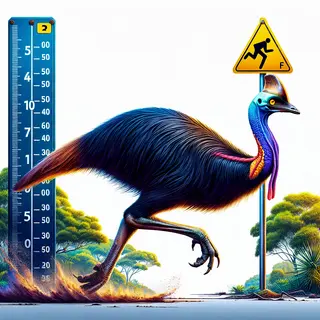
The Cassowary, a type of flightless bird native to Australia, can run up to 31 miles per hour and jump nearly 5 feet straight up into the air. They are also one of the world's most dangerous birds.
 Engineering
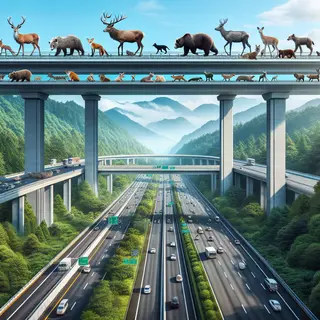
Architectures built to safeguard wildlife from traffic are in practice across the world. These bridges are designed so that animals can cross highways without risking their lives.
 Geography
Antarctica, the world's largest desert, is an icy wasteland with minimal precipitation, extreme cold, and sparse life, home to penguins, mites, and research stations.
 Nature
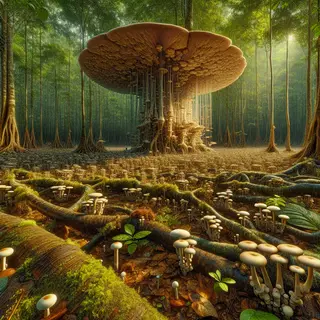
The largest living organism on Earth is a honey fungus (Armillaria ostoyae) in Oregon, spanning 2.4 miles and aged between 1,900 and 8,650 years.
 Travel
In the early 20th century, residents of Fort Bragg, CA, used their coast as a dump. Over time, nature transformed the waste into Glass Beach, covered in smooth, colorful glass pebbles.
 Mysteries
In 1997, an ultra-low frequency and extremely powerful underwater sound known as 'The Bloop' was detected by the National Oceanic and Atmospheric Administration (NOAA).
 Mysteries
The Black Night Satellite is an alleged object orbiting Earth's polar orbit that conspiracy theorists believe has been transmitting signals for over 13,000 years.
 Health
Viagra, the world-renowned medication for erectile dysfunction, was accidentally discovered while researching treatment for angina and high blood pressure.
 Science
Water's boiling point varies with atmospheric pressure, lowering at higher altitudes. On Mount Everest, it boils at 68°C due to reduced pressure.
 Food
FoodHoney's eternal shelf life is due to its low moisture and acidic pH, with ancient pots over 3,000 years old still edible when properly stored.
 Animals
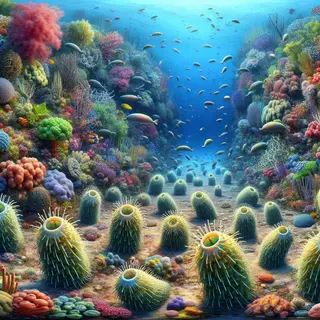
Sea Cucumbers, a type of echinoderm, are essential contributors to the marine ecosystem. They are known as 'biological vacuum cleaners' or 'gardens of the sea'.
 Animals
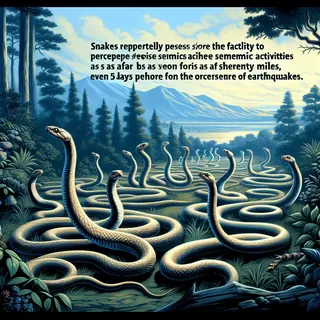
Snakes are believed to be able to sense earthquakes from seventy-five miles away, up to five days before it happens.
 History
Safety glass, used widely in various applications today, including car windshields and bulletproof screens, was invented accidentally by French chemist Edouard Benedictus.
 Nature
Chorioactis geaster, or Devil's Cigar, is a rare fungus found in Texas and Japan. It hisses when releasing spores and changes from a cigar shape to a star.
 Science
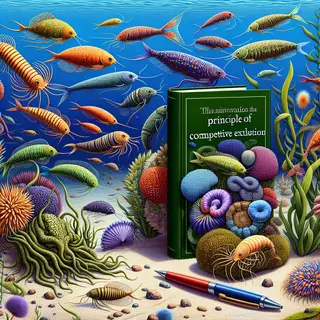
"The Paradox of the Plankton" explores how diverse plankton species coexist in the same environment despite competing for identical resources, challenging traditional ecological theories.
 History
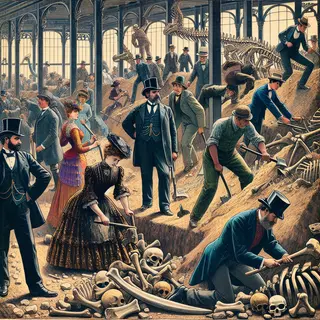
The Bone Wars, also known as the Great Dinosaur Rush, was a period of intense and ruthlessly competitive fossil hunting and discovery during the Gilded Age of American history.
 Engineering
The Swiss Federal Railways commissioned a completely automated railway system, named Autobotoff which ensures that all trains stop at exactly the same spot at each station.
Many of our articles come with a video companion. Sit back and explore.



No spam. Just strange, useful, and fascinating knowledge.
We only use your email for site updates.
 Rumble