Discover Ancient Egyptian Prosthetics from 3,000 Years Ago
Ancient Egyptians crafted prosthetics over 3,000 years ago.

Discover strange, surprising, and little-known facts from science, history, nature, and beyond.

How a century-old industrial incendiary reaction is now being repurposed to date ancient iron artifacts and rewrite the timeline of early metallurgy.
Read Article → History
Ancient Egyptians crafted prosthetics over 3,000 years ago.
 Animals
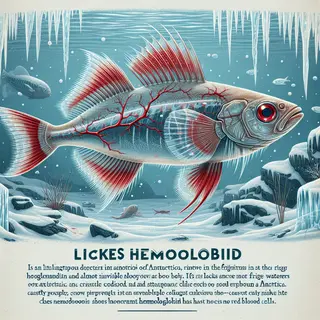
The icefish, native to the cold waters of Antarctica, lacks hemoglobin and lives without red blood cells.
 Geography
Ilha da Queimada Grande, also known as Snake Island, is a Brazilian island so dangerous that public visits are strictly forbidden.
 Nature
Mount Erebus, located in Antarctica, is home to one of the world's few persistent lava lakes.
 History
Ancient civilizations used urine in textile dyeing for its ammonia content, which acted as a mordant, fixing vibrant colors onto fabrics, showcasing early ingenuity and resourcefulness.
 Nature
A beach in Mozambique exhibits a unique phenomenon where the sand glows under specific conditions, mimicking flames.
 Science
Discover Babbitt's Phenomenon, a little-known effect where painted walls appear to change colors under different lighting conditions.
 Oddities
Bubble wrap was initially created as textured wallpaper but failed to sell.
 History
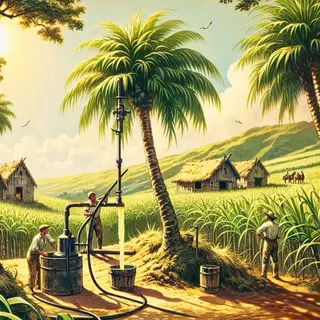
In the early 20th century, a remarkable experiment took place on a Hawaiian sugar cane plantation: tapping trees for petrol.
 Engineering
The Glow-In-The-Dark Highway in the Netherlands uses photoluminescent paint to enhance road safety by making highways visible at night, reducing energy needs.
 Science
Teflon's non-stick property is the result of a fascinating molecular oddity that's not widely known.
 Science
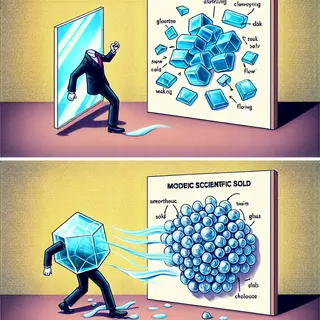
Contrary to the popular belief that glass is a liquid that flows very slowly over time, modern science explains that it behaves as an amorphous solid, challenging misconceptions about its properties.
 Culture
Discover how a simple typo birthed one of superheroes' most famous weaknesses.
 History
Spider silk has been used in ancient and medieval medicine for wound healing and other treatments.
 Food
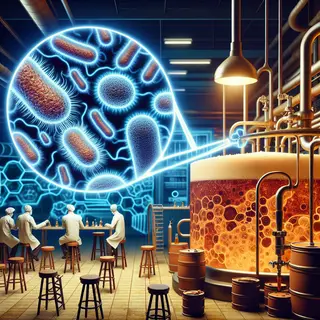
FoodDiscover the lesser-known symbiotic relationship between certain bacterial strains and chocolate beer production.
 Food
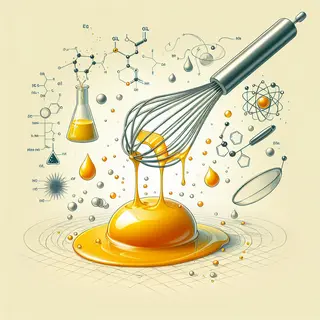
FoodMayonnaise emulsification reveals intriguing thermodynamic principles surprisingly complex for a common condiment.
 Science
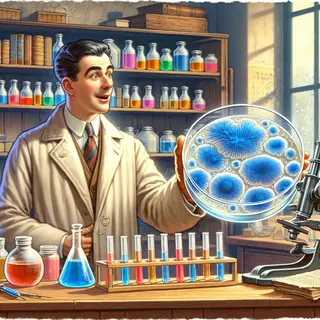
Penicillin, one of the most significant medical discoveries, was accidentally found by Alexander Fleming due to mold contamination.
 Mysteries
Starlite is an extraordinary material invented by an amateur, Maurice Ward, in the 1970s that could endure extreme temperatures.
 History
Bletchley Park, during WWII, was crucial in cryptography and modern computing, with pioneers like Turing and Flowers developing groundbreaking technologies like Colossus.
 History
The 1906 San Francisco Earthquake unexpectedly led to advancements in agricultural practices, including the development of drip irrigation systems, revolutionizing crop cultivation.
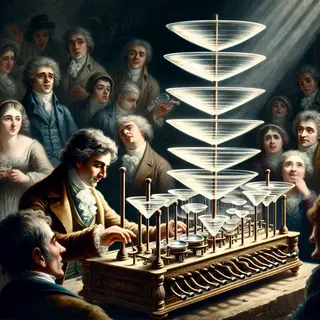 Arts
ArtsThe glass armonica, an instrument invented by Benjamin Franklin, produces ethereal sounds and once caused hysteria.
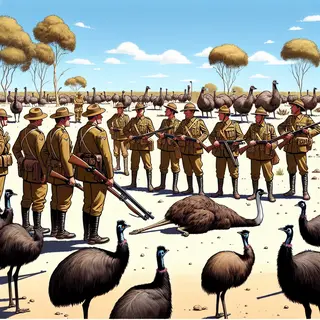 History
In 1932, Australia waged the "Great Emu War" against emus damaging crops, a bizarre and unsuccessful military campaign highlighting post-WWI agricultural struggles.
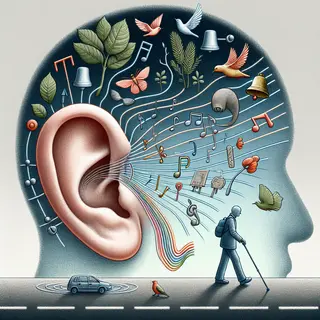 Science
Human echolocation enables visually impaired people to navigate by emitting sounds and interpreting echoes, creating a mental map of their surroundings for enhanced mobility.
 Nature
The symbiotic relationship between sycamore fig trees and fig wasps is an astonishing, yet little-known aspect of natural ecology.
Many of our articles come with a video companion. Sit back and explore.

No spam. Just strange, useful, and fascinating knowledge.
We only use your email for site updates.