Serendipitous Creation: The Birth of the Color Mauve
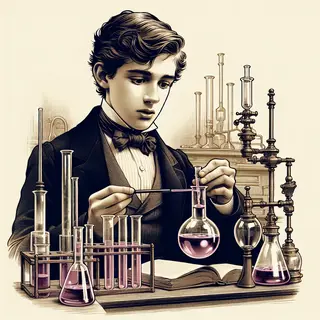
The color mauve was accidentally discovered by an 18-year-old chemist named Sir William Henry Perkin while attempting to create a synthetic quinine, a treatment for malaria.

Discover strange, surprising, and little-known facts from science, history, nature, and beyond.
 History
The color mauve was accidentally discovered by an 18-year-old chemist named Sir William Henry Perkin while attempting to create a synthetic quinine, a treatment for malaria.
 History
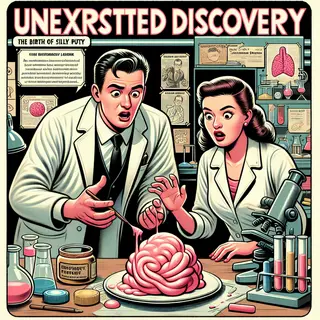
The popular toy known as 'Silly Putty' was invented accidentally during World War II while attempting to create a synthetic alternative for rubber.
 History
In 132 AD, Chinese inventor, Zhang Heng, invented the world's first seismoscope to detect earthquakes.
 History
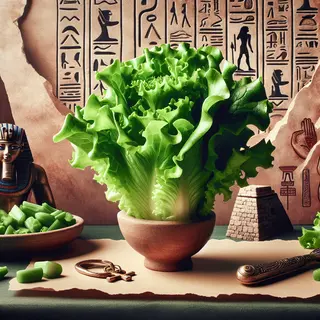
In ancient Egypt, lettuce was not primarily eaten as a food but was instead regarded as an aphrodisiac and symbol of male fertility.
 History
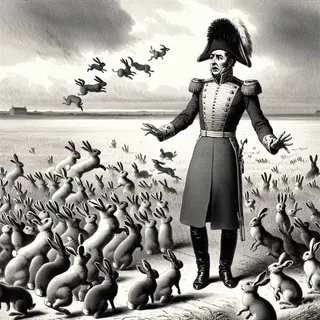
In 1807, Napoleon Bonaparte was attacked by a horde of bunnies.
 History
Despite common beliefs, the discovery of Penicillin by Alexander Fleming in 1928 was quite unsystematic and majorly a product of unanticipated circumstances.
 History
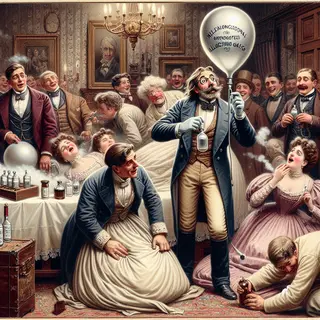
A medical doctor in the 19th century discovered the anesthetic properties of nitrous oxide, quite accidentally during a party.
 History
16th-century astronomer Tycho Brahe wore a prosthetic silver nose after losing part of his real one in a duel.
 History
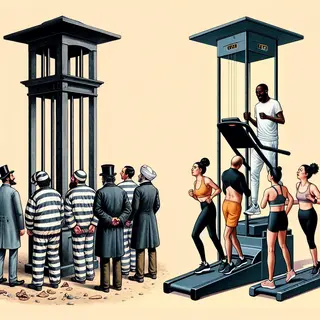
Far from its present use for fitness, treadmills were initially used as punishment in prisons during the 19th century.
 History
Gustave Eiffel had a private apartment on the top of the famous tower he engineered and built in Paris.
 History
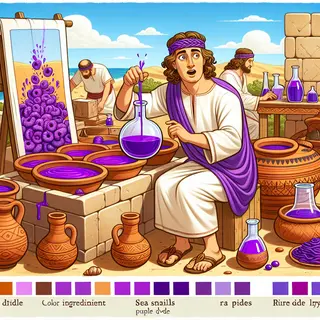
Purple dye was accidentally discovered by ancient Phoenicians.
 History
During the Cold War, the United States secretly built and operated a city underneath Greenland's ice cap to house nuclear missiles. The plan was known as 'Project Iceworm'.
 History
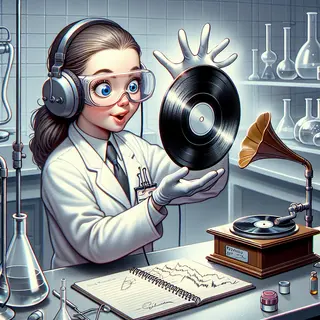
Vinyl, the much-loved material used in records for music, was originally discovered by accident.
 History
Albert Hofmann, a Swiss chemist, unintentionally discovered the psychedelic effects of LSD (Lysergic Acid Diethylamide) in 1943.
 History
Construction of the Hoover Dam made use of huge amounts of 'builders tea' to reduce heat stress among workers.
 History
Despite being called 'pencil lead', the thin graphite rod at the heart of your average pencil has nothing to do with lead, and its origin is more complex than one might expect.
 History
The color mauve was accidentally discovered in 1856 by a British chemist named William Perkin who was trying to synthesize quinine for the treatment of malaria.
 History
Contrary to popular belief, The first known use of an emoji-like form wasn't on the smartphones but was used in 1881 by a satirical magazine named Puck Magazine.
 History
During WWII, the U.S. army deployed a deceptive unit known as the Ghost Army which used inflatable tanks and sound effects to fool enemies.
 History
During the early 20th century, uranium was added to certain types of glassware for color effects. This resulted in radioactive glass that glows under UV light.
 History
A Seiko pocket watch survived the atomic bombings in Hiroshima, and it is still functional.
 History
In the verdant beauty of the Epping Forest in London, there are hidden World War II bomb pits which were dug as part of Britain's air defense strategy during the war.
 History
In the early 20th century, so-called 'Radium Girls' contracted radiation poisoning from painting watch dials with self-luminous paint, resulting in significant implications for worker's rights.
 History
The swim fins we know and love utilized in water sports and deep sea diving, were actually first invented by Benjamin Franklin when he was just 11 years old.
No spam. Just strange, useful, and fascinating knowledge.
We only use your email for site updates.