
The Medieval Cure That Actually Worked by Accident
A 1,000-year-old Anglo-Saxon eye remedy, dismissed for centuries as superstition, turned out to be a clinically effective antibiotic treatment — and nobody can fully explain why it works.
 Watch on YouTube
 Watch on Rumble
The Potion That Embarrassed Modern Medicine
In 2015, a team of microbiologists at the University of Nottingham did something most of their colleagues considered a waste of lab time: they brewed a 1,000-year-old eye remedy from a manuscript called Bald’s Leechbook, one of the oldest surviving medical texts in English, dating to roughly the 9th century AD. The decision to take this recipe seriously at all required a kind of intellectual humility that does not come naturally to modern science, a field built on the premise that knowledge advances in only one direction. What the researchers found when they finally tested their ancient brew forced a quiet but significant reckoning with that assumption.
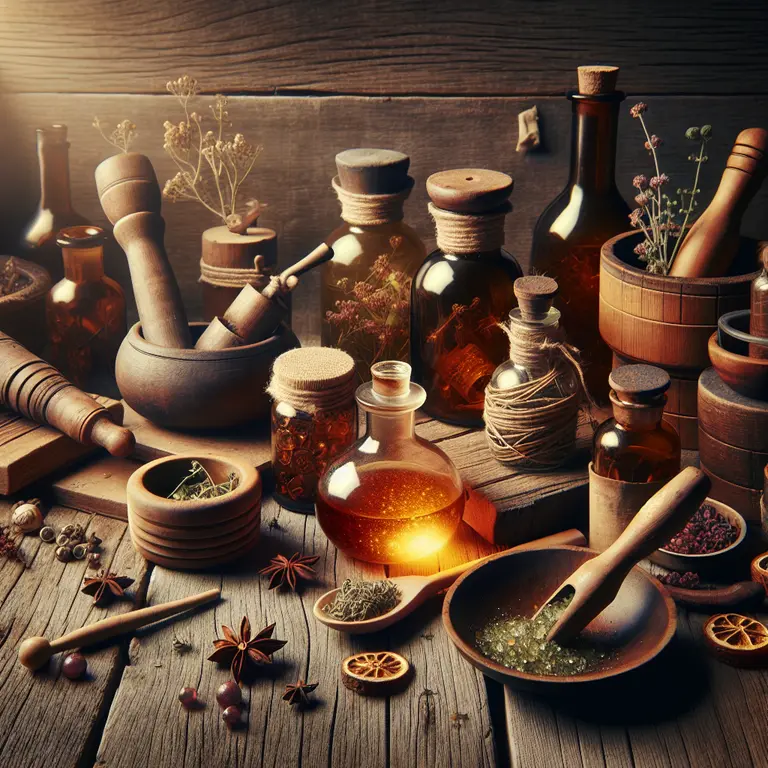
The recipe called for equal parts garlic and onion or leek, wine, and ox bile, all steeped in a brass vessel for nine days before being strained through a cloth. The instructions were precise, almost fussy. Specific proportions, a specific vessel material, a specific duration. Medieval healers clearly took this seriously, and the level of procedural detail in the manuscript suggests that whoever recorded it was not simply passing along hearsay. They were documenting something that had been tested, refined, and trusted.
What happened next was not supposed to happen.
The Result That Shouldn’t Exist
When researchers tested the brew against Staphylococcus aureus biofilms, including MRSA, one of the most antibiotic-resistant bacteria threatening modern hospitals, the ancient remedy killed approximately 90% of bacterial cells. That figure deserves a moment of stillness. This was not a marginal result. It was not a promising trend, but the data were inconclusive. It was a near-total kill rate against one of the most feared pathogens in contemporary clinical medicine.
To put that in perspective, most modern antibiotics struggle to penetrate bacterial biofilms at all. Biofilms are essentially fortified bacterial cities, structured communities in which individual cells are protected by a self-generated matrix of proteins and polysaccharides. They are extraordinarily resistant to chemical attack, and they are a leading cause of chronic wound infections, implant failures, and surgical complications. Hospitals spend enormous resources trying to manage them. The medieval eye salve did not just inhibit bacterial growth at the surface. It dismantled the biofilm architecture from within.
The research was published in the peer-reviewed journal Scientific Reports, and it sent a quiet shockwave through the microbiology community. The study’s lead researcher, Freya Harrison, was careful not to overstate the findings, noting that the results were preliminary and that much remained to be understood about the mechanism. But the data itself was difficult to argue with. A recipe scratched into vellum by an Anglo-Saxon monk had outperformed expectations that no one had even thought to set.
Why This Is Genuinely Strange
Here is where it gets counterintuitive: none of the individual ingredients worked particularly well on their own. Garlic alone, despite its well-documented antimicrobial properties, produced only modest results against the biofilm. Onion alone, wine alone, bile alone: all were underwhelming in isolation. Each ingredient, tested separately, behaved more or less as a skeptic would have predicted. Mildly interesting, perhaps, but nothing close to clinically meaningful.
The potency emerged only from the combination, and specifically from the interaction chemistry that developed during the nine-day brewing process. The brass vessel likely contributed trace copper ions, which have their own antimicrobial effects and which would not have been present had the recipe called for a clay or wooden container. The wine’s acidity may have altered the bioavailability of sulfur compounds released by the alliums during maceration. The bile salts, which are biological detergents evolved to break down fats, may have disrupted bacterial cell membranes in ways that primed cells for attack by the other compounds already present in the mixture.
In other words, the recipe works as a system. It is a synergistic pharmacological process in which the whole is dramatically more effective than the sum of its parts. And that system was empirically discovered through trial and error, centuries before germ theory, before organic chemistry, before anyone on earth knew that bacteria existed. Whoever developed this remedy had no conceptual framework for what they were treating or why their preparation worked. They knew only that it did.
This is a profoundly strange thing to sit with. Modern pharmaceutical development is built on mechanistic understanding. Researchers identify a target, design a molecule to interact with that target, and test it under controlled conditions. The Leechbook remedy inverts this process entirely. The mechanism came last, or rather, it has not fully arrived yet. The efficacy was discovered first through observation and repetition across generations of healers who had no language for what they observed.
The Cross-Disciplinary Sting
This discovery sits at an uncomfortable intersection of pharmacology, medical history, and epistemology. It forces a question that the scientific community is not always eager to ask: how much effective knowledge did pre-scientific cultures accumulate that has been casually discarded as folklore, superstition, or primitive guesswork?
Ethnobotanists have long argued that traditional medicine deserves rigorous testing rather than reflexive dismissal. Aspirin is derived from salicylic acid, a compound found in willow bark, and the use of willow preparations for pain and fever is documented in ancient Egyptian and Greek medical texts. Artemisinin, currently the most effective antimalarial compound in clinical use, was isolated from a herb called sweet wormwood that appears in Chinese medical texts dating to approximately 168 BC. The scientist who identified its antimalarial properties, Tu Youyou, was guided to the plant by reading ancient literature. She won the Nobel Prize in Physiology or Medicine in 2015, the same year the Leechbook study was published.
But Bald’s Leechbook goes further than either of those examples, because it is not simply a plant remedy. It is a multi-component protocol with specific timing, specific vessel material, and specific preparation steps. This is not someone chewing on a leaf and feeling better. This is something closer to a pharmaceutical manufacturing process, documented in procedural detail by people who understood, at some practical level, that the details mattered even if they could not explain why. The nine days are not decorative. The brass is not incidental. The combination is not arbitrary. Whoever developed this recipe had, through observation alone, reverse-engineered a synergistic chemical process without any of the tools or vocabulary that modern science would consider necessary for such a task.
This has implications that extend beyond medicine. It raises the possibility that other domains of pre-scientific knowledge, agricultural practices, fermentation traditions, architectural techniques, and ecological management strategies may contain embedded empirical wisdom that has not yet been subjected to the kind of rigorous testing that could reveal what it actually does and why.
What Remains Unexplained
Researchers still have not fully characterized which chemical reactions during the nine-day brewing period produce the active compounds. The interaction pathway between the allium sulfoxides, bile acids, and ethanol remains only partially mapped. The role of the copper ions introduced by the brass vessel is understood in general terms but not in precise mechanistic detail. Follow-up studies are ongoing, and there is cautious interest in whether scaled or modified versions of the formula could be developed for topical wound treatment, particularly for MRSA-infected diabetic ulcers, where treatment options are dangerously limited and where biofilm-related complications are among the leading causes of amputation.
The challenge of scaling the remedy is not trivial. Pharmaceutical development requires reproducibility, standardization, and safety profiling. A recipe that calls for ox bile and a brass vessel presents obvious practical obstacles in a clinical context. But the underlying chemistry, once fully characterized, could be reproduced through synthetic analogs or reformulated to preserve the synergistic mechanism without the logistical complications of medieval brewing. That work is slow, and funding for it remains modest, in part because there is no obvious patent pathway for a remedy whose formula has been in the public domain for roughly 11 centuries.
For now, a monk’s handwritten recipe from the age of Viking raids is sitting in a university laboratory being taken very, very seriously. The manuscript itself is held at the British Library. It is written in Old English, in a careful hand, by someone whose name we do not know, recording knowledge passed down from healers whose names we also do not know. The chain of observation and refinement that produced this recipe stretches back further than the text itself, into an oral tradition that left no other record.
Conclusion
The assumption the Leechbook study challenges runs deep in the culture of modern science: the idea that pre-scientific medicine was essentially guesswork, that anything that worked did so by accident or placebo, and that the history of medicine is a story of progressive enlightenment moving away from darkness. In at least some cases, that story is more complicated. Pre-scientific healers were not doing science in the modern sense, but they were doing something. They were observing, comparing, refining, and recording. They were accumulating empirical knowledge through a process that was slow, undirected, and untheorized, but that was not random.
The Leechbook remedy is a reminder that efficacy does not require understanding, and that understanding does not guarantee we have noticed everything worth noticing. A civilization that could not explain bacteria could nonetheless develop a preparation that kills them with remarkable efficiency. That fact does not romanticize the medieval past or suggest that modern medicine should defer to ancient texts. It suggests something more specific and more useful: that the archive of human empirical experience is larger than the portion of it that has been formally tested, and that some of what remains untested is worth the laboratory time.