
Cucumber: a Natural Remedy to Fight and Cure Bad Breath
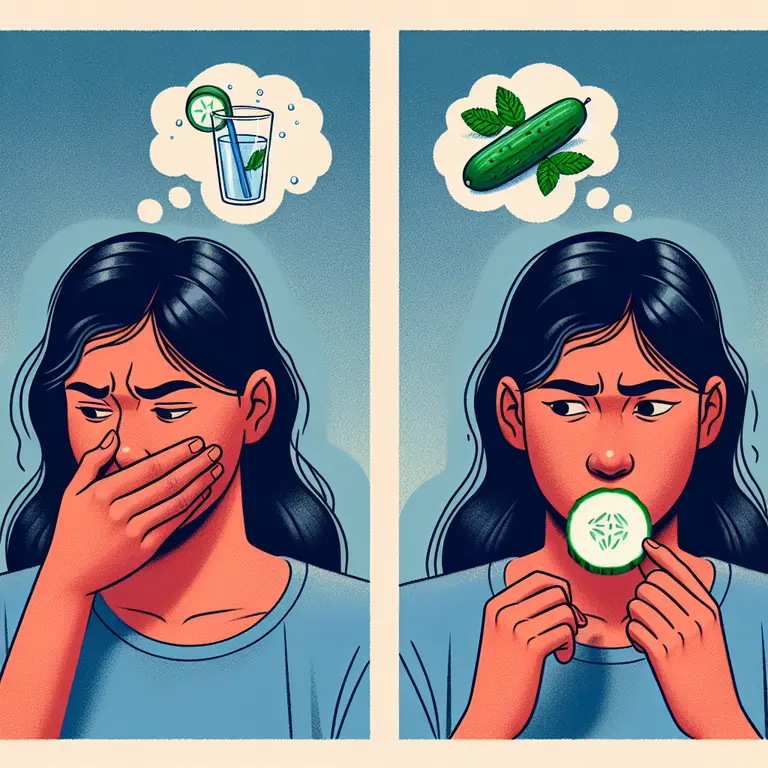
Using cucumber slices can help eliminate bad breath.
 Watch on YouTube
 Watch on Rumble
Introduction
Bad breath, clinically known as halitosis, affects an estimated 25 to 30 percent of the global population at any given time, making it one of the most common oral health complaints worldwide. Despite its prevalence, it remains a deeply personal and often embarrassing condition, one that people tend to manage quietly and sometimes ineffectively. While the pharmaceutical and personal care industries have built entire product lines around the problem, from mint-flavored strips to alcohol-based mouthwashes, a surprisingly simple solution may already be sitting in your refrigerator.
A little-known folk remedy and increasingly popular DIY hack involves placing a thin slice of cucumber between your tongue and the roof of your mouth and holding it there for approximately 90 seconds. Advocates of the technique claim it can neutralize odor-causing bacteria, leaving the mouth noticeably fresher. The mechanism behind this trick is rooted in the phytochemical composition of cucumbers, which possess documented antibacterial properties. While this remedy should never be viewed as a replacement for consistent dental hygiene, it offers a genuinely useful, natural option when conventional tools are out of reach. Understanding why it works requires a closer look at what causes bad breath and what cucumbers actually contain.
The Science Behind Bad Breath
To appreciate why cucumbers might help, it helps to understand the biology of halitosis. Bad breath is overwhelmingly caused by anaerobic bacteria that live in the oral cavity, particularly on the back of the tongue, between the teeth, and along the gumline. These bacteria feed on proteins found in food particles, dead cells, and saliva. As they break down these proteins, they release volatile sulfur compounds, most notably hydrogen sulfide and methyl mercaptan, which are responsible for the characteristic unpleasant odor associated with bad breath.
The tongue is a particularly hospitable environment for these bacteria. Its textured surface, covered in tiny papillae and crypts, provides countless hiding spots where bacteria can accumulate undisturbed. This is why tongue scraping, though often overlooked, is considered by many dental professionals to be one of the most effective tools in combating halitosis.
Beyond bacterial activity, several other factors can worsen bad breath. Dry mouth, or xerostomia, is a significant contributor. Saliva plays a critical role in oral health by mechanically washing away food debris and bacteria, and it also contains antimicrobial proteins that help regulate bacterial populations. When saliva flow is reduced, such as during sleep, periods of dehydration, or as a side effect of certain medications, bacteria multiply more rapidly, and odor compounds accumulate. This explains why morning breath is so universally recognized.
Dietary choices also play a major role. Foods like garlic and onions contain sulfur-rich compounds that are absorbed into the bloodstream after digestion and eventually expelled through the lungs, meaning that no amount of brushing will fully eliminate the odor until the compounds are metabolized. Certain medical conditions, including gum disease, sinus infections, acid reflux, and even kidney or liver problems, can also manifest as chronic bad breath, which is why persistent halitosis warrants professional evaluation.
Cucumbers and Their Antibacterial Properties
Cucumbers belong to the Cucurbitaceae family and are composed of roughly 96 percent water, making them one of the most hydrating foods available. But beyond their water content, cucumbers contain a range of bioactive compounds that have attracted scientific interest. These include flavonoids such as quercetin, kaempferol, and apigenin, as well as lignans and cucurbitacins, all of which fall under the broad category of phytochemicals, naturally occurring compounds produced by plants as part of their own defense mechanisms against pathogens and environmental stress.
Several of these phytochemicals have demonstrated antimicrobial activity in laboratory settings. Quercetin, for instance, has been studied for its ability to inhibit the growth of certain bacterial strains by interfering with cell membrane integrity and disrupting energy production within bacterial cells. While much of this research has been conducted in controlled laboratory environments rather than clinical oral health trials, the underlying chemistry provides a plausible explanation for why cucumbers might reduce oral bacterial populations when held in contact with the tongue and palate.
The 90-second contact time suggested by the remedy is not arbitrary. Many antimicrobial compounds require sustained contact with a surface in order to exert a measurable effect. By pressing the sliced cucumber against the roof of the mouth, you are effectively maximizing the surface area exposed to the phytochemicals released as the cucumber is gently compressed and warmed by body heat. This releases more of the plant’s juice and bioactive compounds directly onto the tongue and surrounding tissue, where the highest concentration of odor-producing bacteria tends to reside.
The high water content of cucumbers also contributes to the remedy’s effectiveness. Introducing moisture into a dry mouth stimulates saliva production, which in turn helps flush out bacteria and food particles. This dual action, both antimicrobial and hydrating, makes the cucumber slice a more sophisticated tool than it might initially appear.
Phytochemicals in Context: How Plant Compounds Fight Bacteria
The antibacterial properties of plant-derived compounds are not a new discovery. Humanity has relied on botanical antimicrobials for thousands of years, long before the development of modern antibiotics. Cloves, for example, contain eugenol, a compound still used in dental procedures today for its pain-relieving and antibacterial properties. Tea tree oil, derived from the Australian Melaleuca alternifolia plant, is a staple in natural medicine for its broad-spectrum antimicrobial activity. Even the tannins found in green tea have been shown to inhibit the growth of Streptococcus mutans, one of the primary bacteria responsible for tooth decay and gum disease.
Cucumbers fit into this broader tradition of plant-based oral care. Their phytochemicals work through multiple mechanisms. Some disrupt the structural integrity of bacterial cell walls, causing the bacteria to lyse or collapse. Others interfere with quorum sensing, the chemical communication system that bacteria use to coordinate behavior and form biofilms. Biofilm disruption is particularly relevant to oral health, as dental plaque is itself a biofilm, a structured community of bacteria encased in a self-produced matrix that makes them significantly more resistant to conventional cleaning.
It is worth noting that the research specifically on cucumbers and oral bacteria remains limited compared to the body of work on other botanical antimicrobials. Much of what is claimed about cucumbers is extrapolated from studies on their individual phytochemical constituents. This does not invalidate the remedy, but it does underscore the importance of viewing it as a complementary measure rather than a clinically proven treatment. The anecdotal evidence is considerable, and the biochemical rationale is sound, but further targeted research would be valuable.
Using Cucumbers as Part of a Broader Oral Care Routine
Understanding what cucumbers can and cannot do is essential to using this remedy wisely. A cucumber slice will not remove plaque, reverse gum disease, or address the underlying causes of chronic halitosis. What it can do is provide a meaningful, temporary reduction in bacterial load and odor, particularly useful in social situations where a toothbrush is not available.
Think of the cucumber remedy as occupying a similar niche to chewing sugar-free gum. Both stimulate saliva production, both provide a degree of mechanical and chemical freshening, and neither replaces proper brushing and flossing. The advantage of cucumbers over commercial breath fresheners is the absence of artificial sweeteners, synthetic fragrances, and alcohol, all of which can irritate sensitive oral tissue or, in the case of alcohol-based mouthwashes, actually dry out the mouth over time and worsen halitosis with repeated use.
For those dealing with chronic bad breath, the cucumber trick offers temporary relief but should be accompanied by a thorough review of oral hygiene habits. Brushing at least twice daily, paying particular attention to the tongue, flossing to remove interdental debris, and staying adequately hydrated throughout the day are the foundational practices. Scheduling regular dental cleanings allows a professional to identify and treat conditions like gum disease or deep-seated tartar buildup that home care cannot adequately address. If bad breath persists despite diligent hygiene, a physician should evaluate for systemic causes, including gastrointestinal issues, respiratory infections, or metabolic conditions.
Conclusion
Cucumbers offer a genuinely clever and scientifically grounded solution to one of everyday life’s more socially fraught problems. The combination of hydrating properties, saliva-stimulating moisture, and phytochemicals with documented antimicrobial activity makes the humble cucumber slice a surprisingly effective tool for quickly and naturally freshening breath. Holding a slice against the roof of your mouth for 90 seconds is not folk superstition but a practice with a coherent biochemical rationale, one that deserves more attention than it typically receives.
That said, the cucumber remedy works best as a supplement to sound oral hygiene rather than a shortcut around it. The next time you find yourself without a toothbrush before an important meeting or conversation, reaching for a cucumber is a sensible, natural choice. It is inexpensive, widely available, free of harsh chemicals, and rooted in the same principles that have guided plant-based medicine for centuries. Sometimes the most elegant solutions are also the simplest ones.