Unveiling El Mirador: A Timeless Legacy of Maya Astronomy
El Mirador, an ancient Maya city, offers a remarkable history of astronomy that dates back over 2,000 years.

Discover strange, surprising, and little-known facts from science, history, nature, and beyond.

How a century-old industrial incendiary reaction is now being repurposed to date ancient iron artifacts and rewrite the timeline of early metallurgy.
Read Article → History
El Mirador, an ancient Maya city, offers a remarkable history of astronomy that dates back over 2,000 years.
 Culture
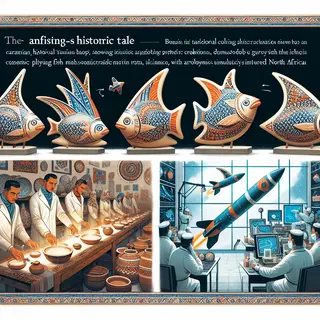
This fact explores the unique ceramic flying fish that were historically made in Tunisia and their surprising journey from a local craft to an aerospace-related discovery.
 Science
Did you know that fire can produce sound waves? This rare phenomenon occurs when heat fluctuations within flames generate acoustic vibrations.
 History
A chance encounter at the 1904 World's Fair led to the creation of the beloved ice cream cone.
 Nature
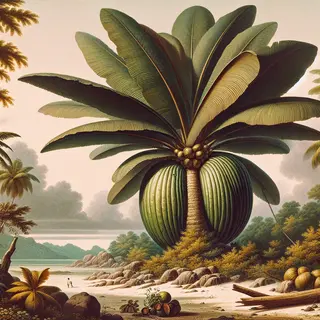
The largest seed in the world, weighing up to 25 kg, comes from the Coco de Mer tree found only in the Seychelles.
 History
Damascus steel, prized for its strength and beauty, was mysterious until recent advancements.
 History
A unique anti-pirate feature was accidentally discovered when crafting navigational lenses for ships.
 Oddities
A common kitchen staple, the humble potato has an unusual use outside cooking, specifically for safely removing broken light bulbs from their sockets.
 Nature
Discover the unique fungus in the Waitomo Caves of New Zealand that glows beautifully thanks to bioluminescence.
 Animals
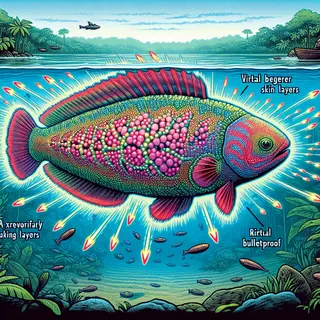
An extraordinary fish found in Amazonian waters can regenerate its scales and skin layers, making it virtually bulletproof.
 Travel
Australia's Eyre Highway contains one of the world's longest straight roads, stretching an uninterrupted 90 miles through a vast and empty landscape.
 Nature
A subaquatic labyrinth of limestone formations and marine life was discovered underneath the Great Blue Hole in Belize, few know about this hidden marvel.
 Nature
Unique discovery of an ancient carnivorous plant preserved in Siberia's permafrost for 30,000 years.
 Science
Recent genetic studies show Denisovans interbred not just with Neanderthals, but also with a more mysterious group.
 Environment
Bhutan is the only carbon-negative country in the world, absorbing more carbon than it produces.
 Oddities
A theme park in Southern China is entirely run by people with dwarfism.
 History
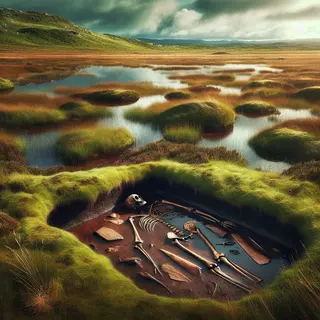
Denmark is home to well-preserved ancient human remains called bog bodies, offering fascinating insights into Iron Age society.
 Engineering
Ondol is an ancient Korean under-floor heating system used for centuries to provide warmth and comfort in homes.
 Health
A unique examination of how sleep enhances the body's immune memory.
 History
An astonishing piece of Paleolithic art was accidentally discovered by four teenagers in 1940, revealing some of the most intricate and well-preserved prehistoric paintings known to man.
 Travel
A winter wonderland that features massive ice sculptures.
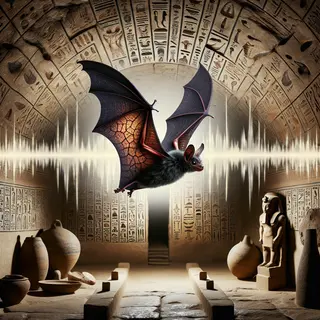 Animals
The Egyptian Tomb Bat can echolocate in silence due to inaudible clicks.
 Food
FoodThe sandwich as we know it today was popularized by an 18th-century English nobleman who wanted to eat without leaving his gambling table.
 History
The invention of French fries traces back to Belgian monasteries where monks were frying fish during winter months.
Many of our articles come with a video companion. Sit back and explore.



No spam. Just strange, useful, and fascinating knowledge.
We only use your email for site updates.