
Istanbul and Its Street Cats: Unique Symbiotic Relationship
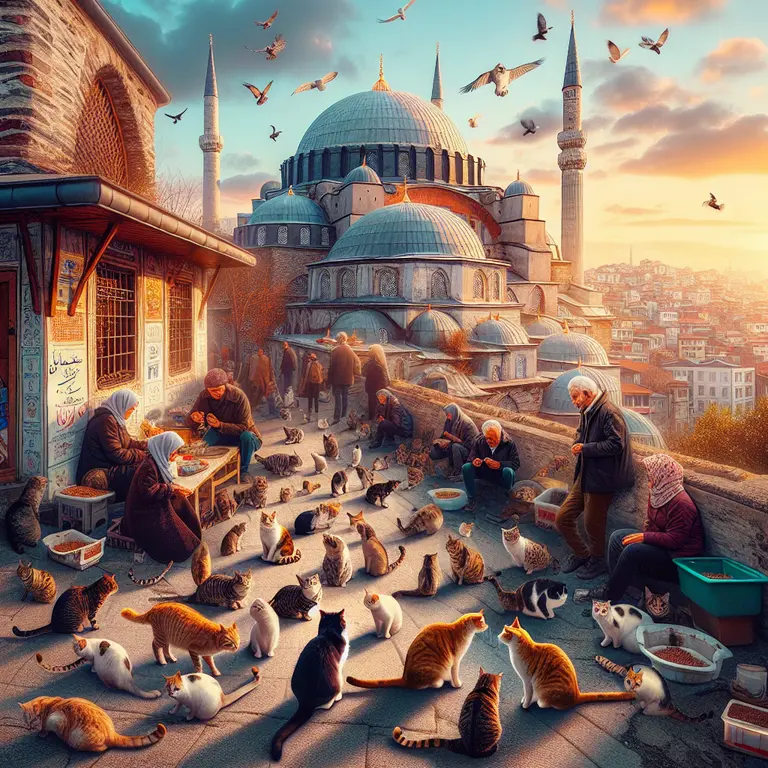
Istanbul, the largest city in Turkey, is famous for its thousands of street cats that freely roam the city and are cared for by residents.
Introduction
Few cities in the world can claim to share their streets, markets, and monuments with hundreds of thousands of feline residents quite like Istanbul. The cats of this ancient metropolis are not strays in the conventional sense, nor are they pets in the traditional meaning of the word. They occupy a category entirely their own, somewhere between wild and domestic, between resident and wanderer. Estimates suggest that Istanbul is home to anywhere from 100,000 to over 300,000 street cats at any given time, though the true number is difficult to pin down precisely. What is not difficult to measure, however, is the depth of the bond between these animals and the human population that shares the city with them. This relationship, centuries old and deeply embedded in the cultural fabric of Istanbul, offers a remarkable case study in urban coexistence, compassion, and the ways in which animals can become inseparable from a city’s identity.
Historical Background and Origins
To understand why Istanbul is so uniquely defined by its street cat population, it is necessary to look back several centuries to the city’s origins as one of the most important trading hubs in the ancient and medieval world. Known first as Byzantium, then Constantinople, and eventually Istanbul, the city served as a crossroads between Europe and Asia, drawing merchants, goods, and travelers from across the known world. With the abundance of foodstuffs stored and traded in its busy markets came an equally abundant population of rats and mice. Cats were introduced, or at least actively encouraged, as a practical solution to this persistent problem. Their presence helped protect grain stores, reduce the spread of disease, and maintain basic hygiene standards in densely populated residential and commercial areas.
This utilitarian beginning, however, tells only part of the story. The Ottoman Empire, which ruled from Istanbul for centuries, had a complex and largely positive relationship with cats rooted in part in Islamic tradition. The Prophet Muhammad is said to have been deeply fond of cats, and numerous hadith, or recorded sayings and actions attributed to him, reflect a respect and tenderness toward the animals. One of the most frequently cited stories describes Muhammad cutting off the sleeve of his robe rather than disturb a cat sleeping on it. This cultural and religious reverence helped shape an attitude toward cats across much of the Islamic world that was notably more affectionate than the suspicion and hostility cats faced in parts of medieval Europe during the same period. In Istanbul, this religious dimension reinforced what was already a practical appreciation, and over generations, the street cat became something far more than a working animal.
Cultural Integration and Everyday Life
By the time Istanbul entered the modern era, the street cat had become so thoroughly woven into daily life that its presence required no explanation or justification. Today, visitors to the city encounter cats at every turn. They lounge in the doorways of spice shops in the Grand Bazaar, curl up on the steps of mosques, weave between the legs of diners at outdoor restaurants, and perch on the ledges of ancient Byzantine walls as if surveying a kingdom they have always owned. The cats move through the city with a confidence and ease that suggests they are not merely tolerated but genuinely welcomed.
Shopkeepers routinely leave out food and water for the cats that frequent their storefronts, and many develop close, ongoing relationships with particular animals over months and years. Residents in apartment buildings often take collective responsibility for the neighborhood's cats, pooling resources to feed them and ensure they receive veterinary care when needed. In many neighborhoods, small wooden shelters have been built and placed along streets and in parks specifically to give cats protection from the cold during Istanbul’s often harsh winters. These shelters are sometimes constructed by local residents, and in other cases by the Istanbul municipality itself, which has also run trap-neuter-return programs to manage the population humanely. This is not a city that merely looks the other way when it comes to its street animals. It actively participates in their welfare as a matter of civic culture.
Aesthetic and Social Significance
Beyond their practical presence in daily life, Istanbul’s street cats have taken on a powerful aesthetic and symbolic role in how the city understands and presents itself to the world. They appear in countless photographs taken by both locals and tourists, their images shared across social media platforms in numbers that have made certain individual cats genuinely famous. One cat named Gli, who lived for years inside the Hagia Sophia, became something of an international celebrity, receiving visits from dignitaries and appearing in news coverage worldwide. When Gli died in 2020, tributes poured in from people across the globe who had never set foot in Istanbul but felt a personal connection to the animal through photographs and stories.
The most significant artistic exploration of this phenomenon came in 2016 with the release of Kedi, a documentary film directed by Ceyda Torun. The film follows seven street cats through the streets of Istanbul, capturing their daily routines, personalities, and relationships with the humans who care for them. Torun, who grew up in Istanbul before moving abroad, described the film as a meditation on the city itself, with the cats serving as a lens for understanding Istanbul’s soul. Kedi was both a critical and commercial success, finding audiences far beyond those who might ordinarily seek out a documentary about street animals. It was praised for its cinematography, its emotional depth, and its ability to illuminate something genuinely profound about the relationship between humans and the natural world in an urban setting.
Media Coverage, Global Interest, and Lessons for Other Cities
The international response to Kedi was part of a broader wave of global interest in Istanbul’s street cats, reflected in coverage by major media outlets, including the BBC, The Guardian, National Geographic, and dozens of others. These stories consistently highlight the contrast between Istanbul’s approach to street animals and the often adversarial stance taken by other cities worldwide, where street cats are frequently trapped, impounded, or euthanized as a matter of policy. The question many of these articles implicitly or explicitly raise is whether Istanbul’s model offers a template that other cities might learn from or adapt.
The answer is not straightforward. Istanbul’s relationship with its street cats is the product of a specific and layered history that cannot simply be transplanted elsewhere. It emerged from a combination of religious tradition, practical necessity, geographic circumstance, and centuries of accumulated cultural habit. Replicating it in cities with different histories and different attitudes toward public space and urban animals would require significant shifts in both policy and popular sentiment. Nevertheless, Istanbul demonstrates that a large, densely populated modern city can maintain a vast population of street animals without descending into chaos or a public health crisis, provided that the human population is engaged, compassionate, and organized in its approach to care. Trap-neuter-return programs, municipal feeding stations, community-based shelters, and accessible veterinary services all play a role in making the system function.
Conclusion
Istanbul’s street cats are far more than a charming quirk of city life. They are living evidence of what becomes possible when a culture decides, collectively and over a very long period of time, that the animals sharing its urban space deserve dignity, care, and belonging. The city’s history gave cats a foothold, its religious traditions gave them respect, and its people gave them love. The result is something genuinely rare in the modern world: a metropolis of millions where humans and animals have found a way to coexist not just tolerantly but warmly. As cities around the world grapple with questions of urban wildlife, animal welfare, and the kind of environments they want to build for both human and non-human residents, Istanbul’s example stands as a quiet but powerful argument for choosing compassion.