Unveiling Barbie's True Identity: What's Her Real Name?
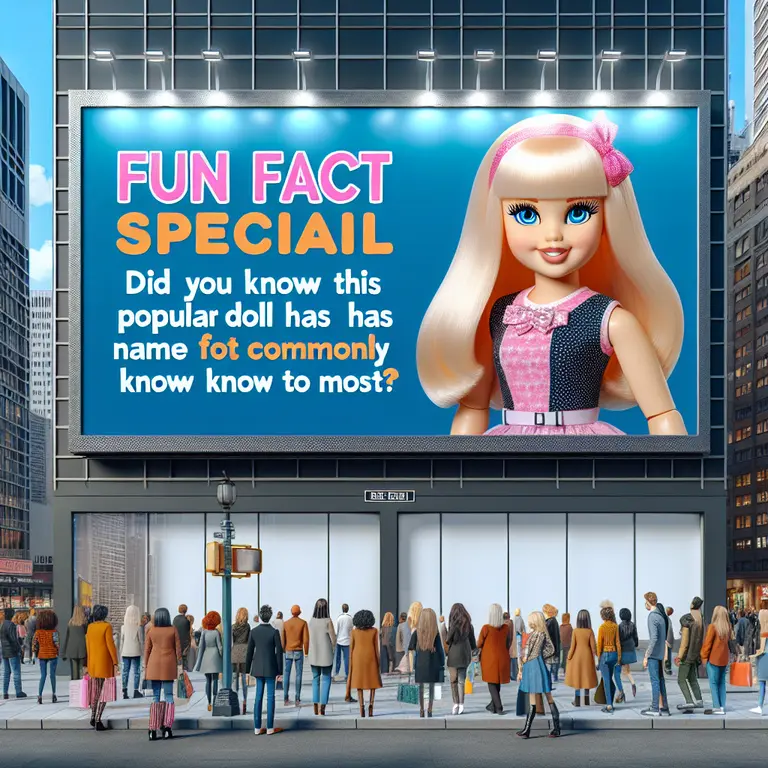
Barbie has a full name that isn't commonly known.
 Watch on YouTube
 Watch on Rumble
Introduction
Barbie, the iconic doll that has captured the imaginations of children across the globe since her debut in 1959, is more than just a popular toy. She has an entire backstory, including a full name many people might not know. Known simply as “Barbie” to most of the world, her full name is Barbara Millicent Roberts. This lesser-known detail highlights the thought and care that went into creating not only the doll herself but also her identity, giving her a sense of personality and background that contributed to her enduring appeal.
What makes this detail particularly interesting is how deliberate the process was. At a time when most toys were designed as simple objects of play with little narrative depth, Mattel chose to invest in something more ambitious: a character with a name, a hometown, a family, and a future. That decision, made in the late 1950s, would shape the way children interacted with toys for generations and set a precedent for character-driven marketing that the industry still follows today.
The Origins of Barbie’s Name
Barbie was created by Ruth Handler, co-founder of Mattel, Inc., and inspired directly by her daughter, Barbara. Handler came up with the idea for Barbie after observing that Barbara, like many young girls at the time, enjoyed playing with paper dolls and often imagined them as adults rather than children. While the toy market was dominated by baby dolls designed to encourage nurturing play, Handler recognized something different in what children were actually doing. They were not pretending to be mothers. They were pretending to be grown women with careers, wardrobes, and independent lives.
Handler saw a gap in the market that nobody else had thought to fill. She recognized the potential for a doll that could serve as a more realistic representation of an adult woman, one that would allow girls to project their dreams and aspirations onto the figure rather than simply practicing caretaking. Her idea was initially met with skepticism from her colleagues at Mattel, who doubted that parents would purchase a doll with an adult female form for their young daughters. Handler persisted, and after seeing a similar German novelty doll, Bild Lilli, during a trip to Europe, she returned to the United States with renewed conviction and a clearer vision of what Barbie could become.
When it came time to name the new doll, Handler honored her daughter by giving the toy her name. The name “Barbie” was derived from Barbara as a natural nickname. This personal connection between the doll and Handler’s family helped to create a sense of familiarity and relatability for the doll’s target audience. It was not a name invented by a marketing committee. It came from a real girl, a real family, and a real observation about how children play and dream.
The middle and last names, “Millicent Roberts,” were chosen by Handler as part of Barbie’s fictional background. Unlike the first name, which was a direct tribute to her daughter, “Millicent Roberts” was selected to complete the character’s full name and give her the kind of formal identity that a real person would have. Though these names are not as widely known or used in everyday conversations about the doll, they add depth to Barbie’s identity as a character with her own story, history, and place in the world.
Barbie’s Fictional Backstory and the Power of Narrative Play
Barbie’s full name, Barbara Millicent Roberts, was part of a broader and more significant effort by Mattel to craft a detailed backstory for the doll. This fictional biography was designed to enhance the play experience by giving Barbie more personality and history, encouraging children to imagine her as a real person with her own life, interests, and adventures rather than a blank canvas.
Barbie’s fictional background places her origins in the small town of Willows, Wisconsin, where she grew up with her parents, George and Margaret Roberts, and her siblings. Her younger sister, Skipper, was introduced in 1964, followed by a rotating cast of siblings and friends over the years, each with their own names and personalities. Ken Carson, her longtime boyfriend, was introduced in 1961 and named after Handler’s son, mirroring the same family-inspired naming tradition. This expanded universe of characters gave children an entire social world to populate and explore through play.
Over the decades, Barbie has taken on more than 200 careers, ranging from astronaut and surgeon to presidential candidate and video game developer. This range was not accidental. Each new career was a deliberate response to the cultural moment, a way of telling girls that the doors being opened in the real world were also open in Barbie’s world. When NASA began training female astronauts, Barbie became one too. When female politicians began gaining national prominence, Barbie ran for president. The fictional backstory was never static. It evolved alongside society, keeping the character relevant and aspirational across multiple generations.
The Impact of Barbie’s Identity on Culture and Empowerment
Barbie’s full name and background contribute to her legacy as more than just a plastic doll. By giving her a detailed persona, Mattel established Barbie as a cultural icon who could evolve with changing social norms and expectations. Her ability to take on numerous careers and roles mirrored the growing opportunities available to women over the decades, making her a symbol of empowerment for generations of girls who grew up seeing her on store shelves.
The name “Barbara Millicent Roberts” may not be as widely recognized as “Barbie,” but it reflects the doll’s unique place in the toy world. The combination of a relatable, friendly nickname and a formal, complete name gave Barbie an air of sophistication while remaining approachable. She was both the girl next door and a woman of the world, a balance that proved remarkably durable across more than six decades of cultural change.
Barbie has also been a lightning rod for criticism, and understanding her full identity helps frame those debates more clearly. Critics have long pointed to her proportions, her consumer-oriented lifestyle, and her early emphasis on fashion as potentially limiting messages for young girls. Mattel has responded over the years by diversifying Barbie’s body types, skin tones, and abilities, introducing dolls with wheelchairs, prosthetic limbs, and a wide range of ethnic backgrounds. These changes reflect the same underlying philosophy that Ruth Handler originally championed: Barbie should reflect the full range of what women can be, not a narrow or idealized version of it.
Ruth Handler’s Legacy and the Doll That Outlived Its Creator
Ruth Handler’s connection to Barbie’s creation played a significant and personal role in the doll’s development and long-term direction. Naming the doll after her daughter, Barbara, shows Handler’s personal investment in Barbie’s success and her belief that the toy represented something genuinely meaningful. The doll was not a cynical commercial product designed purely to generate revenue. It was, in Handler’s own words, a way of telling girls through the doll’s story that they could be anything they wanted to be.
Handler’s own life story added another layer of resonance to Barbie’s legacy. In the 1970s, Handler was diagnosed with breast cancer and underwent a mastectomy. Finding that prosthetic breasts available at the time were uncomfortable and unrealistic, she used her experience and her background in doll manufacturing to develop a more natural-looking prosthetic breast called Nearly Me. Her willingness to confront difficulty and turn it into something useful mirrored the can-do spirit she had always wanted Barbie to embody.
Though Handler passed away in 2002, her legacy lives on through the doll she created. Barbie has faced controversy and undergone many transformations, particularly in response to changing beauty standards and societal expectations. However, the core idea that Barbie can be anything she wants, whether an astronaut, doctor, president, or artist, remains as relevant today as it was when the doll first appeared at the American International Toy Fair in New York City in February 1959.
Conclusion
Barbie’s full name, Barbara Millicent Roberts, is a small but significant part of her long history as one of the world’s most recognizable and culturally influential toys. Created by Ruth Handler and named after her daughter, Barbie was designed from the beginning to be more than just a doll. She was given a full identity, complete with a backstory, a hometown, a family, and a future that children could explore and expand through their own imaginations.
Over the years, Barbie has taken on countless roles and careers, adapted to shifting cultural values, and survived waves of criticism and reinvention. Through all of it, the foundation laid by Handler in 1959 has held firm. The idea that a doll could have a name, a history, and a sense of possibility was radical at the time and remains powerful today.
While most people may only know her by her nickname, Barbie’s full name adds depth to her character and serves as a reminder that she was designed with genuine care and intention. That thoughtfulness, present from the very beginning in something as simple as a name, has helped Barbie remain relevant and beloved for more than sixty years, cementing her place not just as a toy, but as a companion, a mirror, and an enduring symbol of what it means to imagine a life without limits.