Mycelium Networks Revolutionize Disaster Communication
Recent breakthroughs in mycelium-based technologies are transforming emergency management systems in disaster-prone regions.

Discover strange, surprising, and little-known facts from science, history, nature, and beyond.
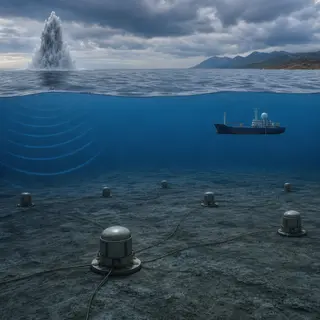
How a Cold War-era monitoring network called the International Monitoring System uses hydroacoustic sensors buried in the ocean floor to detect clandestine nuclear tests anywhere on Earth — and what it accidentally records along the way.
Read Article → Technology
Recent breakthroughs in mycelium-based technologies are transforming emergency management systems in disaster-prone regions.
 Environment
How an ancient fuel source is becoming a geopolitical flashpoint amid climate concerns and energy security debates.
 Technology
How recent breakthroughs in transparent quantum dot technology are transforming urban windows into power generators without sacrificing visibility.
 Science
How recent discoveries about quantum effects in plant photosynthesis are transforming agricultural science and bioenergy research
 Environment
Recent research reveals how next-generation solar technology using quantum dots interferes with honey bee magnetoreception, threatening pollination systems.
 Environment
How large language models and AI training are consuming more energy than many small nations, creating a hidden environmental challenge.
 Technology
How civilian dual-frequency GPS technology is transforming Ukraine's drone capabilities despite Russian jamming efforts
 Science
How subatomic particles from space are revolutionizing our ability to forecast seismic events
 Health
Recent research reveals alarming evidence of nanoplastics crossing the placental barrier, raising concerns about fetal development and future health implications.
 Science
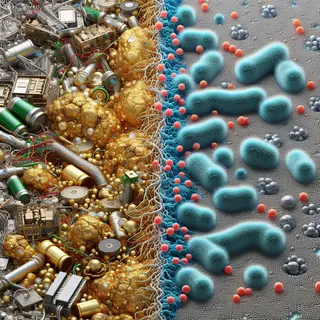
How specialized bacteria are transforming mining practices by extracting precious metals from electronic waste and low-grade ores.
 Technology
How AI-powered disaster response systems are inadvertently creating new forms of discrimination in emergency management
 Science
How recent breakthroughs in quantum thermodynamics are creating batteries that charge exponentially faster than conventional ones.
 Science
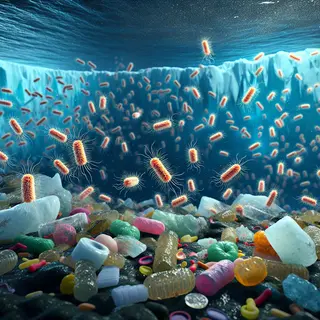
Recent discoveries of plastic-eating microbes in Antarctic waters reveal evolutionary adaptations that could revolutionize waste management.
 Environment
How emerging deep-sea mining operations targeting polymetallic nodules are pitting economic interests against environmental concerns in one of Earth's last unexplored frontiers.
 Language
How urban beekeepers develop specialized language that reflects ecological awareness and community identity
 Science
How precisely controlled sound waves can suspend objects in mid-air, enabling revolutionary applications from pharmaceuticals to quantum computing.
 Science
How single-celled bacteria maintain sophisticated circadian rhythms that challenge our understanding of biological complexity
 Space
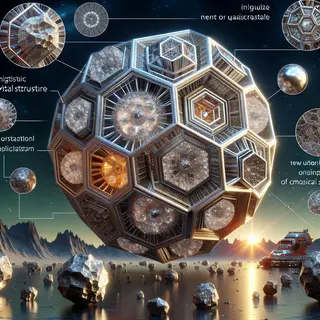
How naturally occurring quasicrystals in meteorites are challenging fundamental assumptions about material formation in the early solar system
 Mysteries
How the acoustic properties of megalithic structures may have facilitated unusual chemical reactions during ancient rituals
 Health
Exploring congenital amusia, a neurological condition affecting musical perception, and its surprising connections to language processing and social cognition.
 Science
How palynology—the study of pollen and spores—has revolutionized forensic science by providing crucial evidence in criminal investigations through microscopic plant particles.
 Science
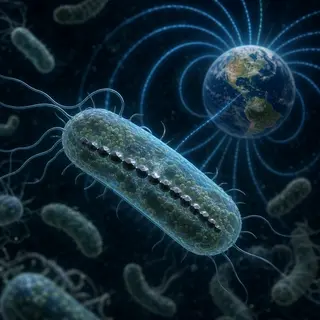
How certain bacteria use quantum effects to navigate Earth's magnetic field with astonishing precision
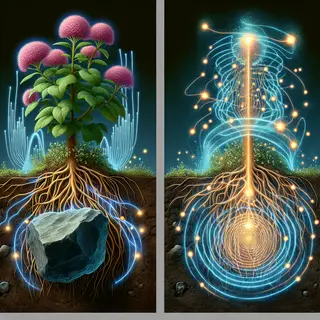 Science
How plant roots form spatial memories using bioelectric signals to navigate around obstacles long after they're removed.
 Health
How Soviet-era bacteriophage treatments are re-emerging to combat antibiotic resistance
Many of our articles come with a video companion. Sit back and explore.


No spam. Just strange, useful, and fascinating knowledge.
We only use your email for site updates.
 Rumble