Orchids: Pioneers of Fungiculture Millions of Years Ago
A species of orchid cultivates its own fungal gardens in a sophisticated agricultural relationship that predates human farming by millions of years.

Discover strange, surprising, and little-known facts from science, history, nature, and beyond.
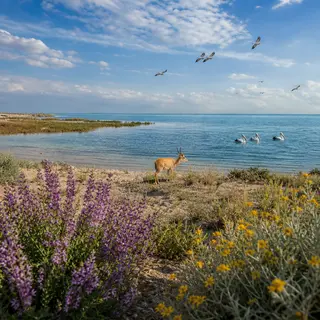
How unexpected ecological restoration is occurring in Kazakhstan's portion of the once-dying Aral Sea, challenging predictions about one of Earth's worst environmental disasters.
Read Article → Nature
A species of orchid cultivates its own fungal gardens in a sophisticated agricultural relationship that predates human farming by millions of years.
 History
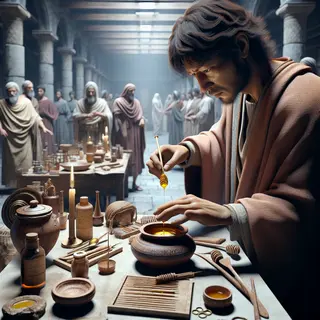
How ancient Greeks used honey to solve murders and identify poisoning cases millennia before modern forensic toxicology
 History
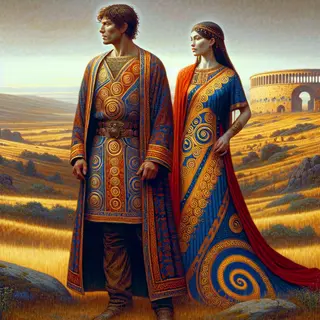
Bodies preserved in peat bogs reveal Bronze Age Europeans wore sophisticated, colorful clothing with complex patterns—not the drab, primitive garments depicted in popular culture.
 Nature
Lichens aren't single organisms but complex partnerships between fungi, algae, and bacteria that can survive in space and might be functionally immortal.
 Language
Why babies across diverse cultures often point to their noses first when asked to identify body parts
 History
How a rumor about toilet paper shortages triggered nationwide panic buying and social unrest in Japan, revealing deep anxieties in a rapidly modernizing society.
 Animals
The scaly-foot snail forges metal armor using deep-sea hydrothermal chemistry
 Health
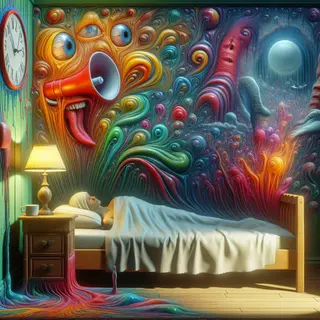
A harmless but terrifying sleep phenomenon where people hear imaginary loud noises just as they're falling asleep or waking up
 Mysteries
For centuries, astronomers have documented strange, fleeting flashes and colorful glows on the Moon's surface that science still struggles to explain.
 Mysteries
How cartographic errors created and then erased phantom islands from our digital world
 Space
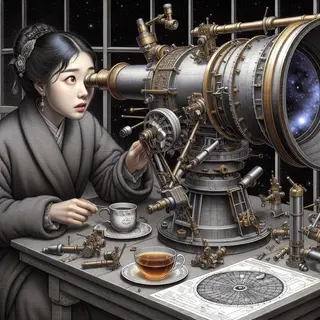
How a graduate student's tea break led to one of astronomy's most important discoveries
 Science
Certain microorganisms can generate electrical current as a byproduct of their normal metabolic processes.
 Space
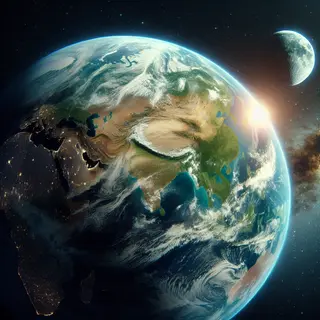
Our planet is gradually slowing down as the Moon drifts away, with profound long-term consequences.
 Mysteries
How 28,800 bath toys lost at sea became valuable scientific tools for understanding ocean currents
 Science
Scientists accidentally created immortal cellular structures that continue functioning long after the organism dies.
 Animals
A parasitic bacterium that transforms ladybugs into zombie bodyguards for its offspring
 Animals
The unexpected chemical connection between hummingbirds and fungi
 History
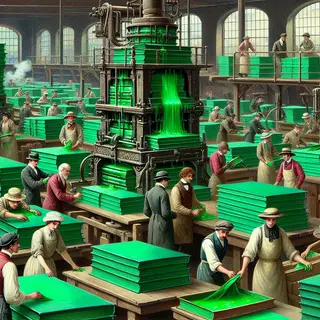
In the 1800s, Victorian-era book manufacturers created arsenic-laden 'Scheele's Green' books that could poison readers through skin contact.
 Space
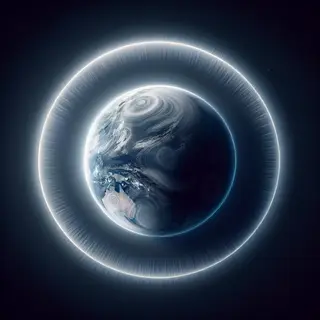
Earth has a hydrogen atmosphere extending 50,000 miles into space, visible only from the Moon.
 History
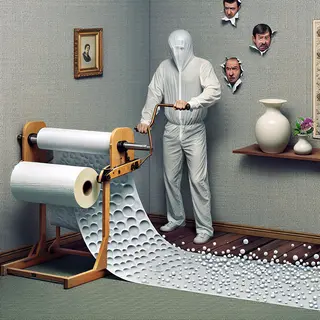
How a failed attempt at creating textured wallpaper led to one of the world's most ubiquitous packing materials
 Science
How bacteria communicate to make collective decisions, and how this ancient system is inspiring new medical treatments and AI algorithms.
 Environment
Recent discoveries reveal how specialized soil bacteria can degrade microplastics at unprecedented rates, potentially revolutionizing waste management.
 Technology
How quantum algorithms are revolutionizing seed dispersal strategies in degraded rainforests
 Science
How specialized extremophile bacteria are revolutionizing gold extraction while reducing environmental impact
Many of our articles come with a video companion. Sit back and explore.

No spam. Just strange, useful, and fascinating knowledge.
We only use your email for site updates.
 Rumble