Radioactive Element Ensures Safety in Home Smoke Detectors
Your household smoke detector is slightly radioactive.

Discover strange, surprising, and little-known facts from science, history, nature, and beyond.
 Science
Your household smoke detector is slightly radioactive.
 Science
Sir Charles Vernon Boys, a British physicist, accidentally invented invisible glass while trying to create ultra-thin fibers known as 'spun quartz.'
 Science
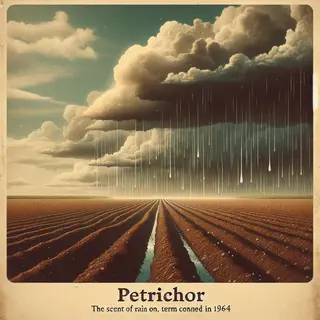
The scent produced when rain falls on dry soil is known as Petrichor. This term was coined in the year 1964.
 Science
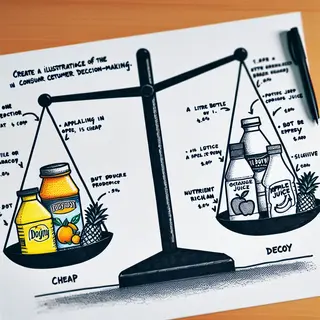
The phenomenon where consumers tend to have a change in preference between two options when a third, asymmetrically dominated option is presented, is known as the Decoy Effect.
 Science
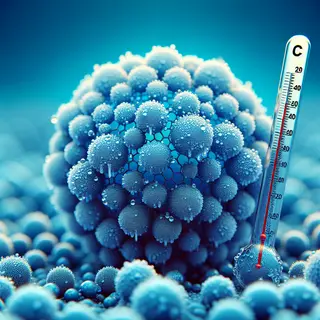
Water can remain a liquid below its freezing point in a state known as 'supercooling'.
 Science
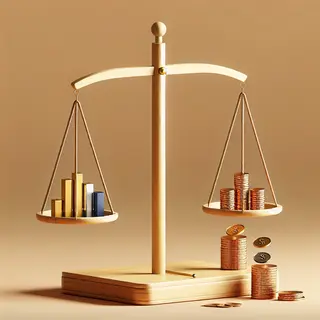
The Decoy Effect uses a less appealing third option to influence decisions, pushing consumers toward pricier choices by making them seem more attractive.
 Science
Oil-soaked rags can spontaneously combust and start a fire.
 Science
Rubber duckies, very popular bath toys for kids, have an interesting physics behind their quacking sound.
 Science
The largest known prime number, as of January 2019, was discovered not by a mathematician or scientist but an electrical engineer.
 Science
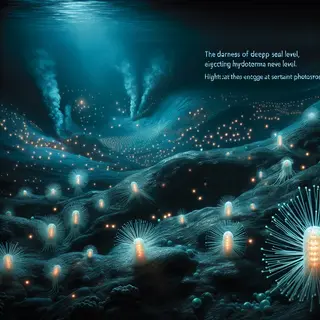
Certain species of bacteria found in deep sea hydrothermal vents are capable of a unique form of photosynthesis.
 Science
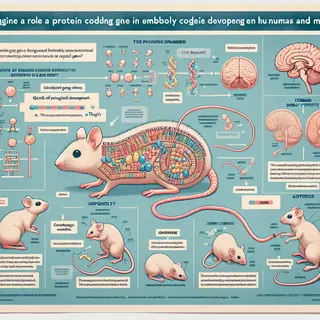
The 'Sonic Hedgehog' gene is a protein coding gene in both humans and mice which plays a crucial role in the organization of the brain and body structure during embryonic development.
 Science
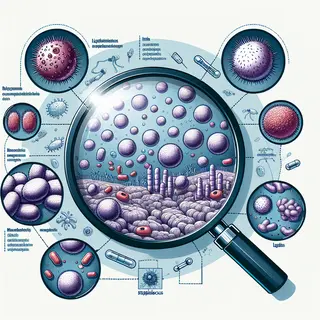
The bacteria Staphylococcus offers fascinating model systems for interspecies interactions.
 Science
Did you know that the Earth once had a naturally occurring nuclear fission reactor?
 Science
You can make invisible ink and reveal the text with heat, using common household items like lemon juice and heat.
 Science
Did you know that there are facilities called 'Biobanks' that store a diverse range of biological materials at ultra low temperature for scientific research, conservation, and medical purposes?
 Science
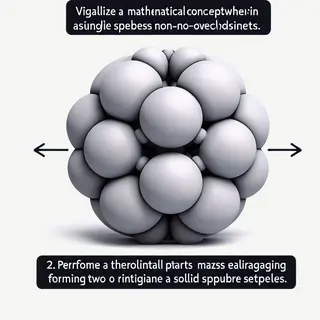
It's a mathematical concept that states you can theoretically take a solid ball, separate it into a finite number of non-overlapping pieces, and use those pieces to construct two solid balls identical to the original.
 Science
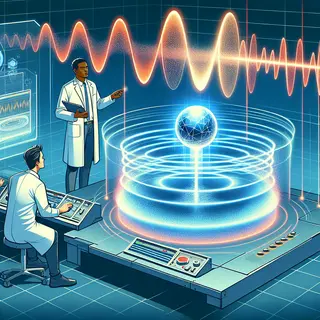
Scientists have successfully utilized sound waves to develop 'tractor beams', revolutionizing particle manipulation.
 Science
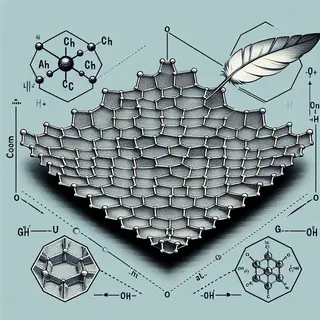
Graphene, a one-atom thick sheet of carbon atoms arranged in a hexagonal lattice, is one of the strongest and lightest materials known to humanity.
 Science
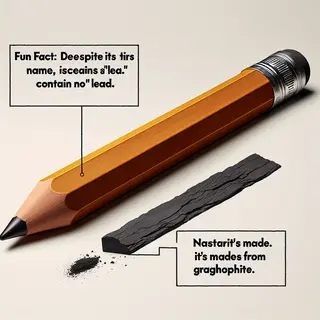
Contrary to what its name implies, a pencil 'lead' contains no lead at all. In fact, it is made from graphite.
 Science
Teixobactin is a recently discovered antibiotic, found as a result of an innovative method of culturing bacteria from soil.
 Science
Microchimerism is a phenomenon where an individual's body harbors cells or genetic material from another individual, typically the mother or a sibling.
 Science
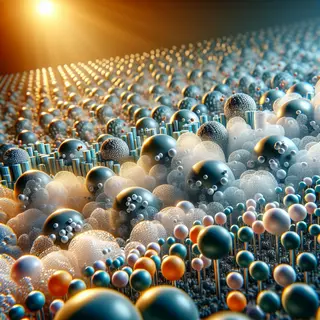
Hydrogen, one of the smallest molecules, can permeate many materials, including those that are completely impervious to other gases. This phenomenon is known as Hydrogen Permeability.
 Science
Researchers accidentally discovered that high-density form of polyethylene plastic can block out nearly all heat radiation.
 Science
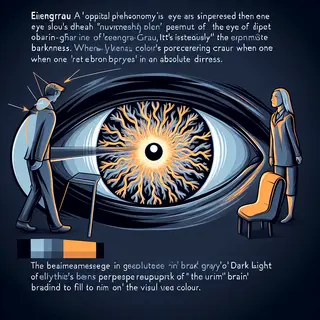
Eigengrau, also known as 'brain gray' or 'dark light', is the color perceived by the human eye in total darkness.
No spam. Just strange, useful, and fascinating knowledge.
We only use your email for site updates.