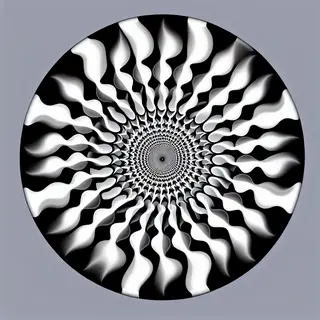
The Science and Illusion Behind the Benham's Spinning Disk
A peculiar optical illusion which involves a patterned disk that generates color when spinning, despite being black and white.

Discover strange, surprising, and little-known facts from science, history, nature, and beyond.
 Science
A peculiar optical illusion which involves a patterned disk that generates color when spinning, despite being black and white.
 Science
Fruits communicate with each other through a system called allelopathy.
 Science
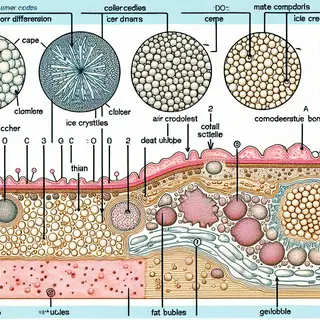
Ice cream involves a unique and complex set of physical properties that contribute to its creamy texture and melting pattern.
 Science
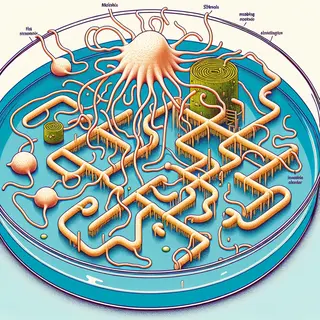
Physarum polycephalum, a brainless slime mold, demonstrates remarkable problem-solving abilities, navigating mazes and optimizing routes, challenging our understanding of intelligence.
 Science
Slime molds, despite not having a brain or nervous system, can solve complex puzzles and navigate mazes.
 Science
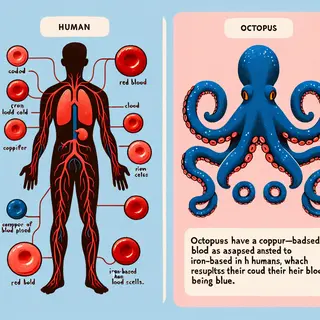
Octopuses have a copper-based blood as opposed to iron-based blood in humans, which results in their blood being blue.
 Science
A bigon is a two-dimensional geometric figure with two corners or 'vertices' and two sides or 'edges'. It is considered an illegal geometric figure in traditional geometry
 Science
The 'Elevator Paradox' is a lesser-known phenomenon that explains why elevators seem to mostly go in one direction when you're waiting for them.
 Science
Chemist Mas Subramanian and his team accidentally discovered a new vibrant shade of blue known as YInMn Blue in 2009 while experimenting on materials for electronics.
 Science
Physarum polycephalum, also known as 'the many-headed slime', is a common single-celled organism that possesses abilities to learn and remember despite lacking a brain.
 Science
Albert Hofmann, a Swiss chemist working at Sandoz laboratories, unintentionally discovered the potential effects of Lysergic Acid Diethylamide (LSD) in 1943.
 Science
The CRISPR-Cas9 gene-editing technology, likely the most popular tool in genetic engineering today, was discovered as part of a defense mechanism in the humble yogurt bacteria.
 Science
Contrary to popular belief, the sky's blue color is not because it reflects the ocean. Instead, it can be attributed to a phenomenon known as Rayleigh scattering.
 Science
Gallium is a peculiar metal that can melt in your hand.
 Science
Teflon, known for its non-stick properties widely used in cookware, was accidentally invented by a chemist Roy Plunkett while he was trying to develop a new type of refrigerant.
 Science
'Humphry Davy Effect' refers to the phenomenon where scientific discoveries are often named after the second person who discovered them, not the first.
 Science
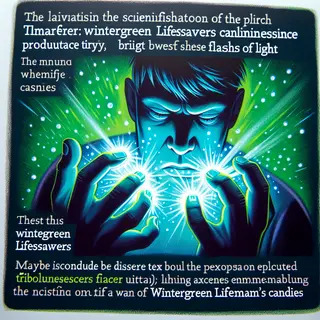
Crushing Wintergreen Lifesavers candies in the dark can produce a tiny, brief flash of light. This is due to an effect known as triboluminescence.
 Science
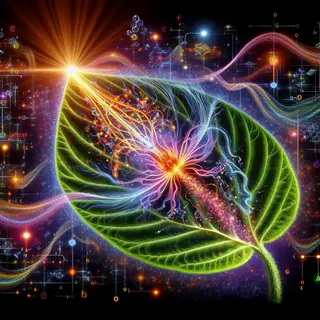
Plants utilize quantum superposition in the process of photosynthesis.
 Science
The principle of superconductivity was discovered accidentally by Heike Kamerlingh Onnes, a Dutch physicist, in 1911.
 Science
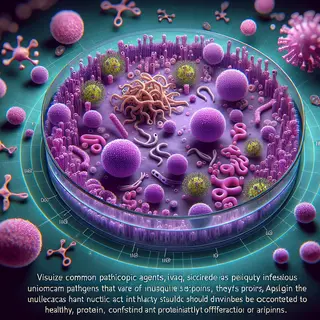
Prions are a form of infectious agent consisting entirely of proteins.
 Science
Contrary to popular belief, rust can only form when water, iron and oxygen are all present.
 Science
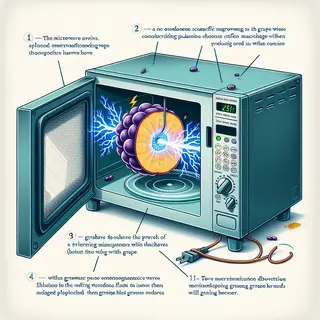
Grapes can produce plasma if microwaved correctly.
 Science
Scientists have invented a way to 'unboil' an egg
 Science
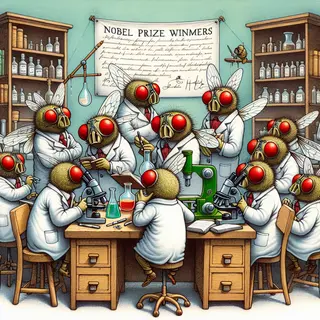
Did you know that the humble fruit fly has greatly contributed to scientific research, leading to multiple Nobel Prizes?
No spam. Just strange, useful, and fascinating knowledge.
We only use your email for site updates.