
The Fever That Cures: Hyperthermia's Dark Medical Past
Long before antibiotics, physicians deliberately induced high fevers in patients to treat syphilis, schizophrenia, and cancer — a practice that won a Nobel Prize and still quietly informs modern oncology.
 Watch on YouTube
 Watch on Rumble
Introduction
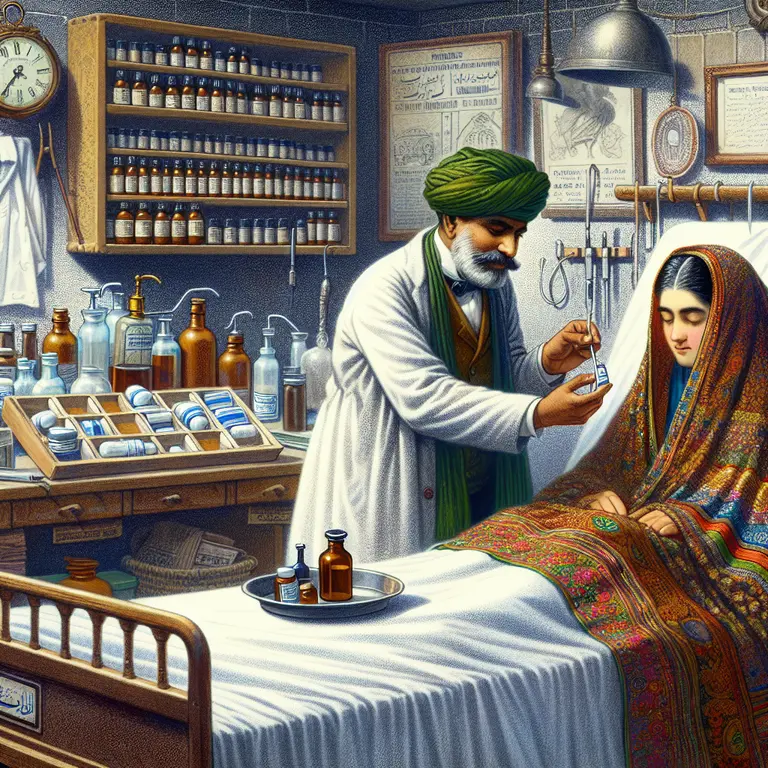
In 1927, the Austrian psychiatrist Julius Wagner-Jauregg received the Nobel Prize in Physiology or Medicine for a treatment that would horrify any modern ethics board: he deliberately infected patients suffering from neurosyphilis with Plasmodium vivax, the parasite responsible for malaria. His reasoning was precise and, by the standards of his era, empirically grounded. The sustained high fevers produced by malaria — often reaching 40 to 41 degrees Celsius over several days — appeared to kill or suppress Treponema pallidum, the bacterium responsible for syphilis. In the pre-penicillin world, neurosyphilis was a death sentence that destroyed the brain over the years, producing dementia, paralysis, and psychiatric deterioration in its final stages. Wagner-Jauregg’s malarial fever therapy, while deeply dangerous, produced genuine remissions in roughly 30 percent of patients, an extraordinary figure at the time. Patients were then treated with quinine to clear the malaria once the therapeutic work was presumed to be done. The Nobel committee called it one of the most significant advances in psychiatric medicine. It remains the only Nobel Prize ever awarded for a psychiatric treatment, and it opens a window into a far older and stranger story about what fever actually is and what it can do.
The Ancient Intuition Behind Fever Therapy
The idea that fever could heal rather than harm stretches back at least to Hippocrates, who observed in the fifth century BCE that patients with epilepsy sometimes improved after surviving a febrile illness. Parmenides, the pre-Socratic philosopher, is often quoted as saying that if he could induce fever, he could cure any disease — though the attribution is disputed, the sentiment captured a genuine thread of ancient medical thought that ran parallel to, and sometimes against, the dominant view of fever as a dangerous enemy to be suppressed. Roman physicians documented cases where patients with chronic conditions experienced unexpected recoveries following bouts of high fever. Throughout the medieval period, the observation that certain infections seemed to suppress others was recorded repeatedly, though without any mechanistic understanding of why this might occur.
What these observers were noticing, without the vocabulary to describe it, was the immune system’s extraordinary capacity for amplified activity under thermal stress. Fever is not merely a symptom; it is an evolved immune weapon. Elevated body temperature accelerates lymphocyte proliferation, enhances the cytotoxic activity of natural killer cells, improves dendritic cell antigen presentation, and impairs the replication of many pathogens and tumor cells. The febrile response is metabolically expensive, consuming significant caloric resources and placing stress on the cardiovascular system, so natural selection would not have preserved it across hundreds of millions of years of vertebrate evolution unless it conferred a genuine survival advantage. The physicians of antiquity lacked the tools to understand this, but their observations were not superstition. They were pattern recognition applied to something real.
Coley’s Toxins and the Suppressed Cancer Therapy
William Coley, a New York bone surgeon, arrived at fever therapy through grief. In 1891, he lost a young patient named Bessie Dashiell to sarcoma, and devastated by the loss, he began combing through hospital records for any documented case of spontaneous cancer remission. He found a pattern that would redirect the rest of his professional life: several patients whose tumors had vanished had previously suffered severe bacterial infections accompanied by prolonged high fevers. Coley hypothesized that the immune response triggered by infection was destroying the cancer, and he set out to deliberately reproduce that effect.
He began injecting patients with mixtures of killed Streptococcus pyogenes and Serratia marcescens bacteria, a preparation that came to be known as Coley’s Toxins. The results were startling in some cases, with documented complete remissions in bone and soft-tissue sarcomas previously considered untreatable. Over his career, Coley treated more than a thousand patients and published his findings extensively. His approach was eventually sidelined by the rise of radiation therapy in the early twentieth century, which was newer, more controllable, and backed by powerful institutional and commercial interests. The American Cancer Society listed Coley’s Toxins as an unproven method for decades, and his work was largely dismissed by mainstream oncology for most of the twentieth century.
Yet modern immunologists have revisited his records with considerable respect and some astonishment. His bacterial injections were almost certainly triggering what we now call innate immune activation, flooding the tumor microenvironment with cytokines, including tumor necrosis factor and interleukins, and activating macrophages and natural killer cells in ways that modern immunotherapy drugs attempt to replicate, though far more sophisticated and expensive means. The checkpoint inhibitor drugs that earned James Allison and Tasuku Honjo the 2018 Nobel Prize operate on the same fundamental principle that Coley was groping toward in the 1890s: that the immune system, if sufficiently activated and directed, can destroy cancer. Coley had no molecular biology, no controlled trials, and no institutional support, but he had the right idea more than a century before the field caught up with him.
Hyperthermia in the Modern Oncology Clinic
The therapeutic use of heat has not disappeared from medicine — it has quietly been refined into a legitimate, increasingly evidence-supported clinical tool. Clinical hyperthermia, the deliberate heating of tumor tissue to temperatures between 40 and 44 degrees Celsius using focused ultrasound, radiofrequency waves, or microwave applicators, is an approved adjunct treatment in several countries for specific cancers, including cervical and bladder cancer, as well as soft tissue sarcomas. The 2023 European Society for Hyperthermic Oncology guidelines affirm its use in combination with radiotherapy and chemotherapy for locally advanced tumors, and the body of supporting clinical evidence has grown substantially over the past two decades.
The mechanism is multifaceted and more sophisticated than simply cooking cancer cells. Heat disrupts DNA repair pathways in tumor cells, making them more vulnerable to radiation-induced strand breaks. It increases tumor blood flow, thereby improving the delivery of chemotherapy drugs to poorly perfused regions of solid tumors that would otherwise be shielded from treatment. It also activates heat shock proteins on the surface of cancer cells, effectively flagging them for destruction by the immune system. A landmark Dutch randomized trial published in the Journal of Clinical Oncology demonstrated that adding hyperthermia to radiotherapy in patients with locally advanced cervical cancer improved complete response rates from 57 percent to 83 percent, a clinically dramatic difference that would be headline news if it had been produced by a new pharmaceutical compound.
The central challenge remains the precise and controllable delivery of heat to tumors without damaging surrounding healthy tissue, a technical problem that nanoparticle-based approaches and focused ultrasound are beginning to address in compelling ways. Iron oxide nanoparticles injected directly into tumors can be heated remotely by alternating magnetic fields, concentrating thermal damage at the cellular level with a spatial precision that Wagner-Jauregg, working with live malaria parasites and systemic fever, could never have imagined. The continuity between his work and these technologies is not merely metaphorical. It is a direct line of inquiry into the same biological phenomenon.
The Evolutionary Logic of Fever Revisited
Perhaps the most intellectually unsettling aspect of this entire history is what it implies about one of the world's most common medical practices. The near-universal habit of suppressing fever with ibuprofen or acetaminophen at the first sign of illness is increasingly questioned by evolutionary immunologists and infectious disease researchers. A 2019 analysis published in PLOS Biology by researchers at McMaster University modeled the energetic and immunological costs and benefits of fever in vertebrates and concluded that the evolved febrile response likely persists because it confers a genuine survival advantage against a wide range of pathogens. Suppressing fever in otherwise healthy individuals with non-life-threatening infections may, in some cases, prolong illness duration and increase viral shedding, potentially worsening both individual outcomes and population-level transmission.
This does not mean that high fevers should never be treated. Fevers above 41 degrees Celsius carry real risks of neurological damage, and in vulnerable populations, including infants, the elderly, and the immunocompromised, aggressive fever management is medically justified. But the reflexive suppression of moderate fever in healthy adults, driven more by discomfort than by clinical necessity, deserves more scrutiny than it typically receives. The thermal logic that Wagner-Jauregg exploited against syphilis bacteria and Coley stumbled upon in cancer is embedded in every warm-blooded animal’s immune repertoire, shaped by hundreds of millions of years of selection pressure.
Conclusion
The history of deliberate fever induction is not simply a catalog of pre-scientific desperation or medical barbarism. It is a record of physicians observing something real — that the body’s own heat is a weapon against pathogens, parasites, and potentially malignant cells — centuries before molecular biology existed to explain the observation. From Hippocrates noting the strange recoveries of febrile epileptics, to Wagner-Jauregg infecting asylum patients with malaria and winning the Nobel Prize, to Coley injecting bacterial broths into sarcoma patients, to contemporary oncologists using focused ultrasound and magnetic nanoparticles to heat tumors from within, the thread is unbroken. Science has become incomparably more precise, and ethics incomparably more rigorous, but the underlying insight has not changed. Sometimes the most powerful medicine available is the one the body was already trying to use.
Sources & Further Reading
- Raju, T.N. Julius Wagner-Jauregg and the Nobel Prize for Malaria Therapy. Annals of Internal Medicine, 1998.
- Hoption Cann, S.A., van Netten, J.P., van Netten, C. Dr William Coley and tumour regression: a place in history or in the future. Postgraduate Medical Journal, 2003. https://pmj.bmj.com/content/79/938/672
- Van der Zee, J. Heating the patient: a promising approach? Annals of Oncology, 2002. https://doi.org/10.1093/annonc/mdf280
- Earle, C.C. et al. Modeling the costs and benefits of the febrile response. PLOS Biology, 2019. https://journals.plos.org/plosbiology/