
Unraveling Cellular Time: The Ultradian Rhythm Revolution
Beyond circadian rhythms lies a deeper biological timekeeping system — ultradian oscillators operating inside individual cells that govern everything from gene expression to cancer vulnerability, and how researchers are now learning to manipulate them.
 Watch on YouTube
 Watch on Rumble
Introduction
Most people have heard of circadian rhythms — the roughly 24-hour internal clock that tells your body when to sleep, when to release cortisol, and when to feel hungry. It is the biological metronome most of us vaguely understand, the reason jet lag feels so disorienting, and the reason shift workers face an elevated risk of metabolic disease. But circadian rhythms are only the most visible layer of a far more intricate biological timekeeping architecture. Inside every living cell, from a single-celled yeast organism to a neuron in the human prefrontal cortex, there exist shorter, faster oscillating cycles called ultradian rhythms. These operate on timescales ranging from 90 minutes down to mere seconds, and they govern processes so fundamental that disrupting them even slightly can tip a cell toward malignancy, impair immune response, or undermine the brain’s capacity to learn and consolidate memory.
Understanding these hidden clocks requires looking past the familiar story of circadian biology and into the deeper, faster, and often stranger world of cellular timekeeping. What researchers have uncovered over the past two decades is not a single backup clock running alongside the circadian system, but an entire hierarchy of nested oscillations — each operating on its own schedule, each governing a different layer of cellular life, and each interacting with the others in ways that are only beginning to be mapped. The implications for medicine, neuroscience, and our basic understanding of what it means to be alive are profound.
Not Just One Clock, But Many
The word ultradian comes from Latin, meaning “beyond the day,” and refers to cycles that repeat more frequently than once every 24 hours. While circadian clocks are driven primarily by feedback loops involving proteins like CLOCK and BMAL1, ultradian oscillators are often tied to metabolic cycles — the rhythmic oxidation and reduction of molecules inside the cell, particularly nicotinamide adenine dinucleotide (NAD+), and its reduced form, NADH. These molecules are central to energy metabolism, and their cyclical interconversion appears to function as a kind of chemical pendulum that keeps time even in cells stripped of their genetic machinery.
These oscillations were first observed in yeast in the early 2000s by researchers connected to the laboratory of Leland Hartwell, who shared the 2001 Nobel Prize in Physiology for earlier work on cell cycle control. What his team and others found was that even in the absence of any external time cues, yeast cells synchronized their metabolic activity in waves of roughly 40 minutes. The cells were not simply reacting to their environment — they were keeping time internally, coordinating the consumption of oxygen and the production of energy in rhythmic pulses that swept across entire colonies simultaneously. The synchrony was so precise that it could be detected by measuring oxygen levels in the growth medium, which dipped and rose with the regularity of a clock.
What makes this discovery particularly striking is that yeast cells have no nervous system, hormones, or organs. They are among the simplest eukaryotic organisms on Earth, yet they possess a timekeeping mechanism of considerable sophistication. This suggests that ultradian oscillations are not a late evolutionary invention layered onto complex organisms, but a fundamental property of cellular life itself — one that predates the circadian clock and may have served as its evolutionary precursor.
The Metabolic Heartbeat and Its Consequences
In 2006, a landmark study from the University of Edinburgh demonstrated that human red blood cells — which lack a nucleus and therefore have no DNA-based gene expression — still maintain robust circadian oscillations through purely metabolic mechanisms. This was startling because it overturned the long-held assumption that biological clocks required genetic machinery to function. The oscillations were driven entirely by the rhythmic oxidation of peroxiredoxin proteins, ancient molecules found in nearly every form of life on Earth, including bacteria that diverged from our own lineage more than two billion years ago. The finding implied that the deepest roots of biological timekeeping lie not in genes but in chemistry.
But the ultradian cycles operating within nucleated cells are even more consequential for human health. Research published in the journal Molecular Cell in 2018 showed that the p53 protein — often called the guardian of the genome for its role in suppressing tumor formation — pulses in and out of activity in cycles of approximately five to six hours. Rather than remaining at a steady level, p53 concentration rises and falls repeatedly in response to DNA damage, with each pulse representing a decision point: repair the damaged DNA or trigger programmed cell death. When these pulses are artificially flattened or disrupted, cells lose their ability to make that distinction accurately and become significantly more likely to accumulate mutations that can lead to cancer.
This has direct and urgent implications for oncology. Some chemotherapy drugs are now being studied not just for their chemical toxicity to tumor cells, but for their ability to disrupt or reset these ultradian signaling pulses in ways that force cancer cells into self-destruction. The emerging field of chronopharmacology — timing drug delivery to coincide with specific phases of a cell’s internal cycle — has shown, in animal models, that the same dose of a drug can be either curative or entirely ineffective, depending on when it is administered. In some experiments, the difference in outcome between optimal and suboptimal timing was not marginal but categorical. Tumors that shrank dramatically under timed dosing continued to grow unchecked when the same drug was given on a conventional fixed schedule. The cell’s clock, in other words, is not a passive backdrop to its biochemistry — it is an active gatekeeper of what the cell will and will not respond to.
Neurons, Sleep Pressure, and the 90-Minute Mystery
One of the most familiar ultradian rhythms in human experience is the Basic Rest-Activity Cycle, or BRAC, first described by sleep researcher Nathaniel Kleitman in 1963. Kleitman, who also co-discovered REM sleep, observed that humans cycle through alternating periods of focused alertness and mental diffusion roughly every 90 minutes throughout the waking day — not just during sleep. During sleep, this same cycle governs the progression from light non-REM stages down into deep slow-wave sleep and back up into REM, with each full cycle taking approximately 90 minutes. Most adults complete four to six of these cycles per night, and the ratio of deep sleep to REM shifts across the night, with deep sleep dominating early cycles and REM lengthening toward morning.
What is less well known is that this 90-minute rhythm appears to be tied to a phenomenon called the nasal cycle — the alternation of dominant airflow between the two nostrils that occurs roughly every 90 to 120 minutes, controlled by the autonomic nervous system through the selective engorgement of erectile tissue inside the nasal passages. Research from the Karolinska Institute and later from the Salk Institute has suggested that this nasal alternation is connected to shifts in hemispheric brain dominance, with right-nostril dominance correlating with greater left-hemisphere activation and vice versa. Some researchers have proposed that the BRAC is not a single discrete clock but rather the surface expression of a deeper oscillation in autonomic nervous system tone that ripples simultaneously through every organ system in the body — heart rate variability, gut motility, hormonal secretion, and cerebral blood flow all shifting in coordinated waves beneath the threshold of conscious awareness.
The practical implication is that human cognitive performance is not a flat line across the waking day. There are approximately 20-minute windows within each 90-minute cycle during which the brain is measurably more receptive to learning and memory consolidation. Neurofeedback researchers have begun mapping these windows in individual subjects with the goal of scheduling cognitively demanding tasks during peak phases — a concept sometimes called ultradian performance rhythms in sports psychology and executive coaching literature. While this application remains more art than science, the underlying neurophysiology is increasingly well supported. The brain does not simply tire gradually over the course of a day. It breathes in and out of receptivity on a schedule, and that schedule is written not in the stars but in the oscillating chemistry of its own cells.
Engineering Time: Synthetic Biology Meets the Cell Clock
The newest frontier in ultradian research sits at the intersection of synthetic biology and chronobiology, and it may represent one of the most consequential developments in medicine in the coming decade. In 2023, a team at MIT’s Department of Biological Engineering published results describing a synthetic genetic oscillator — an artificial gene circuit designed to pulse on a programmable schedule inside living mammalian cells. Building on earlier work with repressilator circuits, which used three mutually inhibiting genes to create a biological clock from scratch in bacterial cells, the MIT team achieved oscillation periods tunable between two and twelve hours, well within the ultradian range. The circuits were stable across multiple cell generations, heritable, and responsive to chemical inputs, allowing researchers to adjust the clock’s speed from outside the cell.
The applications being pursued are not trivial. One target is insulin secretion in pancreatic beta cells, which naturally oscillates in pulses of five to ten minutes in healthy individuals but loses this rhythmicity in type 2 diabetes. This loss of pulsatility is not merely a symptom of the disease — it appears to be a contributing cause of insulin resistance, because target tissues in the liver and muscle become less sensitive to insulin when it arrives as a continuous trickle rather than in discrete waves. Restoring pulsatile insulin secretion through synthetic oscillator circuits implanted into beta cells or engineered replacement cells could, in theory, address the underlying mechanism of receptor desensitization rather than simply compensating for reduced insulin levels.
Another application involves cancer immunotherapy. T-cells, the immune system’s primary tumor-killing agents, exhibit ultradian cycles of activation and exhaustion that determine how effectively they can recognize and destroy malignant cells. Researchers at Stanford have found that stimulating T-cells during the active phase of their cycle produces an immune response three to four times more potent than stimulation during the refractory phase. Timing CAR-T cell infusions — a cutting-edge cancer treatment in which a patient’s own T-cells are genetically modified and reinfused — to coincide with the cells’ internal activation window is now being explored in early clinical trials. If validated, this approach would represent a shift in immunotherapy from a purely molecular discipline to one that is also fundamentally temporal.
Conclusion
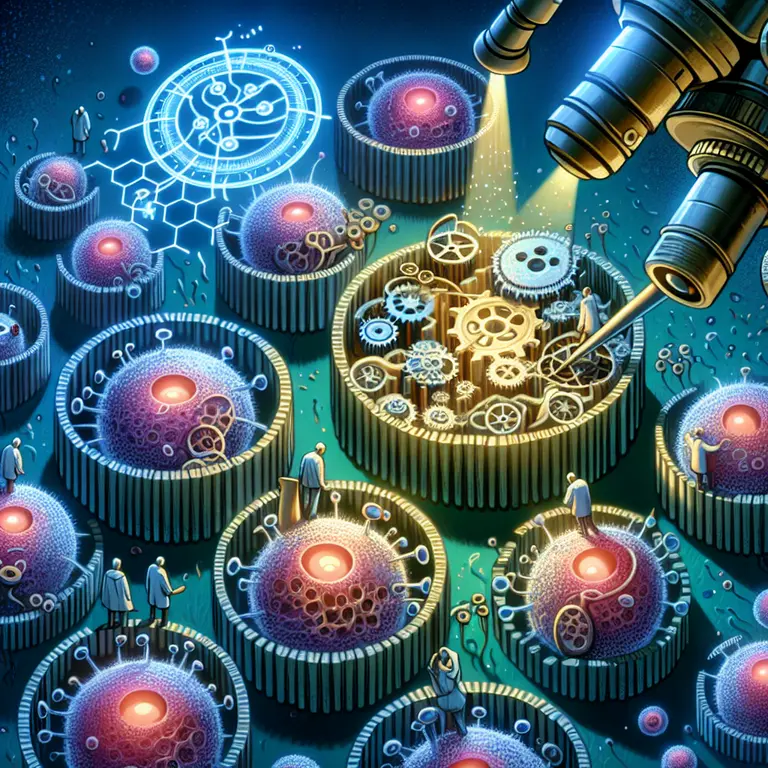
What all of this reveals is that life does not simply exist in time. Life is made of time, structured by oscillating processes nested within one another like wheels within wheels, from the millisecond firing of a single ion channel to the five-hour pulse of a tumor-suppressing protein to the 90-minute rhythm of rest and alertness to the 24-hour sweep of the circadian clock. Each layer of this hierarchy is real, measurable, and consequential. Each can be disrupted by disease, by the wrong timing of a drug, or by the accumulated insults of a lifestyle that ignores the body’s internal schedule.
The next generation of medicine may be less about what we give to the body and far more about when — and at what phase of its hidden, ticking interior world. Drugs that fail in clinical trials because they are administered on a fixed schedule regardless of the patient’s cellular clock phase may one day be rescued by chronopharmacological protocols that align treatment with biology rather than working against it. Therapies that restore lost rhythms — in diabetic beta cells, in exhausted immune cells, in the disrupted signaling cascades of a cancerous genome — may prove more powerful than any molecule designed to simply block or activate a single pathway.
The hidden clocks inside every cell are not a curiosity at the margins of biology. They are among the most ancient and fundamental features of living matter. Learning to read them, and eventually to work with them rather than in ignorance of them, may be one of the defining medical projects of the twenty-first century.