
Understanding the Complexities of Hyper Igm Syndrome
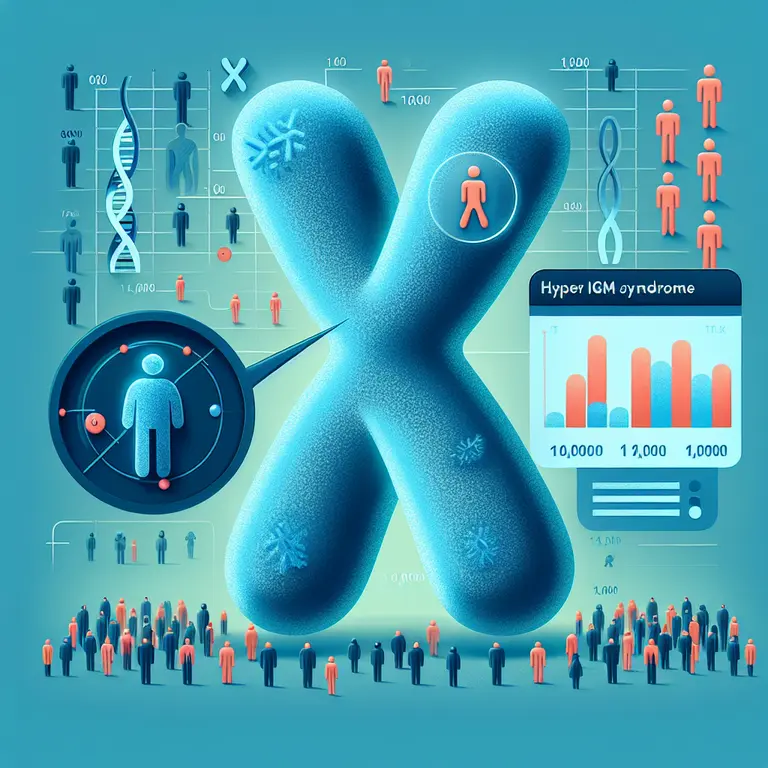
Hyper IgM Syndrome is a very rare disease caused by mutations in a gene located in the X chromosome. It affects approximately 1 in 1,000,000 individuals globally.
 Watch on YouTube
 Watch on Rumble
Hyper IgM Syndrome: A Rare Immunodeficiency at the Frontier of Genetic Medicine
Hyper IgM Syndrome (HIGM) is a rare primary immunodeficiency disorder characterized by abnormally low levels of specific antibodies called immunoglobulins G (IgG) and A (IgA), alongside normal or elevated levels of immunoglobulin M (IgM). This unusual antibody profile fundamentally disrupts the body’s immune response, leaving patients vulnerable to a wide range of infections that a healthy immune system would ordinarily neutralize with ease. Though rare, affecting roughly one in every 500,000 to one million individuals, HIGM carries a disproportionately heavy burden on patients and their families. Its complexity lies not only in the clinical challenges it presents but also in the intricate molecular machinery that, when disrupted, gives rise to the disorder. Understanding HIGM requires a journey through immunology, genetics, and the cutting edge of modern medicine.
History and Discovery
First recognized in the early 1960s, Hyper IgM Syndrome was initially described as a puzzling clinical anomaly in which patients exhibited the paradox of high IgM levels alongside severely deficient IgG and IgA. For decades, the disorder was poorly understood, and its underlying mechanisms remained largely speculative. Physicians could observe the consequences of the immune dysfunction but lacked the molecular tools to explain its origins.
It was not until the 1990s, with the rapid expansion of molecular genetics, that a breakthrough arrived. Researchers identified a mutation in the CD40 Ligand gene, located on the X chromosome, as one of the primary genetic causes of HIGM. This gene encodes a protein expressed on the surface of activated T helper cells and plays a critical role in signaling B cells to undergo class-switch recombination. Without this signal, B cells remain locked in a state where they can only produce IgM antibodies, unable to transition to producing the IgG, IgA, or IgE that the immune system needs for long-term, specialized defense. This discovery was transformative. It not only explained the characteristic antibody profile of HIGM but also illuminated a broader principle of immune cell communication that had implications far beyond this single disorder. Since then, researchers have identified several additional genetic variants responsible for HIGM, including mutations in the CD40, AID, and UNG genes, each disrupting the class-switch process at a different molecular step.
Common Manifestations
The clinical picture of HIGM is shaped by the immune system’s inability to mount a fully effective, diversified antibody response. Patients, many of whom are diagnosed in early childhood, often present with a range of symptoms that reflect both the types of pathogens their immune systems cannot control and the systemic consequences of chronic immune dysfunction.
Recurrent oral ulcers are among the more common and immediately visible manifestations. These painful sores can interfere with eating and speaking and tend to recur with frustrating regularity, significantly diminishing a patient’s quality of life. More dangerous, however, is the susceptibility to Pneumocystis jirovecii pneumonia, formerly known as Pneumocystis carinii pneumonia (PCP). This opportunistic lung infection, caused by a fungus that healthy immune systems readily suppress, can be life-threatening in HIGM patients and frequently presents as the illness leading to diagnosis.
Liver disease is another serious complication. HIGM patients are particularly vulnerable to Cryptosporidium parvum, a waterborne parasite that can infect the biliary tract and lead to sclerosing cholangitis, a progressive inflammatory condition of the bile ducts. Over time, this can result in cirrhosis and liver failure, representing one of the most severe long-term complications associated with the disorder. Neutropenia, an abnormally low neutrophil count, also occurs in a significant proportion of patients, further compounding their susceptibility to bacterial and fungal infections. The cumulative effect of these manifestations means that HIGM demands vigilant, multidisciplinary medical management from the time of diagnosis onward.
Conventional Treatment Approaches
For much of HIGM’s clinical history, treatment has focused on managing symptoms and reducing the frequency and severity of infections rather than addressing the underlying genetic defect. The cornerstone of conventional therapy is gamma globulin replacement, more precisely known as immunoglobulin replacement therapy. This involves regular infusions of immunoglobulin G derived from pooled donor blood plasma, administered either intravenously or subcutaneously at intervals of several weeks. By supplementing the patient’s deficient IgG levels, this therapy provides passive immunity against many common pathogens and has substantially reduced morbidity in HIGM patients over the past few decades.
Prophylactic antibiotics, particularly trimethoprim-sulfamethoxazole, are routinely prescribed to guard against PCP and other opportunistic infections. Patients are also advised to use only boiled or filtered water to reduce the risk of Cryptosporidium exposure, a precaution that underscores how significantly the disorder shapes daily life. Neutropenia, when present, may be managed with granulocyte colony-stimulating factor to stimulate white blood cell production.
Despite these measures, conventional therapies carry important limitations. Immunoglobulin replacement does not restore the immune system’s ability to produce its own antibodies or to coordinate the full range of adaptive immune responses. Patients remain on lifelong therapy, face ongoing infection risks, and are subject to the cumulative organ damage that repeated infections and chronic inflammation can produce. The inadequacy of these approaches has made the search for more definitive treatments an urgent scientific priority.
Emerging Therapies: Next-Generation Solutions
The most significant advance in the treatment of HIGM to date has been hematopoietic stem cell transplantation, commonly referred to as HSCT. By replacing a patient’s defective immune cells with healthy stem cells from a compatible donor, HSCT offers the possibility of a functional cure. When successful, the transplanted cells reconstitute the immune system with the correct genetic programming, restoring the capacity for class-switch recombination and normal antibody production. Outcomes have been most favorable when transplantation is performed early in life, before significant organ damage has accumulated, and when a well-matched sibling donor is available. However, HSCT carries substantial risks, including graft-versus-host disease, transplant failure, and infection during the period of immune reconstitution, meaning it is not universally applicable or without consequence.
Gene therapy represents perhaps the most conceptually elegant solution to HIGM. Rather than replacing the entire immune system, gene therapy aims to correct the defective gene within a patient’s own cells. Advances in vector technology, particularly the use of lentiviral vectors and, more recently, CRISPR-based gene editing tools, have brought this approach closer to clinical reality. Early-stage trials and preclinical studies have demonstrated the feasibility of correcting CD40L deficiency in hematopoietic stem cells, and the field is watching these developments with considerable anticipation.
Virus-specific T cell therapy represents another promising avenue. By engineering or selecting T cells that are primed to respond to specific pathogens, researchers hope to provide targeted immune reinforcement without the broad systemic risks of full immune reconstitution. This approach is particularly relevant for managing the viral and parasitic infections that pose the greatest danger to HIGM patients. Clinical trials investigating these approaches are ongoing, and while none have yet achieved widespread clinical adoption, the trajectory of research is encouraging.
Conclusion
Hyper IgM Syndrome occupies a unique position at the intersection of clinical immunology, molecular genetics, and translational medicine. It is rare enough to be overlooked in general medical discourse, yet complex enough to demand the full attention of some of the most advanced scientific disciplines. The history of HIGM reflects the broader arc of modern medicine, moving from symptomatic observation to molecular understanding to the threshold of genetic correction. For patients living with this disorder today, conventional therapies provide essential support, but they fall short of the definitive resolution that curative approaches promise. Continued investment in genetic research, clinical trials, and the development of accessible transplantation and gene therapy protocols remains essential. As science closes in on the molecular roots of HIGM, the prospect of a future in which this condition is not merely managed but genuinely cured grows increasingly within reach.