
Century-Old Auto Repair Shop Still Thriving in Modern Times
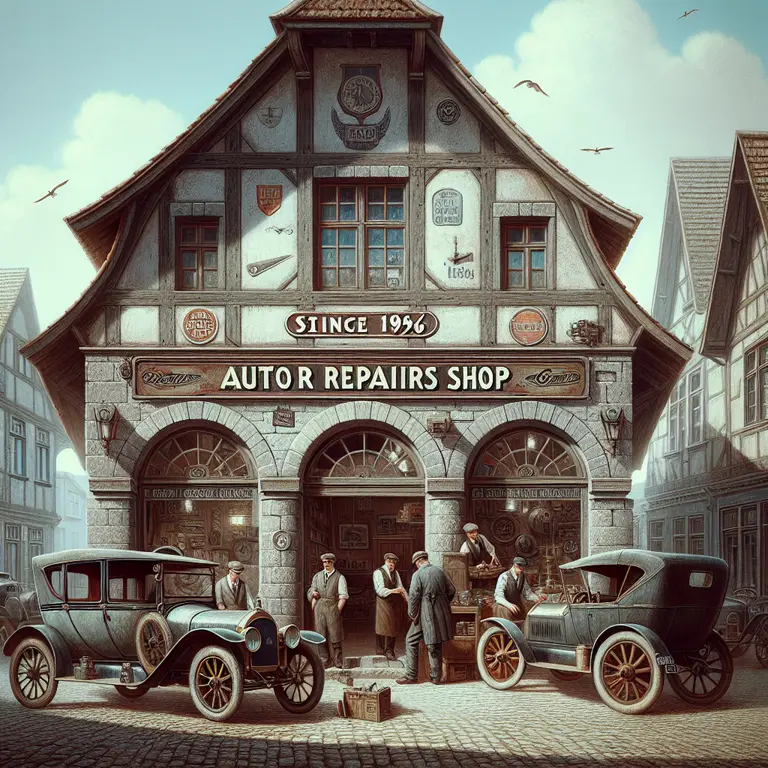
The oldest auto repair shop still in operation today is in Germany and it was established in 1896.
Introduction
The Ritschel & Becker auto repair shop in Hamburg, Germany, established in 1896 by Ludwig Ritschel and Carl Wilhelm Becker, stands as a testament to the longevity and adaptability of the automotive repair industry. Founded initially to repair and maintain water pumps for ships and factories, the shop evolved with the changing technological landscape of an era defined by rapid industrial transformation. As the automobile revolutionized transportation in the early twentieth century, Ritschel & Becker transitioned into an auto repair shop, servicing cars and trucks for well over a hundred years. This small but significant history remains largely unknown to many auto enthusiasts and historians alike, yet it highlights the enduring role that independent repair shops have played in supporting the broader evolution of the automobile industry.
To understand the full significance of Ritschel & Becker, one must consider the context in which it was born. The 1890s were a period of extraordinary mechanical ambition across Europe. The steam-powered industry was giving way to new forms of energy and propulsion, and the cities that had grown rich on maritime trade were beginning to feel the tremors of a coming transportation revolution. Hamburg, one of the busiest port cities in the world, sat at the center of this transformation. It was precisely this environment that gave Ritschel & Becker both its origins and its opportunity.
Early Days: A Focus on Water Pumps and Machinery
When Ludwig Ritschel and Carl Wilhelm Becker established their repair shop in Hamburg in 1896, the automobile was still in its infancy. Karl Benz had patented his Motorwagen only a decade earlier, and the idea of a privately owned horseless carriage remained a curiosity for most of the population. At the time, the shop’s primary focus was the maintenance and repair of water pumps used in ships and factories, reflecting the era's dominant industrial needs. As a major port city, Hamburg relied heavily on its shipping industry, and maintaining the machinery that powered ships and kept factories operational was critical to the city’s economic growth and daily function.
The work was demanding and technically exacting. Industrial water pumps of the late nineteenth century were complex assemblies of cast iron, brass fittings, leather seals, and precisely machined valves. A failure in any one of these components could halt a ship’s operations or shut down a factory floor. Ritschel and Becker built their reputation on the ability to diagnose problems quickly, source or fabricate replacement parts, and return equipment to working order with minimal downtime. This kind of precision-oriented, client-dependent work instilled in the shop a culture of accountability that would define its character for generations.
Repairing water pumps required not only mechanical skill but also a broad understanding of fluid dynamics, material fatigue, and the particular stresses that maritime environments placed on metal components. Saltwater corrosion, pressure fluctuations, and the constant vibration of ship engines created failure patterns that required specialized knowledge to address. Ritschel & Becker’s expertise in navigating these challenges gave them a technical foundation that was, in many ways, more sophisticated than the early automotive work that would eventually replace it.
Transitioning to Automotive Repairs: Embracing New Technology
As the twentieth century approached, the invention and popularization of the automobile began to reshape the transportation landscape in ways that few had anticipated. While Ritschel & Becker initially focused on ships and industrial machinery, the founders recognized the growing automotive market’s potential and decided to transition to automobile repairs. This move reflected the adaptability and foresight of two men who understood that the future of transportation would increasingly belong to cars and trucks rather than to horse-drawn carriages or even the great steamships of the previous century.
By the early 1900s, automobiles were becoming more accessible to the public, and with that accessibility came a new and urgent demand for specialized maintenance and repair services. Early cars were notoriously unreliable. Tires frequently blew, engines overheated, ignition systems failed, and the roads of the era were ill-suited to the mechanical tolerances of these new machines. Drivers needed skilled mechanics they could trust, and there were very few. Ritschel & Becker stepped into this gap, leveraging their existing mechanical expertise to service early automobiles and establishing themselves as one of Hamburg’s first dedicated automotive repair facilities.
The transition from ship and factory machinery to automotive repairs was not without its difficulties. The engineering principles overlapped in meaningful ways, but the specific systems were quite different. Early car engines operated on internal combustion rather than steam, and the tolerances involved were considerably tighter. Carburetion, ignition timing, and early transmission systems all required new knowledge. Ritschel and Becker invested in learning these systems, attending technical demonstrations, acquiring trade literature from manufacturers, and in some cases consulting directly with the engineers who designed the vehicles they were tasked with repairing. Their willingness to pursue knowledge rather than simply rely on past experience was a defining characteristic of the shop’s approach.
This adaptability allowed the shop to stay relevant and continue serving the needs of Hamburg’s industrial and commercial sectors even as those sectors themselves were being transformed. Fleet operators, commercial haulers, and eventually private motorists all found their way to Ritschel & Becker, drawn by a reputation built over years of reliable industrial work and now being extended into the new world of automotive transportation.
A Century of Service: Longevity in the Automotive Repair Industry
Over the decades, Ritschel & Becker became a fixture in Hamburg’s automotive scene, servicing cars and trucks through periods of extraordinary technological change and historical upheaval. The shop survived two world wars, the Great Depression, postwar reconstruction, and the wholesale reinvention of the automobile as a product. Its ability to adapt to new developments in automotive technology, whether it was the introduction of electric starters in the 1910s, the transition from carburetors to fuel injection in the latter half of the century, or the rise of computerized diagnostics in the modern era, enabled it to remain competitive and relevant across a span of time that saw most of its contemporaries close their doors.
What sets Ritschel & Becker apart from the many repair shops that rose and fell during this same period is its commitment to continuous learning and institutional investment in new skills and equipment. As the automotive industry grew more complex, the shop responded not by specializing narrowly but by broadening its capabilities. Successive generations of mechanics trained at Ritschel & Becker learned not just the techniques of their immediate era but also the history and logic of the systems they were working on. This depth of understanding allowed them to approach new technologies with confidence rather than confusion.
The shop’s emphasis on quality service and the cultivation of customer trust was equally crucial to its longevity. In an industry where a single bad repair can destroy a relationship built over years, Ritschel & Becker developed a culture of transparency and accountability. Customers were told honestly what their vehicles needed, given accurate estimates, and never charged for work that had not been done. This straightforward approach, unusual enough in any era to be noteworthy, built a loyal clientele that returned generation after generation and referred friends, family members, and business associates. Loyalty of this kind is not easily manufactured. It is earned slowly and lost quickly, and Ritschel & Becker understood this from the beginning.
The Legacy of Ritschel & Becker: A Hidden Gem in Automotive History
While Ritschel & Becker may not be a household name even among dedicated automotive historians, their story represents a significant and underappreciated strand of the broader history of transportation. Most popular accounts of automotive history focus on inventors, manufacturers, and the iconic vehicles they produced. The story of the repair industry, the network of skilled mechanics and small shops that kept those vehicles running, is far less celebrated but no less important. Without facilities like Ritschel & Becker, the widespread adoption of the automobile would have been considerably slower and more painful. A car that cannot be repaired is ultimately a liability rather than an asset, and the early automotive market depended on a competent repair infrastructure to convince buyers that ownership was a practical proposition.
The success of Ritschel & Becker over more than a century demonstrates how crucial independent repair shops have been in supporting the automotive revolution at the local and regional level. Whether working on early models comparable to the Ford Model T, mid-century German engineering from manufacturers like Volkswagen and Mercedes-Benz, or modern vehicles equipped with advanced electronic systems, the shop has remained an essential part of Hamburg’s transportation infrastructure. It has done so not by chasing trends or reinventing itself with each passing decade, but by maintaining a core commitment to mechanical excellence while remaining open to whatever new knowledge that commitment required.
The story of Ritschel & Becker also speaks to something larger about the nature of craft and expertise in an industrial society. The founders were not inventors or entrepreneurs in the dramatic sense that word often implies. They were skilled tradesmen who paid attention, worked hard, and built something durable. That durability, measured not in patents or market share but in more than a century of continuous service, is its own kind of achievement.
Conclusion: A Testament to Adaptability and Excellence
The history of Ritschel & Becker is ultimately a story about the quiet virtues that sustain institutions across time: adaptability, honesty, technical rigor, and a genuine commitment to serving the people who depend on your work. Founded in 1896 as a repair shop for the industrial machinery of a maritime city, the business successfully transitioned to automotive repair as cars became an integral part of modern life. It did so not through luck or circumstance alone, but through deliberate choices made by people who understood their craft and respected their customers' intelligence.
While the shop may not be widely known outside of Hamburg, its longevity and sustained reputation are a testament to the critical role that skilled repair shops have played in the history of transportation. Ritschel & Becker’s ability to evolve alongside changing technologies while maintaining a reputation for quality service demonstrates that expertise and flexibility are not opposing values but complementary ones. As a small but genuinely significant piece of automotive history, Ritschel & Becker continues to exemplify the enduring spirit of craftsmanship and the remarkable possibilities that arise when knowledge is passed carefully from one generation to the next.