
Transmission Risks: Can You Catch a Disease from Books?
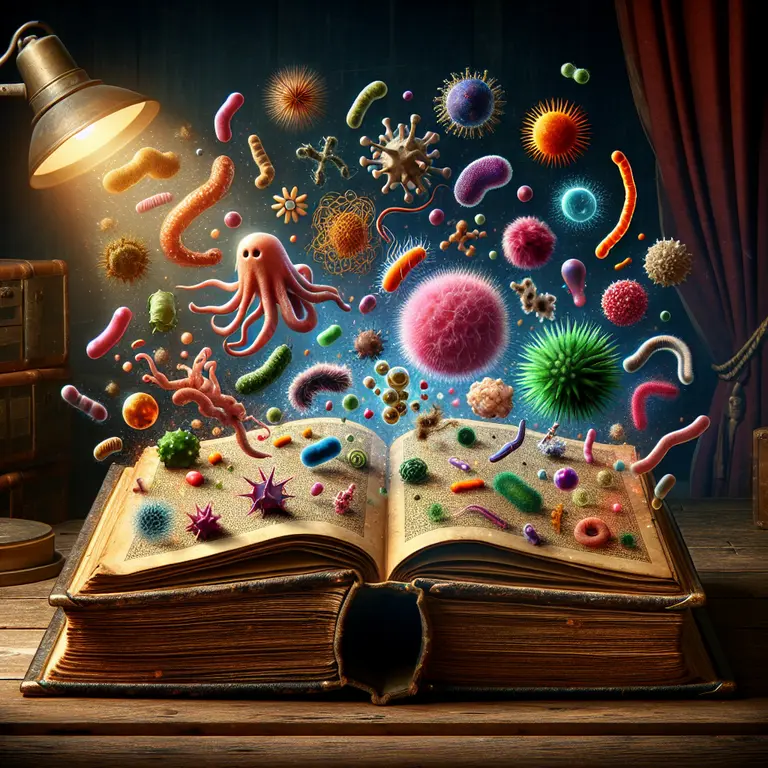
It is possible to catch a disease or get sick from an old book due to the microbes and bacteria that can survive within its pages.
Introduction
When most people think about what lives between the pages of an old book, they imagine the preserved ideas of long-dead thinkers, the faded ink of historical records, or perhaps the musty scent of aged paper. Few would consider that books might also be home to thriving communities of microscopic life. Yet the reality is that books, particularly older ones that have passed through many hands over many years, can serve as remarkably hospitable environments for bacteria, fungi, dust mites, and other microorganisms. This is not merely a theoretical concern. Scientific research has begun to reveal the extent to which everyday objects, including those we consider benign and even intellectually noble, can carry biological passengers that, under the right conditions, can affect human health.
Understanding the microbial life of books requires stepping back and considering what a book actually is from a biological perspective. It is a porous, carbon-rich object that is frequently touched by human hands, stored in enclosed and often poorly ventilated spaces, and rarely subjected to the kind of cleaning that other frequently handled objects receive. These characteristics make books surprisingly well-suited to supporting microbial communities, and the science behind this reality is more nuanced and fascinating than most readers would expect.
What Lives Between the Pages
A 2013 study published in the journal PLOS ONE examined the microbial communities in a university library and reported findings of striking diversity. Researchers identified a wide range of microorganisms living on and within the books, including bacterial species commonly associated with human skin. Among these were organisms capable of causing skin infections under certain conditions, particularly in individuals whose immune systems are not functioning at full capacity. The presence of these bacteria was not incidental. It reflected the simple reality that every time a person handles a book, they deposit a portion of their own microbial fingerprint onto its surface.
Human skin is home to an estimated one trillion microorganisms at any given time, a community so complex and individualized that researchers have proposed using it as a form of biological identification. When we touch objects, we transfer a sample of that community onto whatever surface we contact. Books, with their textured paper and fabric or leather covers, are particularly effective at retaining these deposits. Unlike smooth surfaces such as glass or polished metal, which offer fewer points of adhesion, the fibrous structure of paper and bookbinding materials creates an environment where microorganisms can settle and persist.
Fungi are also common residents of old books. Paper, derived from organic plant material, provides a nutrient source for certain fungal species, particularly under elevated humidity. The characteristic smell of old books, which many readers find deeply pleasant and nostalgic, is in part produced by the chemical byproducts of fungal activity and the slow chemical degradation of paper itself. In other words, the beloved scent of aged literature is, at least partially, the smell of biological and chemical decomposition in progress.
The Science of Fomite Transmission
The spread of infectious diseases through contaminated inanimate objects is a well-established phenomenon known as fomite transmission. The term derives from the Latin word fomes, meaning tinder, and refers to any object that can carry and transfer infectious agents from one person to another. Common examples include doorknobs, elevator buttons, handrails, and shared utensils. The inclusion of books in this category may seem surprising, but it follows logically from the same principles that make other frequently touched surfaces a concern.
Research into fomite transmission has demonstrated that certain pathogens can survive on surfaces for remarkably long periods. Some strains of bacteria can persist on paper for hours or even days, while certain viruses have been shown to remain viable on porous surfaces for extended periods under the right conditions. In the case of very old books stored in environments with stable temperatures and limited light exposure, the conditions may be favorable enough for some microorganisms to remain active far longer than they would on more commonly cleaned surfaces.
It is worth noting, however, that the mere presence of a pathogen on a surface does not automatically translate into a meaningful health risk. Infectious disease requires not only the presence of an organism but also sufficient quantity, a viable route of transmission, and a susceptible host. Most people who handle old books in libraries or used bookshops are unlikely to become ill as a direct result, because the microbial load on any given book is typically not high enough to overwhelm a healthy immune system. The concern is more significant for individuals who are immunocompromised, elderly, or otherwise vulnerable, for whom even relatively low doses of certain pathogens can pose a genuine risk.
Broader Patterns in Object-Based Pathogen Transfer
The findings related to books do not exist in isolation. They are part of a growing body of research examining the microbial landscapes of everyday objects and public spaces. The MetaSUB International Consortium, a large-scale research initiative associated with University College London and other global institutions, has undertaken systematic mapping of microbial communities across urban environments. Their work has identified significant pathogen presence on objects including paper currency, metal coins, mobile phones, and public touchscreens in locations such as airports and transit hubs.
These findings collectively suggest that the objects we interact with most casually and most frequently are often the ones we think least about in terms of microbial risk. Mobile phones, for instance, are carried close to the body, kept warm by body heat, and touched hundreds of times per day, creating conditions that are in many ways more favorable to microbial growth than the cool, dark shelves of a library. Paper currency changes hands constantly across populations and geographies, carrying with it a biological record of everywhere it has been and everyone who has touched it.
The lesson from this research is not that people should avoid touching books, phones, or cash, but rather that a more thoughtful awareness of surface hygiene is warranted, particularly in contexts where vulnerable populations are present. Libraries that serve hospitals, care homes, or schools may benefit from more deliberate cleaning protocols for high-circulation materials, even if the practical risk to healthy individuals remains low.
Conclusion
Books occupy a unique place in human culture. They are objects of knowledge, memory, and imagination, and they are also, as science has now made clear, biological environments in their own right. The microbial communities that accumulate on and within books over time reflect every person who has ever handled them, a kind of invisible social history written in bacteria and fungi rather than ink. While the health risks associated with this reality are modest for most people under most circumstances, they are not negligible, particularly for those whose immune systems may not be equipped to manage even low-level microbial exposure.
Proper storage conditions, including controlled humidity, adequate ventilation, and limited exposure to damp environments, can significantly reduce microbial growth on books and extend both their physical longevity and their safety during handling. As research into urban and object-based microbiomes continues to expand, it seems likely that our understanding of the biological lives of everyday objects, including the books we have long treated as purely intellectual artifacts, will become considerably richer and more complex.
Citations: Zaura et al., 2015; Grice and Segre, 2012; MetaSUB International Consortium, University College London.