
The Hidden Influence of Toxoplasma on Human Behavior
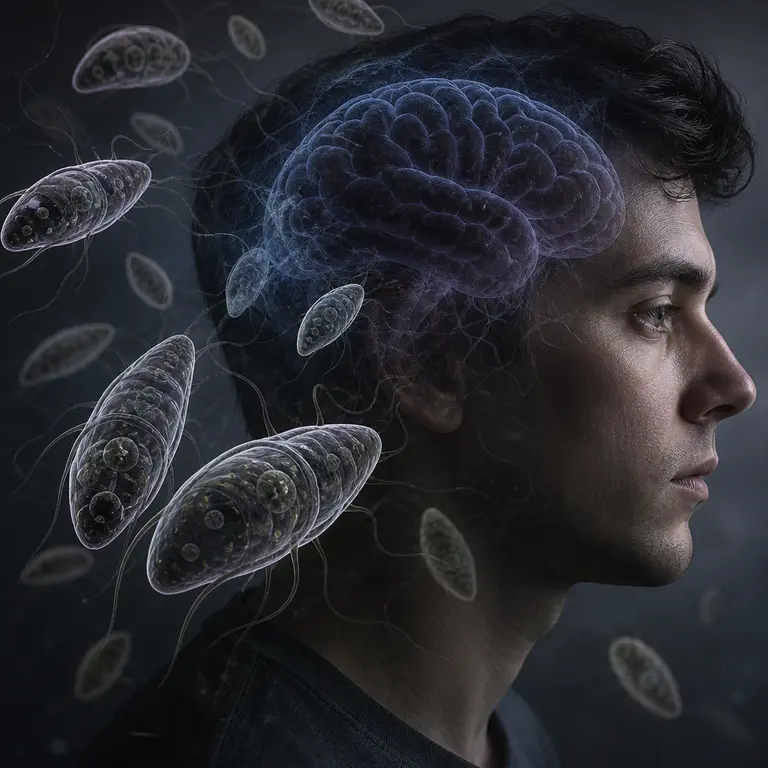
Toxoplasma gondii, a single-celled parasite found in roughly one-third of all humans, has been linked to measurable shifts in risk-taking behavior, reaction time, testosterone levels, and potentially psychiatric disorders — raising unsettling questions about how much of human personality is truly our own.
 Watch on YouTube
 Watch on Rumble
A Parasite Hidden in Plain Sight
Somewhere between 30 and 50 percent of the global human population carries a single-celled organism called Toxoplasma gondii inside their brain tissue right now. Most of them have no idea. The parasite causes a condition called toxoplasmosis, which in healthy adults typically produces no symptoms at all — or perhaps a brief flu-like episode that passes without notice. For decades, the scientific consensus held that once the acute phase passed, the organism simply went dormant, encased in cysts within muscle and brain tissue, harmless and inert.
That consensus has been quietly unraveling since the 1990s, driven largely by the work of Czech parasitologist Jaroslav Flegr at Charles University in Prague. What Flegr and a growing number of researchers around the world have uncovered is both fascinating and deeply strange: Toxoplasma gondii does not simply hide inside its human hosts. In measurable, statistically significant ways, it appears to change them.
What makes this story particularly unsettling is not merely the science itself, but the broader question it raises about the nature of human identity. We tend to think of personality, temperament, and decision-making as products of genetics, upbringing, culture, and conscious experience. The possibility that a microscopic organism — one requiring no symptoms to announce its presence — might quietly reshape those same qualities challenges assumptions that most people have never had reason to examine. The story of Toxoplasma gondii is, in this sense, not just a story about parasitology. It is a story about what it means to be the author of your own behavior.
The Rat Experiment That Changed Everything
To understand why Toxoplasma’s effects on humans matter, it is necessary to understand what the parasite does in its preferred host — the domestic cat. Toxoplasma reproduces sexually only inside feline intestines, and its eggs are shed through cat feces. Rodents that ingest those eggs become intermediate hosts, and here the parasite performs one of the most extraordinary feats of behavioral manipulation documented in nature.
Infected rats and mice lose their innate fear of cat urine. More than that, they are actually attracted to it. Studies published in the journal Nature in 2000 by researchers at the University of California, Oxford, and elsewhere confirmed that infected rodents approach areas marked with cat scent rather than fleeing them. The mechanism involves the parasite forming cysts specifically in the amygdala, the brain region governing fear responses, and in the olfactory circuitry that processes scent. Infected rodents show elevated testosterone and altered dopamine signaling. Their fear of predators is not merely reduced; it is selectively reversed toward the specific predator that completes the parasite’s life cycle.
This is not incidental. It is precise. The parasite effectively converts a survival instinct into a death drive, steering its host toward the stomach of the one creature that allows it to reproduce. The selectivity of this manipulation is what makes it so remarkable. Infected rodents do not become generally fearless or broadly reckless. They remain cautious around other threats. The behavioral change is targeted, as though calibrated by some invisible hand, toward the single outcome that serves the parasite’s reproductive needs. Subsequent research has shown that this targeting involves epigenetic modifications in neurons in the amygdala, with the parasite apparently silencing genes associated specifically with fear responses to feline odors, while leaving other fear pathways largely intact.
The evolutionary elegance of this mechanism prompted researchers to ask an uncomfortable follow-up question: if Toxoplasma rewires rat brains with such specificity, what might it be doing inside the brains of three billion infected humans?
What Happens to Infected Humans
Jaroslav Flegr began studying this question in the early 1990s after noticing that he seemed to take unusual risks — stepping into traffic without adequate caution and behaving in ways that struck him as atypically reckless. He suspected his own Toxoplasma infection, confirmed through blood testing, might be relevant. His subsequent research over two decades, drawing on large population studies in the Czech Republic and internationally, produced a series of findings that remain controversial but have been partially replicated by independent teams.
Infected men in Flegr’s studies showed lower superego strength, greater suspicion, and slower reaction times than uninfected controls. Infected women showed nearly opposite personality shifts — becoming warmer, more conscientious, and more trusting. Both sexes showed elevated testosterone levels. In traffic accident studies, Toxoplasma-positive drivers were statistically more likely to have been involved in collisions, a finding replicated in a 2009 study published in BMC Infectious Diseases that analyzed data from 146 countries and found a positive correlation between national Toxoplasma prevalence rates and traffic fatality rates, even after controlling for economic factors.
The divergence between male and female responses to infection is one of the more puzzling features of the research. Some investigators have proposed that the difference reflects the distinct ways in which elevated dopamine and testosterone interact with male and female neurological baselines, producing opposite behavioral expressions of the same underlying biochemical disruption. Others have suggested that the personality instruments used in these studies may measure real but culturally mediated responses to the same underlying changes. The honest answer is that no one has fully explained this asymmetry, and it remains one of the more productive open questions in the field.
Perhaps the most striking associations involve psychiatric conditions. Multiple independent studies, including a major 2016 analysis from Denmark involving over 80,000 participants published in Brain, Behavior, and Immunity, found that individuals with Toxoplasma antibodies — indicating past infection — had significantly elevated rates of schizophrenia diagnoses, bipolar disorder, and self-harm behaviors. The Danish cohort study, led by researcher Kristoffer Nyboe Andersen, found that Toxoplasma-positive individuals were 53 percent more likely to attempt suicide. These are correlations, not proven causal pathways, but they have proven remarkably consistent across populations and across different study methodologies, which is precisely what makes them difficult to dismiss.
The Dopamine Connection
The biological mechanism most frequently proposed to explain these effects involves dopamine. Toxoplasma gondii carries two genes encoding the enzyme tyrosine hydroxylase, which is the rate-limiting enzyme in dopamine synthesis. No other known parasitic organism carries this gene. When the parasite forms cysts in brain tissue, it may locally elevate dopamine production in the surrounding neural environment, altering signaling in circuits associated with fear, reward, and risk assessment.
Researchers at Leeds University demonstrated in 2009 that infected rodents show measurably elevated dopamine concentrations in brain regions near parasite cysts. The dopamine hypothesis would also help explain why antipsychotic medications, many of which function as dopamine antagonists, appear to reduce some behavioral effects of Toxoplasma infection in animal models. It would further connect the parasite’s observed associations with schizophrenia, a condition long linked to dopamine dysregulation.
The dopamine pathway also intersects in interesting ways with what researchers call the novelty-seeking personality dimension — a tendency toward risk-taking, impulsivity, and attraction to new stimuli that is itself associated with elevated dopamine activity. Some researchers have speculated that in populations with high Toxoplasma prevalence, the cumulative effect of widespread, low-level dopamine elevation might be detectable not only in individual behavior but also in aggregate cultural tendencies. This is a deeply speculative claim, and it has attracted justified criticism for overstretching available evidence. Nevertheless, it illustrates how seriously some scientists have begun to take the possibility that this parasite’s influence operates at a scale far beyond the individual host.
This is not a settled science. Prominent critics, including several researchers writing in Trends in Parasitology, have argued that many of Flegr’s studies rely on self-reported personality measures, that effect sizes are small, and that the causal direction is unclear — people with certain personality traits may simply be more likely to acquire the infection through dietary habits or risk-taking behavior that predates infection. The field is genuinely contested, and responsible reporting requires acknowledging that the parasite-drives-behavior narrative, while compelling, remains a hypothesis rather than an established fact.
Transmission, Geography, and the Underreported Scale
Toxoplasma gondii is transmitted primarily through consumption of undercooked meat containing tissue cysts, through contact with soil or surfaces contaminated by cat feces, and from mother to fetus during pregnancy, where it can cause severe neurological damage. Infection rates vary dramatically by country, shaped by culinary traditions and cat ownership rates. France, where raw and rare meat consumption is culturally embedded, has historically reported infection rates exceeding 50 percent of the adult population. Brazil and some parts of sub-Saharan Africa show rates above 60 percent. The United States sits at roughly 11 percent, according to recent CDC estimates, down from higher historical figures, likely reflecting changes in meat preparation practices.
The geographic variation in infection rates creates a natural experiment at the population level, and researchers have sought to exploit it to test behavioral hypotheses. Cross-national comparisons have found that countries with higher Toxoplasma seroprevalence show measurable differences in aggregate measures of uncertainty avoidance and novelty-seeking, as assessed through large international psychological surveys. These findings have been published in peer-reviewed journals and have attracted both serious attention and serious criticism in equal measure. The confounding variables in cross-national comparisons are numerous and difficult to fully account for, and the research should be read with appropriate caution. But the consistency of the associations across multiple independent analyses has kept the hypothesis alive and under active investigation.
The parasite’s near-universal geographic distribution and its presence in a substantial fraction of the global human population make it, by sheer numbers, one of the most consequential parasitic infections on Earth — yet it receives a fraction of the research funding directed at malaria or tuberculosis, largely because it produces no obvious acute disease in immunocompetent adults. The hidden costs, if the behavioral and psychiatric associations hold up under further scrutiny, could be enormous. A back-of-the-envelope calculation based on the Danish suicide attempt data alone, applied to global infection estimates, suggests a scale of human suffering that would justify treating this as a major public health priority.
What This Means for How We Understand Ourselves
The implications of Toxoplasma research extend well beyond parasitology. If a single-celled organism can measurably alter personality dimensions, risk tolerance, testosterone levels, and potentially contribute to psychiatric vulnerability in a third of the human species, it forces a reconsideration of how much of what we call personality, temperament, or mental illness is truly endogenous — arising from within — and how much may be shaped by organisms we carry but cannot see.
This is not a new philosophical challenge. The gut microbiome has already been shown to influence mood, cognition, and behavior through the gut-brain axis. What makes Toxoplasma distinctive is the precision and apparent intentionality of its effects, the evolutionary logic that makes the manipulation comprehensible, and the sheer scale of its human presence. We are, in a meaningful sense, not the only agents operating inside our own nervous systems. The organisms we host — some beneficial, some neutral, some with agendas entirely their own — participate in shaping the outputs we experience as thought, feeling, and choice.
Current research groups at Stanford, the University of Leeds, and Charles University continue to investigate the parasite’s mechanisms, with particular interest in whether anti-parasitic drugs might reduce psychiatric risk in infected individuals. Early trials using existing compounds have shown modest but measurable effects on some behavioral markers in infected populations, and the prospect of a pharmacological intervention that could reduce schizophrenia risk or suicide attempts by targeting an infectious agent rather than a neurotransmitter directly represents a genuinely novel therapeutic direction. Whether it will prove viable at scale remains to be seen, but the scientific logic is coherent, and the stakes are high enough to warrant serious investment.
The parasite has been with humanity for millennia. It co-evolved alongside us as we domesticated cats, developed agriculture, and began consuming animals in ways that created new transmission pathways. It may have shaped more of human history, culture, and individual lives than anyone has yet calculated. That possibility alone — that a silent, invisible, single-celled organism may be one of the unacknowledged co-authors of human civilization — is perhaps the most extraordinary scientific story that most people have never heard.
Sources & Further Reading
- Flegr, Jaroslav. Frozen Evolution: Or, That's Not the Way It Is, Mr. Darwin. Charles University Press, 2008.
- Andersen, Kristoffer Nyboe et al. Toxoplasma gondii Infection and Self-directed Violence in Mothers. Brain, Behavior, and Immunity, 2016. https://doi.org/10.1016/j.bbi.2016.08.001
- Webster, Joanne P. The Effect of Toxoplasma gondii on Animal Behavior: Playing Cat and Mouse. Schizophrenia Bulletin, 2007. https://doi.org/10.1093/schbul/sbl073
- Centers for Disease Control and Prevention. Toxoplasmosis: Epidemiology and Risk Factors. CDC, 2023. https://www.cdc.gov/parasites/toxoplasmosis/epi.html