
Microbial Life Thrives in Extreme Radiation Environments
A small but remarkable group of microorganisms not only tolerate lethal doses of ionizing radiation inside active nuclear facilities but appear to thrive there, challenging fundamental assumptions about the limits of life.
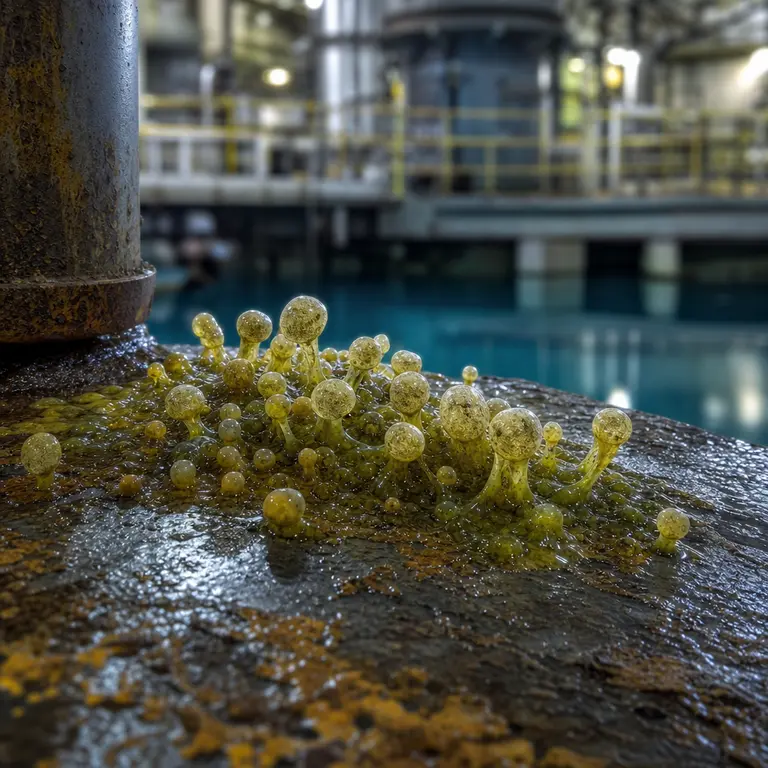
The Radiation Paradox at the Heart of Nuclear Facilities
When engineers first began operating nuclear reactors in the mid-twentieth century, they assumed the intensely hostile environment inside the cooling water systems would be essentially sterile. Ionizing radiation at high doses destroys DNA, denatures proteins, and generates reactive oxygen species that tear apart cellular machinery. The logic seemed airtight: nothing biological could persist in such conditions. That assumption began to unravel in the 1950s and accelerated dramatically in subsequent decades as microbiologists discovered thriving microbial communities colonizing the very water that cools reactor cores.
These organisms are not merely surviving in a marginal sense. Some are metabolically active, reproduce, and, in certain cases, appear to exploit radiation itself as part of their biochemical environment. The discovery has profound implications not only for nuclear safety engineering but for astrobiology, medicine, and our fundamental understanding of where life can exist. What began as an embarrassing anomaly in a can of irradiated meat has grown into one of the most consequential and underreported stories in modern biology, quietly reshaping how scientists define the outer limits of habitability.
Deinococcus Radiodurans: The Toughest Cell on Earth
The most studied radiation-resistant organism is Deinococcus radiodurans, a bacterium first isolated in 1956 from a can of ground meat that had been sterilized by gamma radiation at Oregon State University. Scientists expected the meat to be sterile. It was not. The bacterium inside had survived a dose of roughly 1.5 million rads, a quantity that would kill a human at a fraction of one percent of that exposure. The discovery was treated initially as a laboratory curiosity, a statistical fluke perhaps, or a sign of contamination. Subsequent work made clear that neither explanation held. The organism was real, robust, and reproducible.
What makes Deinococcus radiodurans extraordinary is not that it avoids DNA damage. It cannot. At high radiation doses, its genome is shattered into hundreds of fragments. What the organism does instead is repair that damage with stunning efficiency. It possesses multiple copies of its genome at any given time, uses a highly coordinated set of DNA repair enzymes, and employs a spatial organization inside the cell that keeps broken DNA fragments close together so they can be reassembled. The entire genome can be reconstructed from fragments within hours. Researchers at the University of Wisconsin have estimated that D. radiodurans can tolerate doses up to 1.5 million rads of gamma radiation, approximately 3,000 times the lethal dose for humans, and survive complete desiccation for years without losing viability.
The bacterium’s cellular membrane is also unusually rich in carotenoid pigments, which act as antioxidants, neutralizing some of the reactive oxygen species generated by radiation before they can attack DNA. This layered defense system is not a single adaptation but an integrated suite of mechanisms refined over evolutionary time, likely in response to extreme desiccation rather than radiation specifically, since the molecular damage caused by both stressors is chemically similar. Researchers have also identified an unusually high concentration of manganese ions within D. radiodurans cells, which appear to protect proteins from oxidative damage even when DNA repair is underway. This distinction matters because proteins are the machinery that performs the repair itself, and protecting them ensures the repair system remains functional even under the most severe conditions.
The practical applications of this organism have attracted serious scientific interest. Geneticists have engineered strains of D. radiodurans to break down toxic compounds in radioactive waste sites, where conventional organisms cannot survive long enough to perform bioremediation. The bacterium has also been studied as a model for understanding DNA repair mechanisms relevant to cancer biology and radiation therapy, since the same molecular pathways that allow it to survive in a reactor environment may hold clues to making human cells either more or less resistant to radiation, depending on the therapeutic goal.
Reactor Biofilms and the Contamination Problem
The practical consequences of radiation-resistant microbes became apparent as nuclear operators began encountering persistent microbial contamination in reactor cooling systems, spent fuel storage pools, and even on reactor component surfaces. Spent nuclear fuel pools, which store highly radioactive fuel assemblies in water, were found to harbor biofilms of bacteria and fungi despite continuous exposure to radiation levels that should have been lethal. These are not incidental findings from poorly maintained facilities. They have been documented at well-monitored, operational nuclear plants across multiple countries and across different reactor designs.
A 2016 study published in the journal Environmental Microbiology documented microbial communities in the spent fuel pools at a nuclear facility in Spain. Researchers identified dozens of bacterial genera, including species of Methylobacterium, Sphingomonas, and Meiothermus, all thriving in water with radiation levels orders of magnitude above those found in ordinary environments. The organisms had adapted to use the sparse organic carbon present in the ultrapure water and showed metabolic signatures consistent with active growth rather than mere dormancy. Crucially, the water in spent fuel pools is maintained at high purity to limit corrosion and radioactive contamination, so the microbes were not exploiting a nutrient-rich environment. They were extracting what they needed from conditions that would be considered extreme even by the standards of other hostile environments.
This contamination is not merely a curiosity. Microbially induced corrosion is a recognized engineering problem in nuclear facilities. Certain bacteria produce acids or reduce sulfates, accelerating corrosion of stainless steel and other materials. In a nuclear context, even minor corrosion of fuel cladding or reactor components can have significant safety implications. The Nuclear Regulatory Commission in the United States has issued guidance on monitoring and controlling microbial growth in reactor systems, acknowledging the problem as an ongoing engineering challenge rather than a solved one. The economic dimensions are also substantial. Corrosion-related maintenance and component replacement at nuclear facilities represent a significant fraction of operating costs, and even a modest contribution from microbial activity compounds over the decades-long operational lifespan of a reactor.
Some organisms found in reactor environments have also been shown to concentrate radioactive isotopes within their cells via bioaccumulation, raising questions about how microbial activity might influence the distribution and mobility of radionuclides in cooling water and waste storage systems. Understanding these dynamics has become an increasingly important component of long-term nuclear waste management planning, particularly as countries debate the design of deep geological repositories intended to isolate radioactive material for thousands of years.
Radiotrophic Fungi and the Chernobyl Connection
Perhaps the most astonishing discovery in this field came from the ruins of Reactor Number Four at Chernobyl. In 1991, scientists exploring the destroyed reactor found black, melanin-rich fungi growing directly on the walls of the most radioactive areas inside the containment structure. These organisms were not merely tolerating radiation. Laboratory experiments conducted by researchers at the Albert Einstein College of Medicine, published in PLOS ONE in 2007, demonstrated that certain melanized fungi exposed to radiation levels 500 times higher than normal background radiation actually grew faster than control samples kept in standard conditions.
The proposed mechanism involves melanin, the pigment responsible for human skin color. In these fungi, melanin appears to function somewhat analogously to chlorophyll in plants, absorbing ionizing radiation and converting it into chemical energy usable by the cell. This process, sometimes called radiosynthesis, remains incompletely understood and is still debated in the scientific literature, but the enhancement of growth under radiation exposure has been replicated in multiple experimental settings. The fungi identified include Cladosporium sphaerospermum and Wangiella dermatitidis, both of which have since been found in reactor environments globally. The fact that these are not exotic or newly discovered organisms makes the finding stranger rather than more reassuring. These are species that occur in ordinary soils and on building surfaces worldwide, suggesting that the capacity for radiation exploitation may be latent in a much broader range of organisms than previously suspected.
The implications extend beyond Earth. NASA researchers have taken an interest in melanized fungi as potential candidates for organisms that might survive the radiation environment of Mars, where the thin atmosphere provides little shielding against cosmic rays. Experiments aboard the International Space Station have exposed samples of Cladosporium sphaerospermum to the radiation environment of low Earth orbit to assess their response, with preliminary results suggesting that the organisms exhibit measurable growth in that environment. A study published in 2020 in bioRxiv reported that samples of the fungus placed on the exterior of the ISS showed not only survival but a detectable increase in growth rate compared to ground controls, though the authors noted that the results require further validation before firm conclusions can be drawn about the mechanism involved.
The Chernobyl exclusion zone has itself become an unexpected outdoor laboratory for studying adaptation under chronic radiation exposure. Populations of birds, mammals, and invertebrates in the zone have been studied for signs of radiation-induced mutation and selection, and while some populations show elevated mutation rates and reduced fitness, others appear to have undergone measurable adaptive shifts in antioxidant capacity and DNA repair efficiency within just a few decades. The timescale is short enough to be remarkable, suggesting that selection pressure from radiation can produce detectable biological responses far faster than classical evolutionary models would have predicted.
Evolutionary Origins and Astrobiological Significance
The evolutionary story behind radiation resistance remains a subject of active investigation. The leading hypothesis is that most radiation-resistant organisms did not evolve specifically in response to radiation, since background radiation on Earth has never been high enough to exert strong selective pressure on its own. Instead, the resistance likely evolved as a byproduct of adaptations to extreme desiccation. When cells dry out completely, reactive oxygen species accumulate and cause DNA damage chemically indistinguishable from radiation-induced damage. Organisms that developed robust repair systems to survive drought, therefore, found themselves pre-adapted to handle radiation. This concept, known as cross-tolerance, is well established in biology but is rarely applied to the extremes represented by reactor microbes.
This hypothesis has significant astrobiological implications. If radiation resistance is a byproduct of desiccation tolerance rather than a specialized adaptation requiring specific radiation environments, then the capacity for life to persist in high-radiation environments may be far more widespread than previously assumed. Planets and moons with thin or absent atmospheres, intense cosmic ray bombardment, and periodic desiccation cycles might not be as hostile to life as standard models suggest. Europa, the ice-covered moon of Jupiter, experiences intense radiation bombardment from the planet’s magnetosphere at its surface. Enceladus, Saturn's moon known for its subsurface ocean, experiences a similarly challenging radiation environment. The possibility that organisms with desiccation-derived radiation tolerance could persist in such places, even in dormant or subsurface forms, is no longer the fringe speculation it once seemed.
The study of reactor microbes has thus quietly become a frontier in the search for life beyond Earth, connecting the highly engineered environments of human nuclear technology to the oldest and most fundamental questions about where and how life can exist. Inside the cooling towers and spent fuel pools of nuclear power stations, a biology is operating that was not anticipated when those facilities were built, and which continues to rewrite the boundaries of the possible.
Conclusion
The discovery that life not only persists but in some cases flourishes in the most radiation-saturated environments humans have ever created represents one of the more quietly revolutionary findings of modern science. It challenges assumptions once considered foundational, not just in nuclear engineering but also in biology, planetary science, and the philosophy of what constitutes a habitable environment. The organisms discussed here, a bacterium that reassembles its shattered genome with the efficiency of a skilled archivist, fungi that may feed on ionizing radiation the way plants feed on sunlight, and microbial communities that colonize the ultrapure water of spent fuel pools, are not exceptions to the rules of life. They are evidence that those rules are far more permissive than we imagined.
For nuclear engineers, the lesson is operational: microbial life cannot be assumed away in facility design, and the long-term behavior of microbes in waste storage environments demands continued attention. For astrobiologists, the lesson is expansive: the radiation environments of other worlds are no longer automatic disqualifiers for habitability. And for anyone paying attention to the broader arc of biological discovery, the lesson is humbling. Decades after scientists assumed the interior of a nuclear reactor was as sterile as any environment could be, the microbes were already there, doing what life has always done: finding a way.
Sources & Further Reading
- Battista, J.R. Against All Odds: The Survival Strategies of Deinococcus radiodurans. Annual Review of Microbiology, 1997. https://www.annualreviews.org/doi/10.1146/annurev.micro.51.1.203
- Dakal, T.C. et al. Mechanistic Basis of Antimicrobial Actions of Silver Nanoparticles. Frontiers in Microbiology, 2016.
- Ekendahl, S. et al. Characterisation of Bacterial Communities in Spent-Nuclear-Fuel Pools. Environmental Microbiology, 2004.
- Dadachova, E. et al. Ionizing Radiation Changes the Electronic Properties of Melanin and Enhances the Growth of Melanized Fungi. PLOS ONE, 2007. https://doi.org/10.1371/journal.pone.0000457