
Unveiling the Mystery of Hollow Bones in Avian Dinosaurs
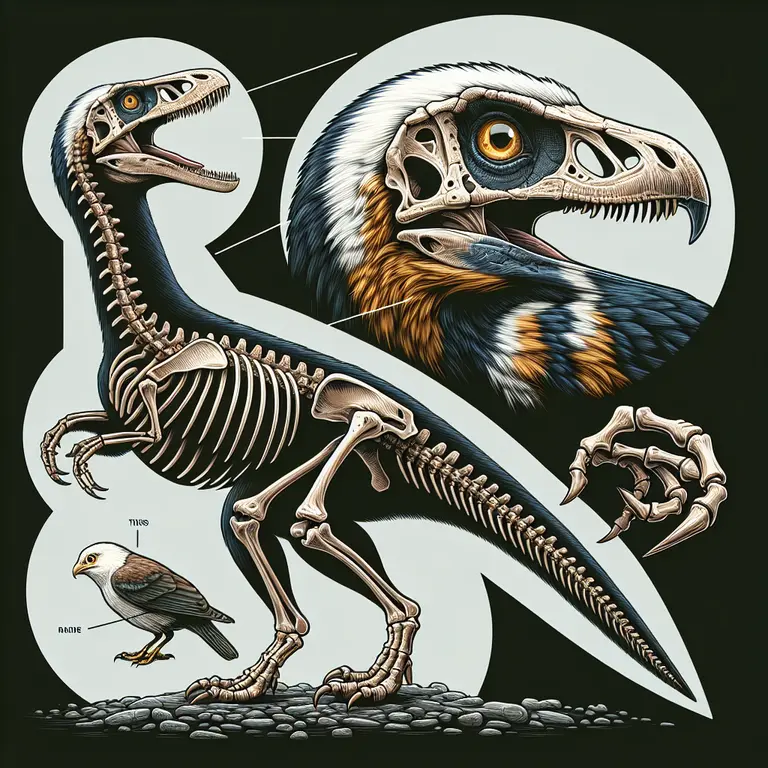
Bird-like dinosaurs, such as the Velociraptor, had hollow bones which contributed not only to their predatory prowess but also linked them closely to modern birds.
 Watch on YouTube
 Watch on Rumble
The Hollow Bones of Theropod Dinosaurs: An Ancient Blueprint Still Shaping Our World
In paleontology, few discoveries have reshaped our understanding of evolutionary biology quite as dramatically as the identification of hollow bones in bird-like dinosaurs. For decades, the popular assumption held that pneumatized, or air-filled, skeletal structures were an innovation unique to birds — a specialized adaptation that enabled powered flight. However, mounting fossil evidence has overturned this assumption entirely. Research now confirms that hollow bones were widespread among theropod dinosaurs, including the iconic Velociraptor, creatures that stalked the Earth more than 65 million years ago. This revelation does not merely add a footnote to dinosaur biology. It fundamentally reframes our understanding of how birds came to exist, how respiratory systems evolved, and how nature’s engineering solutions continue to inspire human innovation today.
The bones themselves are far more sophisticated than the term “hollow” implies. Rather than simply being empty tubes, these skeletal structures contained an intricate network of air sacs connected to the respiratory system. In modern birds, this pneumatic system allows air to flow in one continuous direction through the lungs, a mechanism far more efficient than the in-and-out breathing seen in mammals. The presence of structurally similar air sac systems in theropod dinosaurs suggests that this respiratory advantage predates flight by tens of millions of years. It was not invented for the sky. It was inherited from the ground.
Historical Background
The story of how science came to understand hollow dinosaur bones is itself a study in the slow accumulation of knowledge. The first significant Velociraptor fossils were unearthed in the Gobi Desert of Mongolia in 1924 and were described by American paleontologist Henry Fairfield Osborn of the American Museum of Natural History. These early specimens were remarkable for their size, their clawed feet, and their obvious predatory nature, but the internal architecture of their bones received comparatively little attention. The tools available to early 20th-century paleontologists were limited primarily to visual inspection and physical measurement. Cutting into rare fossil specimens to examine internal structure was both destructive and scientifically costly.
The real turning point came in the latter decades of the 20th century with the widespread adoption of computed tomography (CT) in paleontological research. This non-invasive imaging technology allowed researchers to peer inside fossilized bone without disturbing a single gram of material. What they found was extraordinary. Bones that appeared solid on the outside revealed elaborate internal chambers, struts, and cavities that mirrored the pneumatic architecture of living birds. Subsequent studies using micro-CT scanning further refined these findings, revealing that the degree of pneumatization varied across theropod species and even between different bones within the same animal. The hips, vertebrae, and limb bones of many theropods showed clear evidence of air sac invasion, a process driven by the same developmental biology that shapes bird skeletons today.
Evolutionary Links
The implications of hollow bones in non-avian dinosaurs extend well beyond anatomy. They sit at the heart of one of the most significant and sometimes contentious debates in evolutionary biology: the origin of avian flight. Two broad hypotheses have historically competed for acceptance. The first, known as the trees-down model, proposes that flight evolved in small arboreal animals that glided from branches and gradually developed powered flight. The second, the ground-up model, suggests that running, leaping ground-dwellers developed flight strokes from the bottom up. The discovery of pneumatized bones in ground-dwelling theropods lends considerable weight to a more nuanced version of the ground-up hypothesis.
If hollow bones and efficient respiratory systems were already present in small theropods long before any feathered wings appeared, then the skeletal prerequisites for flight were essentially inherited rather than invented. Emerging theories now propose that the evolution of flight was less a sudden leap and more a gradual accumulation of pre-existing traits repurposed for new functions. Feathers, for example, are now understood to have appeared first for insulation or display before being co-opted for aerodynamic purposes. Hollow bones may tell a similar story. The weight savings and respiratory efficiency they provided were advantageous for fast-moving, warm-blooded predators on the ground long before any ancestor left the earth. Flight, in this view, was not the goal. It was a consequence.
This perspective is supported by the discovery of feathered theropods such as Microraptor, Anchiornis, and the celebrated Archaeopteryx, all of which occupied the blurred boundary between dinosaurs and birds. These animals possessed combinations of dinosaurian and avian features, including pneumatized bones, suggesting a gradual, mosaic pattern of evolution rather than a clean transition. Each new fossil found in formations like the Yixian in China adds another data point to an increasingly detailed picture of avian origins rooted deep in theropod biology.
Practical Implications
The engineering lessons embedded in hollow dinosaur bones have not gone unnoticed by researchers working in fields far removed from paleontology. The structural principle at work is one that engineers have long sought to replicate: maximum strength achieved with minimum material. In theropod and avian bones, internal struts called trabeculae are arranged in patterns that distribute mechanical stress efficiently across the bone’s surface, preventing fracture without adding unnecessary weight. This is not random. It is the product of hundreds of millions of years of selective pressure, and it produces geometries that human engineers are only beginning to fully understand and reproduce.
In aerospace engineering, the challenge of building structures that are simultaneously light and load-bearing is constant and critical. Researchers studying the microstructure of bird bones have drawn direct inspiration for the design of aircraft components, drone frames, and satellite structures. The trabecular arrangements found in avian and theropod bones bear a striking resemblance to lattice structures now being produced through advanced additive manufacturing, commonly known as 3D printing. By mimicking these biological geometries in high-performance materials such as titanium alloys and carbon fiber composites, engineers are producing components that outperform traditionally manufactured equivalents in strength-to-weight ratios.
The applications extend into sustainable construction as well. As the building industry grapples with the need to reduce material consumption and carbon footprints, bio-inspired structural design offers a promising path forward. Hollow, latticed architectural elements modeled on pneumatized bone structures can provide the load-bearing performance of solid materials at a fraction of the mass and resource cost. Several research institutions and architectural firms are already exploring these principles in the design of structural panels, columns, and facade systems. The dinosaur, it turns out, may yet have something to teach the architect.
Conclusion
The hollow bones of theropod dinosaurs represent one of evolution’s most elegant solutions to the competing demands of speed, endurance, and structural integrity. What began as an adaptation for active, ground-dwelling predators became the anatomical foundation upon which birds and flight were eventually built. The story stretches from the Cretaceous deserts of Mongolia to the imaging laboratories of modern universities, and from there into the design studios of aerospace engineers and sustainable architects. Every bird that lifts from a branch or rides a thermal overhead carries within its skeleton a structural legacy tens of millions of years in the making. Understanding where that legacy came from and recognizing its continued relevance to human technology is a reminder that the natural world remains one of the most productive laboratories we have ever had access to. The bones of ancient predators, long buried and long silent, still have things to say.