The Peculiar Tale of the Chicken That Lived Without a Head
A headless chicken named Mike survived for 18 months in the 1940s.

Discover strange, surprising, and little-known facts from science, history, nature, and beyond.

How a century-old industrial incendiary reaction is now being repurposed to date ancient iron artifacts and rewrite the timeline of early metallurgy.
Read Article → Oddities
A headless chicken named Mike survived for 18 months in the 1940s.
 Nature
Discover the unexpected relationship between dog dung and uniquely adapted lichens in cold regions.
 Nature
New Zealand boasts bioluminescent beaches that glow at night due to microscopic organisms, creating otherworldly scenes.
 Sports
Finland hosts an annual World Mobile Phone Throwing Championships.
 Science
Glyphosate, a major weedkiller in agriculture, was accidentally discovered.
 Mysteries
In 1962, an uncontrollable laughter epidemic spread through several villages in Tanzania.
 Arts
ArtsCyanotype photography, known for its distinctive blue color, was an accidental discovery that revolutionized the world of imaging.
 Animals
Contrary to the widespread belief that goldfish have a three-second memory, research shows their memory span can last months.
 Space
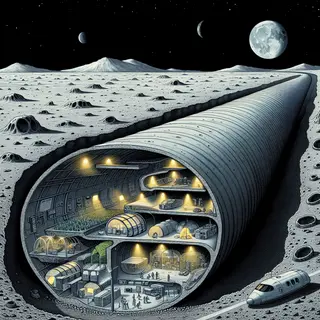
SpaceScientists have discovered that ancient lava tubes on the Moon could potentially serve as habitats for future human colonies, offering protection from harsh lunar conditions.
 Nature
Discover the unique 'Watermelon Snow', a pink snow phenomenon occurring in icy regions like Antarctica.
 Science
Henri Becquerel's serendipitous discovery of radioactivity in 1896.
 History
Discover how railway station refreshment rooms in the 19th century transformed travel and societal norms.
 Oddities
Sealand is an offshore platform that declared itself a sovereign nation. It's one of the smallest countries in the world.
 Animals
Lagomorphs like rabbits and hares, despite their appearance, share a closer evolutionary relationship with certain rodents than previously understood.
 Culture
Sea Silk is a rare, ancient textile made from mollusk filaments, historically known for its delicate and luxurious qualities.
 History
Modern parachutes owe their existence to an unexpected incident where André-Jacques Garnerin, a balloonist and inventor, made the first successful jump.
 History
John Wesley Hyatt's accidental discovery of celluloid revolutionized industries, spawning a new era in material science.
 History
The modern stapler has a history rooted in French royalty and Spanish inventions, with an evolution that spans centuries.
 Arts
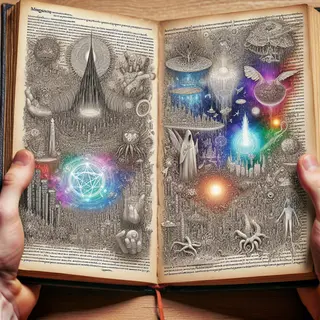
ArtsA unique, hand-drawn encyclopedia with indecipherable text and illustrations of a fictional world.
 Nature
Certain fungi, like mushrooms, can create air currents that help disperse their spores by releasing water vapor.
 Language
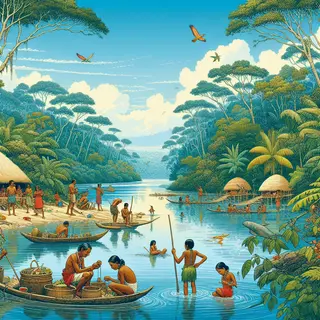
Pirahã, a language spoken by an indigenous tribe in Brazil, has no words for numbers or specific colors.
 Culture
Sea silk, or byssus threads, is an ancient and incredibly rare fabric made from the filaments of a large mollusk known as the Pinna nobilis.
 History
Timgad, a Roman colonial town founded by Emperor Trajan in AD 100 in Algeria, is renowned for its exemplary Roman town planning and remarkable preservation.
 Geography
While Antarctica is largely covered by ice, it is home to the McMurdo Dry Valleys, which are considered the driest and coldest desert on Earth, not widely known.
Many of our articles come with a video companion. Sit back and explore.


No spam. Just strange, useful, and fascinating knowledge.
We only use your email for site updates.