The Unique Green Blood Characteristics of Skinks Unveiled
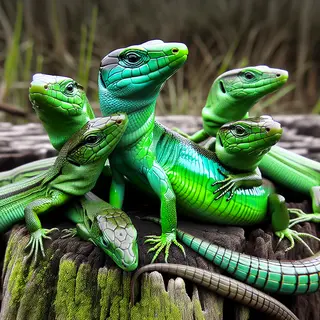
A group of lizards known as skinks found in New Guinea have green blood, which is caused by an excessive amount of bile pigment.

Discover strange, surprising, and little-known facts from science, history, nature, and beyond.
 Animals
A group of lizards known as skinks found in New Guinea have green blood, which is caused by an excessive amount of bile pigment.
 Animals
Certain snail species can sleep for three years.
 Animals
Contrary to common belief, hummingbirds do not hover in the air by flapping their wings. They have a unique flight mechanism that involves rotating their wings in circles.
 Animals
Turritopsis dohrnii, also known as the 'immortal jellyfish', seemingly possesses the ability to age backwards.
 Animals
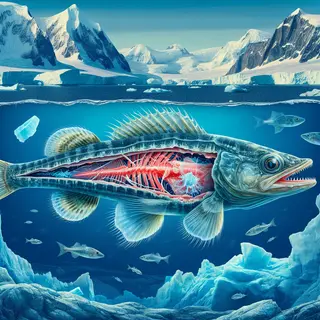
The crocodile icefish in the cold oceans around Antarctica is the only known vertebrate with transparent blood.
 Animals
Bamboo shrimp, also known as wood shrimp, can aid in determining the quality of water bodies due to their susceptibility to pollutants.
 Animals
An interesting science fact about the frequency of chirps made by a type of cricket known as the Snowy Tree Cricket corresponds to the temperature in degrees Fahrenheit when specific calculations are applied.
 Animals
Crows can recognize human faces and remember whether that person has been good or bad to them.
 Animals
Polycephaly is a condition of having more than one head. This phenomenon occurs in wide range of animal species, including humans.
 Animals
The Superb Lyrebird, native to Australia, is famed not only for its impressive tail feathers but also for its extraordinary ability to mimic a vast array of sounds.
 Animals
A species of octopus slaps predators when it feels threatened.
 Animals
Snakes, far from being drab, can exhibit stunning color variations across different species.
 Animals
Hummingbirds have extreme energy demands, eating every 10 minutes, and enter torpor during food scarcity, showcasing remarkable evolutionary adaptations.
 Animals
Rattlesnakes' rattle sound is an auditory illusion created by rapid tail segment movements, not collisions, revealing complex animal adaptation mechanisms.
 Animals
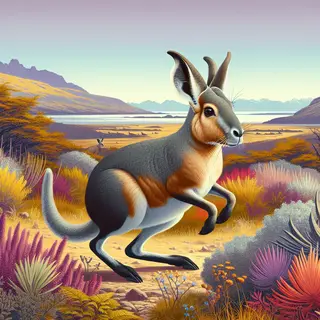
The Patagonian Mara is a unique rodent with kangaroo-like legs, deer-like heads, and rabbit-like ears, thriving in Argentina's grasslands and known for monogamous pairs.
 Animals
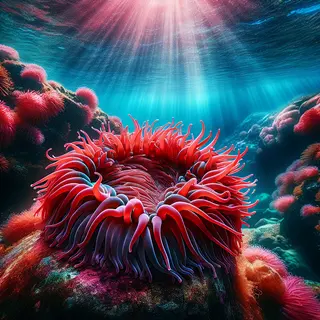
The Actinia equina, more commonly referred to as the 'sea tomato', is an intriguing marine creature with around 192 tentacles!
 Animals
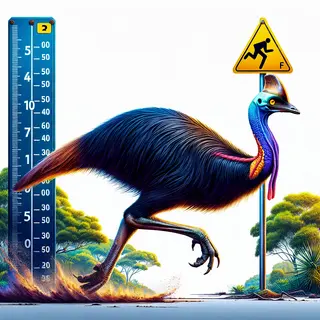
The Cassowary, a type of flightless bird native to Australia, can run up to 31 miles per hour and jump nearly 5 feet straight up into the air. They are also one of the world's most dangerous birds.
 Animals
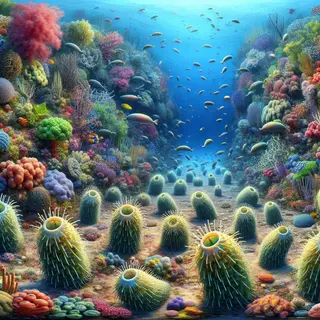
Sea Cucumbers, a type of echinoderm, are essential contributors to the marine ecosystem. They are known as 'biological vacuum cleaners' or 'gardens of the sea'.
 Animals
Snakes are believed to be able to sense earthquakes from seventy-five miles away, up to five days before it happens.
 Animals
In May 2015, Goulburn, Australia, saw millions of spiders descend from the sky due to ballooning, a dispersal method where spiders float on silk threads.
 Animals
A chance discovery by Spanish scientist and amateur beekeeper Federica Bertocchini revealed a peculiar trait of wax worm caterpillars – they can consume and break down polyethylene, one of the most commonly used and stubbornly non-biodegradable plastics.
 Animals
Birds have lightweight, trabeculae-filled bones and pneumatic sacs, reducing body weight for flight. In contrast, human bones are solid and heavy, built for stability.
 Animals
Sloths, known for their slowness and tree-dwelling, are surprisingly adept swimmers, using their buoyant bodies and long limbs to navigate water efficiently.
 Animals
Chrysopelea, a unique species of snake commonly known as the 'flying snake', uses an unusual method of locomotion to glide through the air.
No spam. Just strange, useful, and fascinating knowledge.
We only use your email for site updates.