
Unveiling the Mystery: How Bees Identify Human Faces
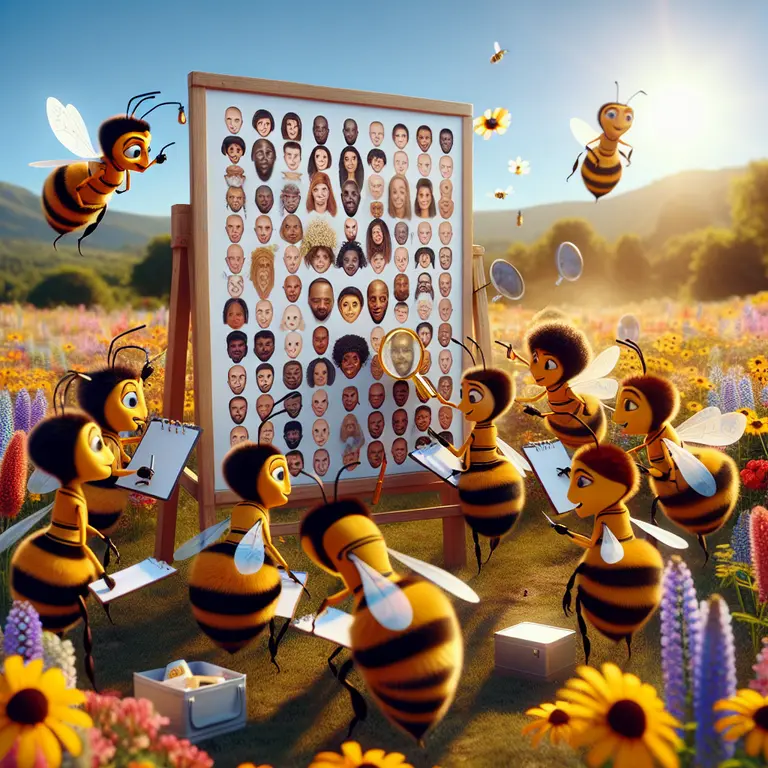
Bees have the surprising ability to recognize and remember human faces.
 Watch on YouTube
 Watch on Rumble
Introduction
When we think about bees, we most immediately envision buzzing insects flitting from flower to flower, diligently collecting pollen and performing their well-documented role in pollinating the world’s plant life. Few people associate these tiny creatures with advanced cognitive abilities. The popular imagination tends to place bees firmly in the category of instinct-driven automatons, their behavior governed entirely by hardwired biological programming rather than anything resembling genuine perception or learning. However, a growing body of research has fundamentally challenged that assumption, unveiling a startling fact: bees can recognize human faces, a trait once considered exclusive to more complex animals such as primates. This discovery is not merely a curious footnote in entomology. It raises profound questions about the nature of intelligence itself, the relationship between brain size and cognitive capacity, and what it means for a creature to truly perceive the world around it.
The Journey of Discovery
The path toward this discovery began in 2005 when Professor Adrian Dyer, an Australian vision scientist, embarked on a carefully designed experiment to assess how well bees could distinguish between different visual patterns. Initially, Dyer used simple geometric shapes, presenting bees with paired images and rewarding them for selecting a specific target pattern. The results were promising enough to push the research in a bolder direction. Dyer introduced a new and unexpected variable into the experiment: photographs of human faces.
Working within a controlled environment, Dyer arranged photographs featuring distinct human faces and trained bees to associate rewards with specific images. The bees were not simply memorizing the location of a reward. They were demonstrating the ability to identify a particular face among a set of alternatives, even when the images were repositioned or presented in new configurations. Intriguingly, despite their minuscule brains containing fewer than one million neurons, compared to over 86 billion in the average human brain, the bees consistently demonstrated the ability to identify familiar faces across multiple trials and under varying conditions.
What made these results particularly compelling was not just the accuracy the bees displayed, but the consistency with which they maintained that accuracy over time. Even after intervals without exposure to the target images, the bees retained the ability to select the correct face. This suggested something closer to genuine memory formation than simple reflexive conditioning. The finding challenged the longstanding assumption that recognizing individual members within a social species requires the kind of complex neurological architecture found in mammals and birds. The implications reach far beyond bee biology, offering potential insights into the broader fields of neuroscience, cognitive science, and artificial intelligence.
Bee Vision and the Mechanics of Face Recognition
To understand how bees accomplish this feat, it is important to first understand how they see the world. Bees process visual information in a fundamentally different way from humans, primarily because of radical differences in eye structure. Each compound bee eye is composed of thousands of individual light-detecting units called ommatidia, each of which captures a small portion of the surrounding visual field. The bee’s brain then assembles these fragments into a composite image. This system provides bees with an extraordinarily wide field of view and exceptional sensitivity to motion, but it produces images of relatively low resolution compared to those of the human eye.
Human eyes, by contrast, rely on a vertebrate-model retina that produces high-resolution, centrally focused images, allowing us to detect fine detail. Given this structural difference, one might reasonably assume that bees would struggle with the kind of nuanced pattern recognition that face identification requires. Yet the experimental evidence suggests otherwise.
Researchers believe that bees rely on a technique known as configural processing, which means they perceive faces not by cataloging individual features in isolation, such as the shape of a nose or the spacing of eyes, but by processing the overall spatial arrangement of those features as a unified whole. This is sometimes described as perceiving the gestalt of a face, the general structure and relationship between its parts, rather than any single defining detail. Interestingly, this approach mirrors one of the primary strategies humans use to recognize familiar faces, suggesting that evolution may have arrived at similar cognitive solutions through entirely different neural pathways.
This convergence is particularly striking when one considers that bees did not evolve to recognize human faces. There is no ecological pressure in a bee’s natural environment that would select for this specific ability. What the research suggests, then, is that face recognition in bees is likely a byproduct of a more general capacity for complex pattern learning, one that evolved to help bees navigate the visual complexity of their floral environments and communicate within their hives.
Implications for Artificial Intelligence and Neuroscience
The discovery that bees can perform sophisticated pattern recognition with fewer than one million neurons carries significant implications for the field of artificial intelligence. Modern AI systems designed to perform facial recognition tasks typically require enormous computational resources, vast training datasets, and complex, layered architectures loosely modeled on the human brain. The bee presents an alternative model, one in which remarkable perceptual performance is achieved through efficiency rather than scale.
Researchers working at the intersection of neuroscience and machine learning have begun examining the bees’ visual processing system as a potential blueprint for more efficient AI design. If a system with such limited neural resources can reliably distinguish human faces, it suggests that the sheer number of processing units may matter far less than how those units are organized and how information flows between them. This insight could influence the development of lightweight AI systems that run on devices with limited processing power, from small robotics platforms to embedded sensors in medical equipment.
Beyond AI, the findings have significant implications for neuroscience more broadly. The bee’s brain offers scientists a relatively simple model for studying the neural mechanisms underlying learning and memory. Because the bee brain is far less complex than a mammalian brain, researchers can more readily isolate specific circuits and trace the pathways through which information is encoded, stored, and retrieved. Progress made in understanding bee cognition could therefore illuminate principles of neural processing that apply across a wide range of species, including humans.
Further Research and What Lies Ahead
Current research is mapping the specific neural circuits in the bee brain responsible for visual learning and face recognition. Advanced imaging techniques and genetic tools are enabling scientists to observe bee brain activity with increasing precision, bringing researchers closer to a detailed mechanistic account of how bees encode and recall visual information. These investigations are also beginning to shed light on the role of dopamine in bee learning, a neurotransmitter that plays a central role in reward-based learning in mammals as well, pointing once again to deep evolutionary continuities in brain function across wildly different species.
There is also growing interest in exploring the limits of bee cognition. Researchers are asking whether bees can recognize faces across different lighting conditions, whether they can generalize from one face to distinguish a new but similar one, and whether their recognition abilities extend to other complex visual categories beyond human faces. Each of these questions has the potential to refine our understanding of what bee intelligence actually consists of and where its boundaries lie.
Conclusion
Bees are small creatures, but the cognitive world they inhabit is far richer and more complex than most people would ever suspect. The discovery that they can recognize human faces, achieved through elegant, efficient neural processing rather than brute computational force, compels us to reconsider some of our most basic assumptions about intelligence, perception, and the relationship between brain complexity and cognitive capability. It is a reminder that nature has been solving difficult problems for hundreds of millions of years, and that some of its most ingenious solutions are hidden in the most unassuming places. For scientists, engineers, and curious minds alike, the bee offers a compelling invitation to look more closely at the world’s smallest marvels and to consider what they might still have left to teach us.