
Catatumbo Lightning: Nature's Never-Ending Storm Show
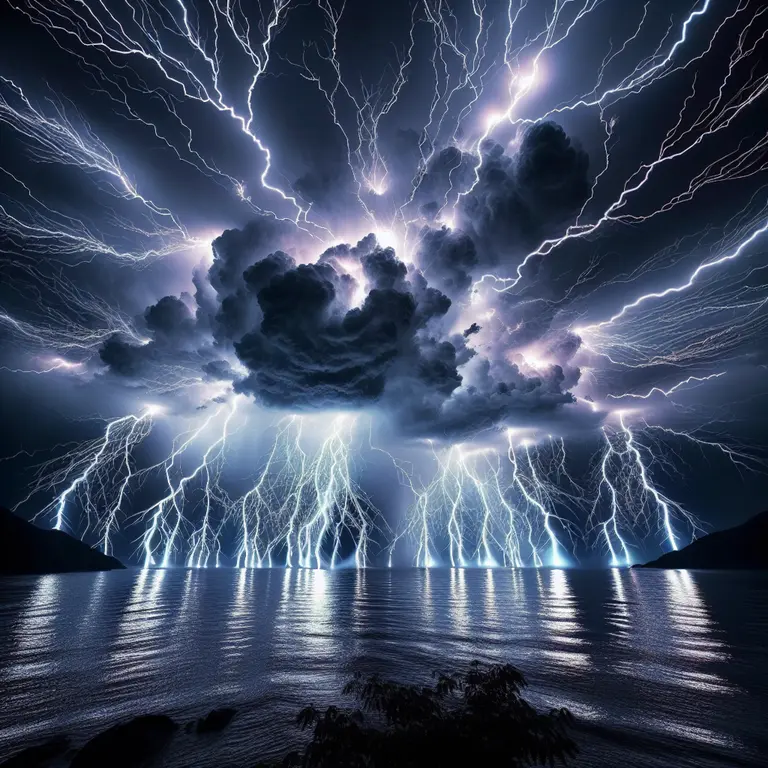
A natural marvel known as the Catatumbo Lightning in Venezuela, a storm containing millions of lightning strikes has been raging for hundreds of years.
 Watch on YouTube
 Watch on Rumble
The Catatumbo Lightning: Venezuela’s Eternal Storm
Few natural phenomena on Earth combine scientific mystery, historical drama, and raw visual power quite like the Catatumbo Lightning. Hovering above a remote Venezuelan wetland night after night, year after year, this perpetual electrical storm has illuminated the skies long before humanity had any framework to explain it. It has guided sailors, repelled invaders, and confounded meteorologists for centuries. Today, it stands as one of the most extraordinary and least-discussed atmospheric events on the planet — a living laboratory crackling with electricity that never seems to rest.
The Spectacle Above the Swamp
One of Mother Nature’s most spectacular light shows can be seen over the Catatumbo River in Venezuela, where it empties into Lake Maracaibo. Known locally as the Lighthouse of Maracaibo and internationally as the Catatumbo Lightning, this unique meteorological phenomenon occurs between 140 and 260 nights per year. For approximately eight hours each night, a persistent cloud cell hovering between two and seven miles above the wetland’s surface generates up to nearly 3,000 flashes of lightning, producing an almost continuous electrical discharge that lights up the horizon without the accompanying thunder most people associate with storms.
What makes the spectacle particularly surreal is its silence. Observers standing at a distance witness a sky that pulses and flickers with extraordinary intensity, yet hear nothing. The storm is so high and so consistent that it resembles less a natural event and more a theatrical production — one with no intermission and no closing night. Visitors who have traveled to the region describe it as watching the sky breathe electricity, a rhythmic and almost meditative display that simultaneously inspires wonder and a quiet, primal unease.
The sheer scale of the phenomenon is difficult to fully absorb. Lightning strikes in this region occur at a rate estimated at around 250 lightning bolts per square kilometer per year, a density that dwarfs virtually every other location on Earth. The storm does not wander. It does not drift unpredictably across the continent. It returns, night after night, to roughly the same coordinates above the same swampy landscape, as if anchored there by some invisible geological contract.
The Science Behind the Storm
The likelihood that any single location would host such concentrated and regular electrical storms requires an exceptional convergence of conditions, and the geography of northwestern Venezuela provides precisely that. Warm, humid air masses flow steadily in from the Caribbean Sea and Lake Maracaibo, carrying enormous amounts of moisture. As this air moves inland, it encounters the surrounding Andes mountain ranges and the Perijá Mountains, which act as natural barriers, trapping the humid air and forcing it upward. This orographic lifting causes the moisture-laden air to cool rapidly, condense, and form the towering cumulonimbus clouds that serve as the engine of the storm.
Beneath these clouds lies the Ciénaga de Juan Manuel wetland, a vast, largely inaccessible swamp that contributes an essential ingredient to the recipe. The decomposing organic matter in the swamp produces substantial quantities of methane gas, which rises into the lower atmosphere and enhances air ionization. This additional ionization is widely believed to be a significant factor in the storm’s unusual electrical intensity, essentially providing extra fuel for the discharge process. The interaction between the methane-rich air rising from the swamp and the electrically charged clouds above creates conditions that are, in a meaningful sense, unique to this corner of the world.
Researchers have also noted the role of temperature differentials between the lake’s surface and the surrounding land masses, which generate localized wind patterns that further destabilize the atmosphere and encourage the formation of convective storm cells. It is the combination of all these elements — moisture, topography, organic gases, and thermal gradients — working in concert that makes the Catatumbo Lightning not merely a frequent storm, but a near-permanent one. Remove any single ingredient from this atmospheric recipe, and the phenomenon would likely collapse into something far more ordinary.
A Lighthouse Before Lighthouses
This phenomenon has been recognized since ancient times, and its practical value to human civilization was understood long before anyone attempted a scientific explanation. Indigenous communities in the region, including the Bari people, incorporated the storm into their cultural and spiritual frameworks, treating it as a sacred and powerful presence rather than a hazard to be feared. Their oral traditions reflect centuries of coexistence with an event that must have seemed, to early observers, like a manifestation of divine energy.
For European mariners navigating the treacherous waters of Lake Maracaibo and the Gulf of Venezuela, the lightning served a far more utilitarian purpose. Because the storm is visible from distances of up to 400 kilometers on a clear night, sailors used it as a navigational reference point long before modern lighthouse technology existed. The name Lighthouse of Maracaibo was not a poetic invention but a practical acknowledgment of the storm’s function. Ships could orient themselves using the distant, constant flicker on the horizon, making the Catatumbo Lightning one of the earliest and most reliable natural navigation aids in the Western Hemisphere.
Its historical significance extends into the realm of military history as well. During the colonial era, the storm is credited with thwarting an attempted English pirate attack on the port of Maracaibo. As the fleet approached under the cover of darkness, the persistent lightning illuminated the lake and exposed the vessels before they could reach their target. The attack failed. Whether the full account is embellished by time or substantially accurate, it speaks to the degree to which this storm was woven into the strategic and practical consciousness of the people who lived and worked around it. The lightning was not merely a curiosity. It was a force with consequences.
Scientific Significance and Global Records
In terms of scientific significance, the Catatumbo Lightning has become an invaluable data source for researchers studying atmospheric electricity and global climate patterns. Its nearly continuous operation throughout the year allows scientists to gather longitudinal data on lightning behavior that would be impossible to collect from ordinary, transient storm systems. Organizations, including the National Oceanic and Atmospheric Administration, have analyzed data from this region to better understand the mechanisms that drive atmospheric electrical discharge and how they interact with broader weather systems.
There is growing interest in what the Catatumbo Lightning might reveal about the relationship between atmospheric electricity and climate change. Some researchers have proposed that changes in the frequency or intensity of the storm over time could serve as a sensitive indicator of shifting regional climate conditions. Indeed, the storm did go silent for several weeks in 2010, coinciding with a severe drought linked to an El Niño weather event. Its disappearance alarmed scientists and local communities alike, and its eventual return was greeted with a relief that underscored just how central the phenomenon has become to the region’s identity and the scientific community’s understanding of atmospheric dynamics.
The persistent nature of this storm earned Venezuela a formal place in the Guinness Book of World Records in 2015, when the Catatumbo region was officially recognized as having the highest concentration of lightning per square kilometer per year on Earth. It is a distinction that no other place on the planet is likely to challenge.
Conclusion
The Catatumbo Lightning is far more than a meteorological curiosity. It is a phenomenon that sits at the intersection of natural science, human history, indigenous culture, and climate research. It guided sailors home, repelled colonial raiders, and continues to generate data that may help scientists understand how the atmosphere behaves amid accelerating environmental change. That such a dramatic and consequential event remains largely unknown outside Venezuela and specialist scientific circles is itself a kind of wonder. In a world that often feels fully cataloged and explained, the eternal storm above the Catatumbo River is a reminder that nature still holds spectacles capable of humbling even the most informed observer.