
The Underwater Explosives Triggered by Stealth Shrimp
Pistol shrimp, a species of marine crustacean, can create shockwaves that are powerful enough to kill small fish.
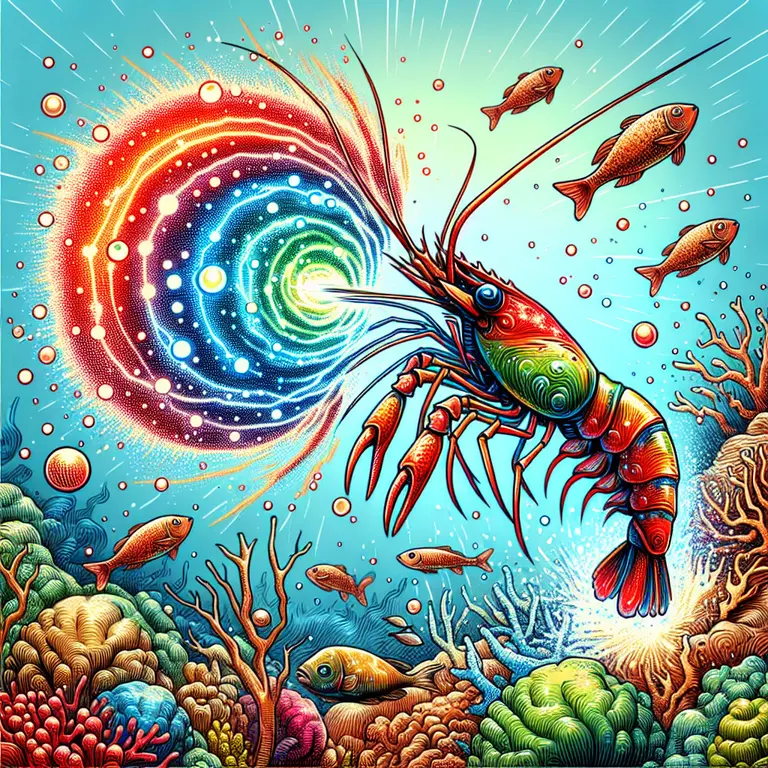
The Pistol Shrimp: Nature’s Most Improbable Weapon
The ocean is full of creatures that defy expectation, but few challenge our assumptions about size and power quite like the pistol shrimp. Also known as the snapping shrimp, this small marine crustacean inhabits the warmer coastal waters of the Pacific and Indian Oceans, tucking itself into coral reefs, oyster beds, and rocky crevices. It belongs to the family Alpheidae, a group of over 600 described species, and at first glance it appears entirely unremarkable. It is small, typically measuring between one and two inches in length, and it spends much of its life hiding in burrows or sheltering beneath rocks. Yet this modest animal is capable of generating temperatures that rival the surface of the sun, pressures that would crush most engineering materials, and sounds louder than a gunshot fired at close range. The pistol shrimp is one of the most startling examples of biological engineering found anywhere in the natural world, and the more closely scientists examine it, the more surprising it becomes.
Anatomy and Mechanism
The pistol shrimp’s most defining feature is its claw, and the asymmetry of its body is immediately striking to anyone who observes it. One claw is roughly the same size as those on similar crustaceans and is used for gripping and manipulating food. The other is enormously enlarged, sometimes accounting for nearly half the animal’s total body weight. This oversized claw is not simply bigger in a straightforward sense. It has evolved a highly specialized locking mechanism, consisting of a plunger-like structure that fits into a socket on the opposite side of the claw. When the shrimp cocks this mechanism and releases it, the claw snaps shut at speeds approaching 62 miles per hour, faster than the blink of a human eye.
The real story, however, is not the speed of the claw itself but what happens in the water around it. As the two halves of the claw slam together, they force a high-velocity jet of water outward. This jet moves so quickly that it causes the local water pressure to drop dramatically, falling below the water's vapor pressure at that temperature. The result is cavitation, the spontaneous formation of a bubble filled with water vapor in a region of extremely low pressure. This bubble is not stable. Within microseconds of forming, the surrounding water pressure reasserts itself, and the bubble collapses violently. That collapse is where the truly extraordinary physics occurs.
When the cavitation bubble implodes, it releases an enormous concentration of energy in an almost vanishingly small space and time. The temperature inside the collapsing bubble has been measured to exceed 5,000 Kelvin, comparable to the Sun's surface temperature. Pressures during the collapse can reach up to 1,000 atmospheres. The shockwave radiating outward from this event produces a sound that can exceed 210 decibels, a level that surpasses the noise of a jet engine at takeoff and is sufficient to stun or kill small fish and invertebrates outright. All of this from an animal that could comfortably sit on a human thumbnail.
Evolutionary Significance
The pistol shrimp did not arrive at this remarkable adaptation overnight. The evolutionary pressures that shaped this mechanism over millions of years were multiple and overlapping, which explains why the snapping claw serves so many different functions simultaneously. At its most basic level, the claw is a hunting tool. The shrimp typically waits near the entrance of its burrow and fires its acoustic weapon at passing prey such as small fish, amphipods, and other crustaceans. The shockwave does not need to make direct physical contact to be effective. The concussive force alone is sufficient to disorient or kill prey at close range, after which the shrimp drags the stunned victim into its burrow.
The claw also functions as a defensive weapon. When threatened by larger predators, the pistol shrimp can produce a rapid series of snaps that create a wall of noise and physical disturbance, discouraging predators from attacking. The sound alone is often enough to drive away fish that might otherwise consider the shrimp an easy meal. This dual use of a single anatomical structure as both an offensive weapon and a defensive shield represents an elegant example of evolutionary economy, in which natural selection has refined a single trait to serve multiple survival functions simultaneously.
Perhaps less obviously, the snapping claw also plays a central role in communication and social organization. Many pistol shrimp species form complex symbiotic relationships with gobies, small fish that share their burrows. The shrimp maintains the burrow through digging and construction while the goby, which has better eyesight, acts as a lookout. The two animals remain in physical contact through the goby’s tail, and the shrimp snaps its claw in patterns that appear to convey information about threat levels and territorial boundaries. Within colonies of pistol shrimp, particularly in species that form eusocial groups similar to those of ants and bees, the acoustic signals produced by snapping claws may help coordinate collective behavior in ways that researchers are still working to fully understand.
Sonoluminescence and the Flash of Light
Among the many remarkable features of the pistol shrimp’s snapping mechanism, perhaps the most visually dramatic is one that occurs too quickly for the human eye to detect under normal circumstances. As the cavitation bubble collapses, it emits a brief but measurable flash of light through a process known as sonoluminescence. This phenomenon, in which sound energy is converted into light through the extreme conditions created inside a collapsing bubble, is one of the more mysterious areas of modern physics.
Sonoluminescence was first observed in laboratory settings in the 1930s, but it was not until 2001 that researchers confirmed that the pistol shrimp was producing it naturally in the wild. The flash lasts for only a few hundred picoseconds, a duration so brief that it would require extremely sensitive equipment to capture. The light emitted is faint, but its existence raises deep questions about the precise physical mechanisms at work inside the bubble. Some researchers have proposed that the temperatures involved might be sufficient to trigger nuclear fusion, an idea sometimes called bubble fusion or sonofusion, though this remains highly controversial and has not been conclusively demonstrated. What is not controversial is that the pistol shrimp has independently evolved a mechanism that replicates one of the most energetically extreme phenomena that physicists can produce in controlled laboratory conditions.
Scientific Implications and Technological Inspiration
The study of the pistol shrimp has opened productive lines of inquiry across several scientific disciplines, and the practical applications that researchers are drawing from this animal are both varied and genuinely promising. In fluid dynamics, the mechanics of cavitation are already well known from their destructive effects on ship propellers and hydraulic machinery, where uncontrolled bubble collapse can erode metal surfaces over time. Understanding how the pistol shrimp generates and directs cavitation in a controlled and repeatable way could inform the design of more efficient pumps, propulsion systems, and even surgical tools that use focused acoustic energy to destroy tissue with minimal collateral damage.
In materials science, the extreme pressures generated by collapsing cavitation bubbles have inspired research into new methods of surface treatment and nanoscale fabrication. The biological structure of the pistol shrimp’s claw itself has attracted attention from engineers interested in designing impact-resistant materials. The claw endures repeated cycles of enormous mechanical stress without fracturing, a property that depends on a highly organized arrangement of mineralized fibers in the claw’s composition. Researchers studying this architecture have proposed applications in the design of helmets, body armor, and aerospace components.
In the field of military and naval technology, the acoustic properties of pistol shrimp colonies have long been of practical interest. Dense aggregations of these animals produce a continuous crackling noise that effectively masks the acoustic signatures of submarines, a phenomenon that naval engineers have had to account for when designing underwater listening systems. Conversely, studying how the shrimp generates directional acoustic pulses could advance sonar technology and underwater communication systems.
Conclusion
The pistol shrimp stands as one of the most instructive examples of how evolution can produce solutions that are not merely functional but genuinely extraordinary. An animal that most people would overlook in a tide pool turns out to generate temperatures comparable to the sun’s surface, produce light through mechanisms that physicists are still working to fully explain, and inspire engineers across multiple industries. It is a reminder that the natural world does not scale its ingenuity to match the size of the creature involved. The pistol shrimp has been quietly snapping its way through the world’s warm oceans for millions of years, and it still has things to teach us.