
Unstoppable Tardigrades: The Resilient Tiny Micro-Animals
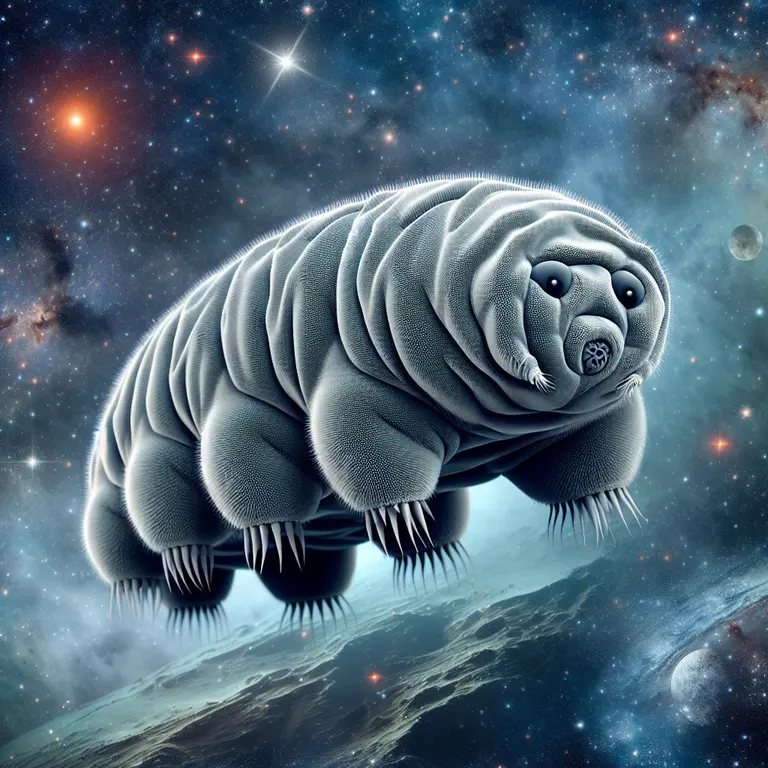
Tardigrades, also known as 'water bears' or 'moss piglets', are eight-legged micro-animals that can survive extreme environments including space.
Introduction
Tardigrades are among the most fascinating creatures ever discovered, captivating scientists and researchers for centuries with their seemingly impossible resilience. Despite their minuscule size, ranging from just 0.3 to 0.5 millimeters in length, these eight-legged micro-animals can endure environmental conditions that would obliterate virtually every other known form of complex life on Earth. They have survived mass extinction events, outlasted entire ecosystems, and even returned alive from the vacuum of outer space. In a world where survival often depends on size, strength, or speed, tardigrades defy every conventional rule of biology, placing them in a category entirely their own. Understanding these creatures is not merely an exercise in curiosity. It is a window into the outer boundaries of what life itself can achieve.
Discovery and Habitat
The story of the tardigrade begins in 1773, when German zoologist Johann August Ephraim Goeze first observed these peculiar creatures under a microscope and named them Kleiner Wasserbär, meaning little water bear. Just three years later, Italian priest and biologist Lazzaro Spallanzani gave them the name tardigrada, derived from the Latin for slow stepper, a reference to their unhurried, lumbering gait. That name has endured to this day, and it suits them perfectly. They move with a deliberate, almost indifferent pace, as though entirely unbothered by the world around them.
What makes their habitat remarkable is its sheer variety. Tardigrades have been found in Arctic and Antarctic ice sheets, in the scalding thermal vents on the deep-ocean floor, on the sun-baked surfaces of desert rocks, and clinging to moss and lichen at altitudes exceeding 6,000 meters in the Himalayas. They inhabit freshwater lakes, tropical rainforests, and the thin films of moisture that collect between soil particles in your own backyard. With over 1,300 known species identified across virtually every corner of the planet, tardigrades represent one of the most geographically widespread animal groups in existence. Their ubiquity alone would make them scientifically interesting, but their biology elevates them to something truly extraordinary.
Extreme Resilience
The resilience of tardigrades reads more like science fiction than natural history. These microscopic animals can withstand temperatures ranging from near absolute zero, approximately -273 degrees Celsius, to well above 150 degrees Celsius. They can endure pressures roughly six times greater than those found at the deepest point of the ocean, the Mariana Trench. They can survive doses of ionizing radiation hundreds of times greater than the lethal threshold for humans. They can even tolerate exposure to highly toxic organic solvents that would dissolve the cellular machinery of most organisms within seconds.
Perhaps the most dramatic demonstration of their resilience came in September 2007, when the European Space Agency launched a group of tardigrades into low Earth orbit aboard the FOTON-M3 mission as part of an experiment called TARDIS, short for Tardigrades in Space. For ten days, two species of tardigrades were exposed to the full vacuum of space, unfiltered cosmic radiation, and the extreme ultraviolet radiation of direct sunlight. Upon their return to Earth, a significant portion of the animals had survived, and some had even successfully reproduced, laying eggs that hatched into healthy offspring. It was a moment that fundamentally shifted how scientists think about the boundaries of life in the universe. If a complex multicellular animal can survive open space, the question of where else life might exist becomes considerably more interesting.
Cryptobiosis: The Secret to Survival
The mechanism behind this extraordinary endurance is a biological process known as cryptobiosis, a state in which an organism essentially suspends all measurable metabolic activity in response to environmental stress. Tardigrades can enter several distinct forms of cryptobiosis depending on the threat they face. When confronted with desiccation, or the loss of water, they undergo anhydrobiosis. During this process, the tardigrade draws its legs inward, contracts its body into a compact barrel shape called a tun, and replaces nearly all of its internal water content with a sugar molecule called trehalose. This sugar forms a glassy matrix around the animal’s cellular structures, effectively freezing them in place and preventing protein degradation and membrane damage that would otherwise occur in the absence of water.
In this desiccated state, a tardigrade is not dead, but it is not conventionally alive either. Its metabolism drops to less than 0.01 percent of its normal rate. It produces no measurable energy, performs no cellular repair, and requires no oxygen. It simply waits. Remarkably, tardigrades in this state have been revived after remaining desiccated for decades. In 2016, Japanese researchers successfully reanimated two tardigrades that had been frozen in Antarctic moss samples collected in 1983, more than thirty years earlier. Both animals recovered, and one successfully reproduced after revival.
Beyond anhydrobiosis, tardigrades can also enter cryobiosis in response to freezing temperatures, osmobiosis in response to high solute concentrations, and anoxybiosis when deprived of oxygen. Each form of cryptobiosis involves its own suite of molecular responses, and scientists are still working to fully map the genetic and biochemical pathways that underlie them. What is already clear, however, is that the tardigrade’s genome contains an unusually high proportion of genes derived from other organisms through a process called horizontal gene transfer. Roughly one sixth of the tardigrade genome appears to have originated from bacteria, plants, and fungi, suggesting that over millions of years, these animals have literally incorporated the survival tools of other life forms into their own DNA.
Scientific Significance
The implications of tardigrade biology extend far beyond the realm of pure curiosity. Researchers across multiple disciplines are actively investigating how the molecular strategies these animals employ might be adapted for human benefit. In medicine, understanding how trehalose and tardigrade-specific proteins protect cellular structures during extreme dehydration could revolutionize the preservation of vaccines, blood products, and transplant organs. Currently, many biological materials require continuous refrigeration to remain viable, a logistical challenge that limits access to healthcare in remote or resource-poor regions. A method of stabilizing these materials at room temperature, inspired by tardigrade biology, could change the landscape of global medicine.
In agriculture, the same principles could be used to develop drought-resistant crops that survive prolonged water stress without irreversible cellular damage. As climate change continues to threaten food security in arid and semi-arid regions, this kind of innovation carries enormous practical importance. Scientists have already succeeded in transferring tardigrade proteins into yeast and human cells, demonstrating that the protective mechanisms are not exclusive to tardigrades and can function in other biological contexts.
The implications for space exploration are equally compelling. If the molecular toolkit of the tardigrade can be partially transferred to other organisms, or even incorporated into synthetic biological systems, it may become possible to engineer life forms capable of surviving the rigors of long-duration spaceflight or even colonization of other worlds. Tardigrades have also become central to discussions about panspermia, the hypothesis that life can travel between planets carried on meteorites or other debris. Their demonstrated ability to survive in open space lends at least theoretical credibility to the idea that microbial or microscopic animal life could, under the right circumstances, hitch a ride across the cosmos.
Conclusion
Tardigrades are far more than a biological curiosity. They are a testament to the extraordinary adaptability of life and a living argument that the boundaries we place around what is survivable are largely provisional. From the icy peaks of the Himalayas to the vacuum of low Earth orbit, these microscopic animals have repeatedly demonstrated that life, given the right tools, can endure almost anything. Their study is already beginning to yield practical benefits in medicine, agriculture, and materials science, and the full scope of what we might learn from them remains largely unexplored. In an era defined by pressing challenges from climate change to space exploration, the humble tardigrade may prove to be one of nature’s most instructive teachers.