
Discovering the Unique Appeal of Canned Bread Delicacies
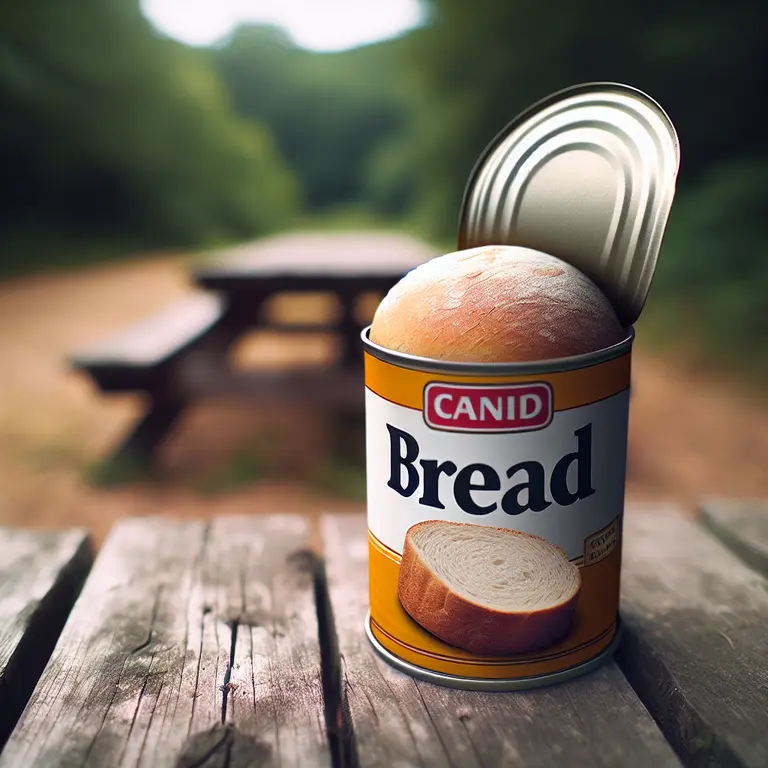
Canned bread, a WWII innovation, offers long-lasting convenience. Popular in New England and Japan, it's a unique, shelf-stable alternative to fresh bread.
 Watch on YouTube
 Watch on Rumble
Introduction
Bread is one of the oldest and most universally consumed foods in human history. Across cultures and centuries, it has taken countless forms — flatbreads, sourdoughs, rye loaves, baguettes, and beyond. It is a food so fundamental to daily life that its absence has historically signaled famine, poverty, and social collapse. Yet for all the reverence we extend to freshly baked loaves, one of the most unusual chapters in the story of bread involves something far less romantic: a cylindrical tin can.
Canned bread is not widely known outside of a few specific regions and contexts, and for most people, the idea of bread sealed inside a metal container sounds more like a curiosity than a culinary tradition. However, this product has a genuine and fascinating history rooted in wartime necessity, regional culture, disaster preparedness, and even modern gourmet reinvention. To dismiss canned bread as a novelty is to miss a surprisingly rich story about how human beings adapt their most essential foods to meet the demands of an unpredictable world. Understanding canned bread means understanding something deeper about food preservation, cultural identity, and the enduring human drive to solve practical problems with creative thinking.
Origins and Purpose: Bread Built for Survival
The origins of canned bread are closely tied to the pressures of wartime food logistics. During World War II, military planners and food scientists faced an enormous challenge: how to feed soldiers, sailors, and civilians in conditions where fresh food was unavailable, refrigeration was unavailable, and supply chains were constantly disrupted. Canned foods, which had already been in use since the early nineteenth century, became an essential solution. Their long shelf life, resistance to spoilage, and ease of transport made them ideal for military use.
It was within this context that bread began to be explored as a candidate for canning. Regular bread, of course, spoils within days. Mold, moisture loss, and staleness make it one of the least shelf-stable of all common foods. The challenge was to develop a bread product that could survive the canning process — which involves high-heat sterilization — while remaining edible and nutritious over an extended period. The result was a denser, moister style of bread, often made with ingredients such as molasses, rye flour, or cornmeal, which helped it retain its texture and flavor even after being sealed and heat-processed in a can.
Navy vessels were among the earliest and most consistent users of canned bread. At sea for weeks or months at a time, sailors had limited access to fresh provisions. A bread product that could be opened and consumed without any preparation whatsoever was enormously practical. The concept was simple but effective: remove the lid, slide the bread out, slice it, and eat it. No oven, no toaster, no waiting. In an environment where every resource and every minute counted, canned bread offered a meaningful solution to the age-old problem of keeping one of humanity’s most beloved foods accessible under difficult conditions.
Regional Popularity: From New England Kitchens to Japanese Convenience Stores
While canned bread never achieved mainstream global popularity, it took deep root in certain regions in ways that reveal how food traditions form and persist across generations. Two of the most notable examples come from opposite sides of the world: New England in the United States and Japan.
In New England, canned bread is not a wartime relic or a novelty item — it is a genuine cultural staple. The most recognized brand is B&M Brown Bread, a product that originated in Portland, Maine, and has been produced for well over a century. B&M Brown Bread is a steamed bread made from a combination of whole wheat flour, rye flour, and cornmeal, sweetened with molasses. It has a dark, dense texture and a subtly sweet, earthy flavor profile. For generations of New Englanders, it has been a traditional accompaniment to baked beans, a pairing that dates back to colonial-era cooking practices rooted in Puritan food culture and Native American culinary traditions. The bread is so embedded in regional identity that many New England households keep a can in the pantry as a matter of course, much as other households might stock pasta or rice. It appears at family dinners, church suppers, and holiday tables, and its continued production speaks to a loyalty that transcends mere convenience.
Japan presents an entirely different but equally compelling case. The Japanese version of canned bread, commonly known as pan kan, has its origins in disaster-preparedness infrastructure. Japan sits atop one of the most seismically active regions on Earth, and its government and citizens take earthquake readiness seriously. Canned bread became a fixture in emergency supply kits and municipal disaster stockpiles because of its long shelf life — some varieties are designed to remain edible for up to five years — and its ability to provide meaningful caloric sustenance without any preparation. During the aftermath of major earthquakes and other disasters, canned bread has been distributed as part of emergency food relief efforts.
What makes Japan’s story particularly interesting is what happened next. During the COVID-19 pandemic and the stay-at-home orders of 2020, Japanese consumers began purchasing disaster-supply items in greater quantities, partly out of anxiety and partly for practical preparation. Canned bread, suddenly more visible in the marketplace, caught the attention of food companies looking for new opportunities. Manufacturers began rebranding and repositioning the product, offering flavors ranging from chocolate and strawberry to matcha and buttercream. What had been a utilitarian emergency item was repackaged as a gourmet snack, sold in attractive tins and marketed to consumers who had never thought of canned bread as anything other than a survival supply. This transformation illustrates a broader pattern in food culture: products born of necessity can, under the right conditions, find entirely new identities.
Practical Benefits: The Case for Long-Shelf-Life Bread
Beyond its cultural dimensions, canned bread makes a straightforward practical argument for its own existence. In an era of growing awareness around food security, emergency preparedness, and sustainable consumption, the idea of a bread product that lasts for years without refrigeration deserves more serious consideration than it typically receives.
Standard bread has a shelf life measured in days. Even bread stored under optimal conditions will begin to mold within a week, and the widespread use of preservatives in commercial bread, while extending that window somewhat, raises concerns for health-conscious consumers. Canned bread, by contrast, achieves its longevity through heat sterilization and airtight sealing rather than chemical additives. The can itself creates a sterile, oxygen-free environment that prevents the growth of mold and bacteria without requiring artificial preservatives.
For individuals and communities living in remote areas with limited access to regular grocery supplies, canned bread offers a genuine alternative. The same is true for campers, hikers, and outdoor enthusiasts who need calorie-dense, non-perishable food that does not require cooking. Emergency management agencies around the world have recognized the value of canned bread in disaster preparedness kits, where it provides both nutrition and the psychological comfort of a familiar food during stressful circumstances. In this sense, canned bread is not simply a quirky product from another era — it is a functional food technology with real-world applications that are arguably more relevant today than ever.
Conclusion
Canned bread occupies a strange and underappreciated corner of food history. It is simultaneously a product of military necessity, a regional cultural tradition, a disaster preparedness tool, and, in at least one country, an emerging gourmet commodity. Its story spans wartime naval vessels, New England baked bean suppers, Japanese earthquake shelters, and pandemic-era pantry stocking — a range of contexts that speak to its quiet versatility.
What canned bread ultimately demonstrates is that innovation in food preservation is rarely just about technology. It is about people finding ways to hold on to something familiar — the taste of bread, the comfort of a staple food — even when circumstances make it difficult. The humble tin can, sealed and shelf-stable, carries within it not just a dense, slightly sweet loaf but also a record of human adaptability. For a product so easy to overlook, canned bread has a great deal to say about who we are and how we feed ourselves when the world does not cooperate.
Sources & Further Reading
- Smithsonian Magazine (2020). The Surprisingly Enduring Appeal of Canned Brown Bread.
- The Boston Globe (2019). Why B&M Canned Bread is a New England Staple.
- NHK World Japan (2021). Canned Bread in Japan: From Disaster Relief to Gourmet Treat.
- Wartime Food Innovations (2017). Canned Bread and Other Culinary Innovations from World War II. History Channel.