
Unraveling the Thunderous Impact of a Shrimp's Sonic Boom
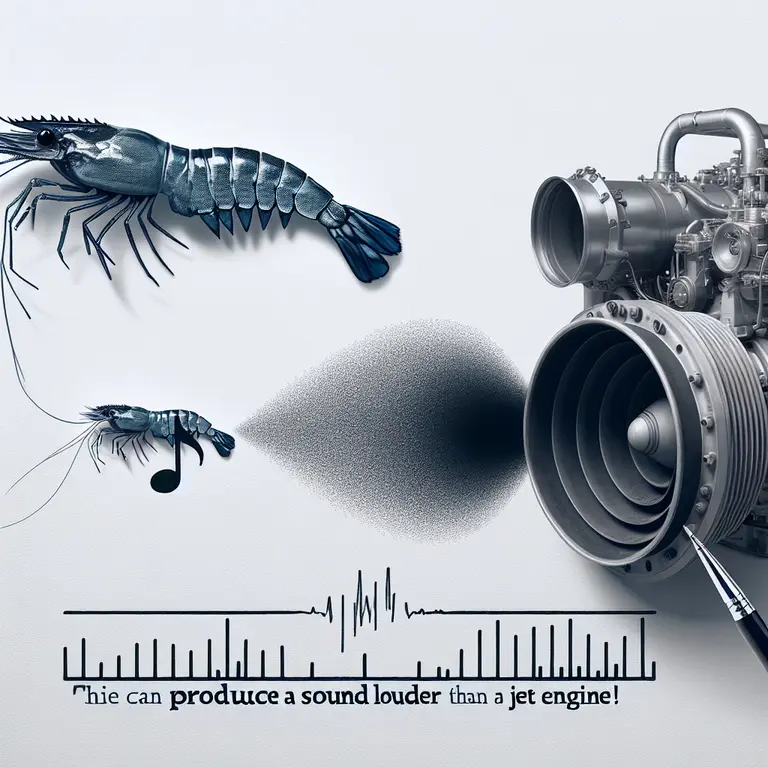
The Pistol Shrimp, one of the tiniest shrimps in existence, can produce a decibel level louder than a jet engine.
 Watch on YouTube
 Watch on Rumble
The Pistol Shrimp: Nature’s Loudest Small Wonder
The natural world is full of astonishing phenomena, and the pistol shrimp, also known as the snapping shrimp, is a prime example. Despite being one of the smallest shrimp species in the world, rarely exceeding two inches in length, this tiny marine creature can create a sound so powerful that it defies common understanding of what small animals are capable of. Found in tropical and subtropical ocean waters around the globe, the pistol shrimp belongs to the family Alpheidae, a group of over 600 known species that have quietly dominated shallow reef ecosystems for millions of years. What makes this creature so remarkable is not merely the volume of the sound it produces, but the extraordinary chain of physical events that makes that sound possible in the first place.
The Phenomenon: A Sound That Shatters Expectations
The pistol shrimp produces a sound that momentarily reaches up to 210 decibels. To put this in perspective, this noise is significantly louder than a rock concert, which typically peaks around 110 to 120 decibels, and nearly twice the human pain threshold of approximately 130 decibels. The intensity of this sound is roughly 30 percent greater than that produced by a commercial jet aircraft during takeoff. Even a rifle shot, one of the most commonly cited examples of extreme noise in everyday life, clocks in at around 160 decibels — still well below what this centimeter-scale crustacean routinely generates.
What makes this figure even more striking is that the decibel scale is logarithmic, not linear. Each increase of 10 decibels represents a tenfold increase in sound intensity. This means the gap between a jet engine and a pistol shrimp snap is not a modest difference but an enormous one when measured in raw acoustic energy. The shrimp does not simply make a loud noise. It produces one of the most intense sounds generated by any living organism on Earth, rivaled only by the calls of sperm whales and the songs of certain species of whale. That such power can originate from an animal smaller than a human thumb is, by any measure, one of the more startling facts in marine biology.
The Mechanism: Physics in a Fraction of a Second
Contrary to what one might initially assume, this extraordinary sound is not produced directly by the snap of the claw itself. The claw does not strike another surface or create a percussive impact in the traditional sense. Instead, the sound emerges from the rapid collapse of a bubble, and the entire sequence of events unfolds in a fraction of a millisecond.
When the pistol shrimp snaps its enlarged, asymmetrical claw shut, the motion is so fast and forceful that it propels a thin jet of water outward at approximately 60 miles per hour. As this high-velocity jet moves through the surrounding seawater, it creates a zone of dramatically reduced pressure directly behind it. This is where Bernoulli’s principle enters the picture. In fluid dynamics, Bernoulli’s principle describes how an increase in the speed of a fluid corresponds to a decrease in pressure. When the pressure in that localized zone drops below the vapor pressure of the surrounding water, the water itself briefly transitions into a gaseous state, forming a small but highly energetic cavity known as a cavitation bubble.
This bubble is not stable. The surrounding water pressure immediately begins to crush it, and within microseconds, the bubble collapses violently inward. That implosion is the source of the sound. The collapse generates a shockwave powerful enough to stun or kill small fish, shrimp, and other invertebrates within close range. For the pistol shrimp, this is not a defensive curiosity but a primary hunting tool. The shrimp does not need to physically contact its prey. It simply fires its acoustic weapon and collects whatever the shockwave has incapacitated. It is a form of biological ballistics that has no real parallel in the animal kingdom.
Sonoluminescence: Light Born from Sound
Perhaps the most astonishing aspect of the pistol shrimp’s snap is something that cannot be seen with the naked eye during a casual underwater observation. At the precise moment the cavitation bubble collapses, it briefly emits a flash of light. This phenomenon is known as sonoluminescence, and it remains one of the more mysterious and actively studied topics in physics and marine biology.
During the implosion, the temperature inside the collapsing bubble spikes to an estimated 8,000 to 15,000 degrees Kelvin. Some researchers have proposed figures even higher than this. For context, the surface of the sun is approximately 5,778 degrees Kelvin. The energy concentrations occurring inside these microscopic bubbles are therefore extraordinary, even if they last for only a few nanoseconds. The flash of light produced is too brief and too faint to be visible without specialized equipment, but it is real, measurable, and deeply puzzling to scientists who study it.
What remains unclear is the precise mechanism by which sound energy is converted so efficiently into light and heat at such extreme intensities. Several competing theories exist, including plasma formation within the bubble and quantum mechanical effects at the boundary of the collapsing cavity. No single explanation has yet achieved scientific consensus. What is clear is that the pistol shrimp has been performing this feat of inadvertent physics for millions of years, long before human researchers had the instruments to detect it. The shrimp is not trying to produce light. It is simply hunting. The sonoluminescence is, in a sense, a side effect of ruthless evolutionary efficiency.
Research Implications: Disrupting Technology and Inspiring It
Scientists find it fascinating not only that pistol shrimp generate such high-intensity sounds, but that they do so without possessing the kind of hearing structures that might be expected in an animal so dependent on acoustic output. Their sensory apparatus is tuned to their environment in ways that researchers are still mapping. What is well established is the collective impact of their noise on the broader underwater acoustic environment.
Pistol shrimp live in large colonies, sometimes numbering in the thousands, across shallow reef systems and coastal waters. The cumulative snapping of an entire colony produces a persistent broadband noise that can significantly interfere with sonar equipment, hydrophones, and other acoustic instruments used in marine navigation and scientific research. During World War II, Allied submarines used pistol shrimp colonies as acoustic cover, positioning themselves near reefs where the constant crackling masked the sound of their engines from enemy detection equipment. The shrimp, unknowingly, became a tactical asset in naval warfare.
Today, researchers are investigating whether the principles underlying sonoluminescence could be harnessed for practical applications. The ability to concentrate enormous amounts of energy into an extremely small space and brief moment in time has theoretical relevance to fields including medical imaging, targeted drug delivery, and even experimental fusion research. If scientists can fully characterize how the pistol shrimp’s bubble collapse achieves such extreme energy densities, the insights could inform the design of systems that replicate or approximate that process under controlled conditions.
Conclusion: Small in Size, Immense in Consequence
The pistol shrimp stands as a compelling reminder that size is a poor predictor of impact. In a single snap lasting less than a millisecond, this small crustacean generates one of the loudest sounds on Earth, creates temperatures rivaling the surface of the sun, and produces a flash of light through a process that physicists are still working to fully explain. It disrupts naval technology, shapes reef ecosystems, and offers potential inspiration for future engineering. Mother Nature continually surprises us with exceptions that challenge preconceived notions, and the pistol shrimp is among the most instructive of those exceptions. It demonstrates that the most profound forces in nature are not always found in the largest or most visible organisms, but sometimes in the ones that snap quietly in the dark at the bottom of a reef, hunting with physics.