
Understanding the Causes and Effects of Coastal Sea Foam
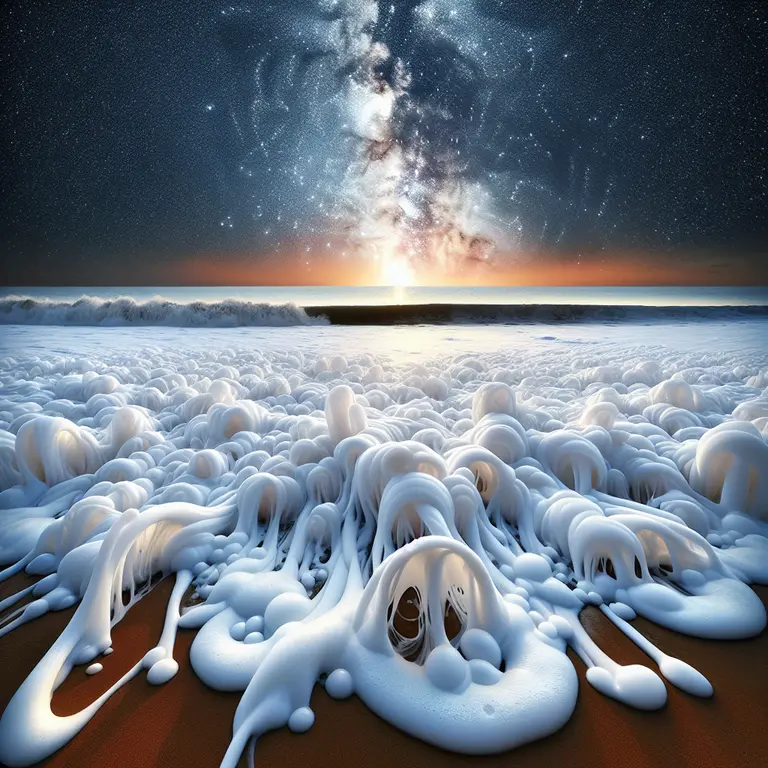
Sea foam is a rare natural phenomenon where certain conditions cause the sea to create foam, often found on beaches and coastal areas.
Introduction
Seafoam, also known as spume or froth, is one of the ocean’s most visually striking and frequently misunderstood phenomena. Its fluffy, bubbly appearance along coastlines draws the curiosity of beachgoers worldwide, who often wonder whether it is natural, harmless, or something more mysterious. Children run through it, photographers chase it during storms, and scientists study it as a window into the health of marine ecosystems. Despite its whimsical appearance, seafoam is a remarkably complex product of biological, chemical, and physical processes working together in the ocean. Understanding what seafoam actually is, where it comes from, and what it does reveals a great deal about the invisible machinery that keeps marine environments functioning. Far from being a simple curiosity, seafoam is a meaningful signal from the sea itself.
Causes of Sea Foam Formation
The origin of seafoam lies deep within the chemistry of seawater, shaped by both biological activity and physical forces. One of the primary contributors to foam formation is the accumulation of dissolved organic matter in the ocean, particularly from the decay of algae, phytoplankton, and other marine organisms. When these organisms die, they release a mixture of proteins, lipids, and carbohydrates into the surrounding water. These substances are known as surfactants, meaning they reduce the surface tension of water and allow it to trap air far more effectively than pure water ever could. Without this organic material, the ocean would produce far less foam, even under the most turbulent conditions.
Waves are the physical engine that transforms this chemically prepared seawater into visible foam. When waves break near the shore or over shallow reefs, they aggressively churn the water, trapping air beneath the surface and creating bubbles. The violent, repetitive motion of wave action breaks these bubbles into progressively smaller microbubbles, which are far more stable and persistent than their larger counterparts. These microbubbles cluster together, coated in the surfactant molecules that prevent them from immediately collapsing, and accumulate into the thick, frothy masses we recognize as seafoam. The process is not unlike what happens when you vigorously shake a bottle of soapy water, except that the ocean operates on a vastly larger and more chemically intricate scale.
Wind also plays a significant supporting role. Strong onshore winds can lift freshly formed foam from the water’s surface and carry it inland, sometimes depositing thick drifts of froth onto beaches, roads, and even nearby buildings. In extreme cases, particularly during or after major storms, this wind-driven foam can accumulate to depths of several feet, creating surreal landscapes that resemble snowdrifts more than anything associated with the sea.
Variability in Sea Foam Occurrences
Not all seafoam is created equal, and the differences between foam events can be striking. The biochemical makeup of any given patch of seafoam depends almost entirely on the composition of the water from which it formed, which in turn is shaped by geography, season, water temperature, and local ecological conditions. In regions where large algal blooms are common, such as during warm summer months along nutrient-rich coastlines, seafoam can appear in unusual colors ranging from yellow to brown to red, depending on the dominant algal species. These colored foam events are not merely aesthetic curiosities; they are indicators of significant biological activity happening just beneath the surface.
Human activity can also alter the character of seafoam in unexpected ways. Vegetable oils and other organic compounds discharged from passing ships or coastal industry can mix with seawater and contribute to foam formation, creating what might be called artificial or enhanced seafoam. While visually similar to its natural counterpart, this type of foam can exhibit distinct chemical properties and may have different effects on organisms that come into contact with it.
Seasonal patterns matter enormously as well. Foam events tend to peak in late summer and early autumn along many temperate coastlines, coinciding with the die-off of large algal blooms that flourished throughout the warmer months. Stormy weather dramatically accelerates the process, as intense wave action provides the mechanical energy needed to whip organic-rich water into froth much faster than calm conditions allow. Some of the most spectacular foam events on record have occurred in the aftermath of major storms, with walls of foam several meters high rolling across beaches in places like Australia, the United Kingdom, and the eastern United States.
One of the most extraordinary variations of seafoam-related phenomena is bioluminescent foam. In certain coastal regions, the same microorganisms responsible for foam formation also produce natural light through chemical reactions within their cells. When waves disturb these organisms at night, the foam they generate can glow with an eerie blue or green light, creating one of nature’s most otherworldly spectacles. This phenomenon has been observed along the coasts of California, India, and New Zealand, among other locations, and is caused primarily by dinoflagellates, a type of microscopic marine plankton.
Impact on Marine Life
Although seafoam is generally harmless to humans and most marine life under ordinary circumstances, certain types of foam events can pose genuine ecological risks. When foam is generated primarily from the decomposition of toxic algal blooms, it can carry harmful compounds that affect fish, seabirds, and marine mammals. Sea turtles and dolphins have been observed in distress during particularly intense foam events associated with harmful algal blooms, and seabirds can suffer feather damage when they become coated in foam with an unusual chemical composition, reducing their ability to regulate body temperature and remain buoyant.
A related phenomenon known as marine snow presents its own set of challenges. Marine snow consists of slowly sinking particles of organic material, including phytoplankton detritus, fecal matter, and dead cells, that clump together as they descend through the water column. While marine snow is not technically the same as seafoam, it shares many of the same organic building blocks and can clog the gills of filter-feeding organisms when it occurs in high concentrations. Fish and invertebrates that rely on clear water to breathe and feed efficiently can be significantly stressed by dense marine snow events, particularly in enclosed bays or estuaries where water circulation is limited.
Ecological Benefits
Despite the risks associated with certain foam events, seafoam and the organic processes that produce it are fundamentally important to the health of marine ecosystems. The detritus that forms both seafoam and marine snow is far from being mere waste material. It represents a rich and concentrated source of nutrients and energy that supports an enormous diversity of microbial life. Bacteria, fungi, and other microorganisms colonize these organic particles in vast numbers, breaking them down and recycling their components back into the water column in forms that other organisms can use.
This microbial activity is a cornerstone of what scientists call marine biogeochemical cycling, the set of processes by which essential elements like carbon, nitrogen, and phosphorus move through ocean ecosystems. The ocean absorbs a significant proportion of the carbon dioxide released by human activity, and the biological pump, driven in part by sinking organic matter, plays a critical role in determining how much carbon is sequestered in the deep ocean versus how much is returned to the atmosphere. In this sense, the humble patch of foam washing across a beach is connected, however indirectly, to global climate dynamics.
Conclusion
Seafoam may appear to be nothing more than a playful quirk of nature, something to photograph on a windy morning or to watch children chase along the shoreline. In reality, it is a visible expression of some of the most important biological and chemical processes occurring in the world’s oceans. From the decay of microscopic algae to the churning force of storm-driven waves, from bioluminescent night displays to the global carbon cycle, seafoam sits at the intersection of ecology, chemistry, and physics in ways that continue to reward scientific investigation. The next time a wave deposits a pile of froth at your feet, it is worth pausing to consider just how much complexity is contained within something so seemingly simple.