
Simple Hack: Use Bread Clips to Fix Your Broken Flip-Flops
You can save a broken pair of flip-flops with a bread clip.
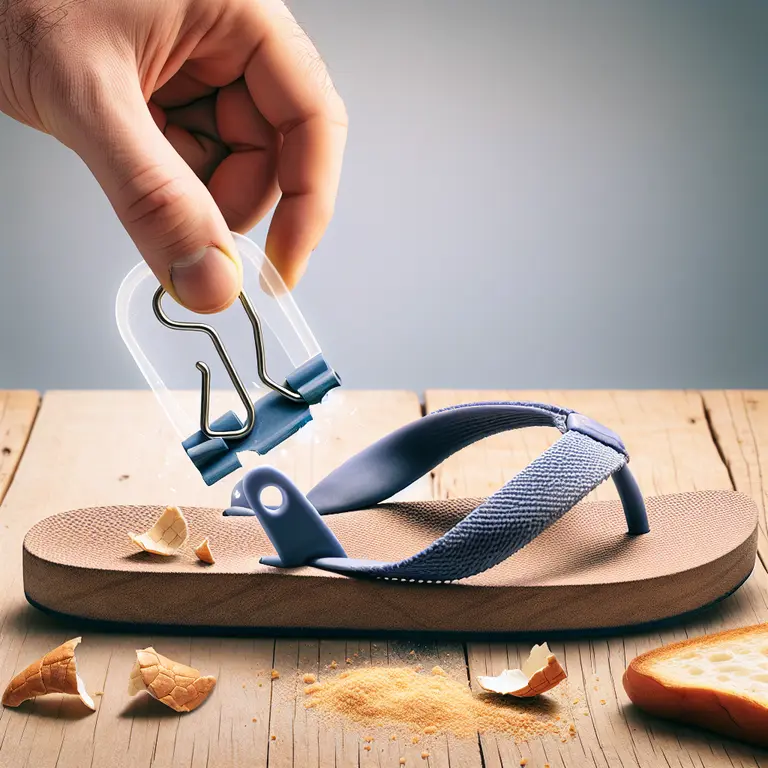
The Bread Clip Fix: How to Repair Broken Flip-Flop Straps with a Common Household Item
Flip-flops are the go-to footwear for warm weather, offering comfort and convenience whether heading to the beach, running errands, or lounging at home. Lightweight, affordable, and easy to slip on, they have earned their place as among the most universally worn footwear on the planet. However, one frustratingly common issue with flip-flops is that the straps can quickly come loose, mainly where they connect to the sole at the bottom of the sandal. For many people, this small structural failure marks the end of an otherwise perfectly good pair of sandals. Instead of throwing them away when this happens, you can use a simple, surprisingly effective DIY fix that requires only a common household item most people already have in a kitchen drawer — a bread clip.
Why Flip-Flop Straps Break
To understand why this fix works so well, it helps to first understand the basic design of a standard flip-flop. Most flip-flops are constructed with a Y-shaped strap that connects to the sole of the sandal through small holes punched through the footbed. The strap is typically threaded through these holes and held in place from the underside by a small molded plug or T-bar. This plug acts as an anchor, preventing the strap from pulling upward and out of position while you walk.
Over time, however, this plug can become worn, cracked, or broken due to the cumulative stress of everyday use. The problem is especially common when flip-flops are exposed to rough surfaces, prolonged water exposure, or the simple repetitive pressure of walking. Sand and grit can also work their way into the sole material, gradually widening the holes and weakening the grip around the strap. When the plug finally gives way, the strap pulls free through the hole, and the sandal becomes unwearable in an instant.
This type of damage can feel sudden and final, but in most cases, the rest of the sandal — the sole, the footbed, and the majority of the strap — is still in perfectly good condition. It is a minor structural failure that does not require a full replacement, which is exactly why the bread clip fix is so valuable.
The Bread Clip Fix: A Step-by-Step Guide
The bread clip is an ideal repair tool because it is small, rigid, and readily available in almost any household. The plastic tabs used to seal bread bags are designed to hold their shape under tension, which makes them surprisingly well-suited for this purpose. Here is how to use one to restore your flip-flop to working condition.
The first step is to locate exactly where the strap has come loose. In most cases, the strap has popped out of the hole positioned near the front of the sandal, between the toes. Once you have identified the problem area, push the loose end of the strap back down through the hole from the top side of the sandal. This step is usually straightforward and can be done with your fingers, though a small blunt object can help guide the strap end through if the hole is tight.
Once the strap is threaded back through and the end is protruding from the underside of the sole, take your bread clip and slide it onto the protruding end of the strap. Position the clip so it sits flat and snug against the bottom surface of the sole, with the clip oriented to prevent it from slipping back through the hole. The clip essentially replaces the original anchor plug, acting as a new stopper that holds the strap firmly in place.
After attaching the clip, gently tug on the strap from the top to test whether the repair is holding. The bread clip should resist the pull and keep the strap from retracting back through the hole. If it holds firm, the repair is complete, and the sandal is ready to wear.
For those who want to add a little extra durability to the fix, applying a small dab of superglue to the underside of the strap before sliding on the bread clip can help bond everything together more securely. This is especially useful if the hole has widened slightly over time and the clip alone feels less stable than ideal. Keeping a few spare bread clips in a bag or glove compartment is also a smart habit for anyone prone to flip-flop failures at inconvenient moments.
Why This Fix Works as Well as It Does
The reason a bread clip works so effectively in this situation comes down to a combination of size, material, and geometry. Bread clips are manufactured from a relatively stiff plastic — typically high-density polyethylene or polystyrene — that is designed to withstand repeated bending and pressure without snapping. They are thin enough to sit comfortably against the underside of a sandal sole without creating an uncomfortable lump underfoot, yet wide enough to span the hole and prevent the strap from passing through.
The shape of a standard bread clip, with its flat rectangular body and central slot, aligns almost perfectly with the dimensions of a typical flip-flop strap plug. This is a coincidence of industrial standardization rather than intentional design, but it results in a remarkably functional fit. The clip distributes the strap's tension across a wider surface area than the original plug, which, in some cases, may actually make it more resistant to being pulled through than the factory component it is replacing.
While this is not a permanent solution and will not hold up indefinitely under heavy use, it performs well enough under normal everyday conditions to extend the life of a pair of flip-flops by weeks or even months. For a repair that costs nothing and takes less than two minutes, that is genuinely impressive.
The Eco-Friendly and Economic Case for Repairing Rather Than Replacing
Repairing your flip-flops rather than discarding them offers benefits that extend well beyond personal convenience. From a financial standpoint, even inexpensive flip-flops represent a cost that adds up over time if they are being replaced every season due to a fixable structural failure. The bread clip fix costs nothing and requires no special tools or skills, making it accessible to virtually anyone regardless of age or DIY experience.
From an environmental perspective, the case for repair is even more compelling. Flip-flops are among the most commonly discarded footwear globally, and because most are made from synthetic rubber or EVA foam combined with plastic components, they are notoriously difficult to recycle. Millions of pairs end up in landfills or, in coastal regions, as ocean debris each year. Extending the functional life of a pair of sandals by even a few additional months through a simple repair represents a small but meaningful reduction in that waste stream.
The bread clip itself, often destined for the recycling bin or trash after the bread bag is emptied, gets a second life as a functional tool. This kind of creative reuse is exactly the type of low-effort, high-impact behavior that sustainability advocates encourage — not because any single act changes the world, but because the habit of looking for repair and reuse solutions before defaulting to replacement shifts consumption patterns in a genuinely positive direction.
When to Consider Replacing Your Flip-Flops
The bread clip trick is a great temporary and often medium-term solution, but there are circumstances where replacing a pair of flip-flops is the more sensible choice. If the soles have worn down to the point where they no longer provide adequate cushioning or traction, continued use can lead to discomfort and even joint strain over time. Similarly, if the strap material itself has cracked or frayed beyond its structural integrity, no amount of clever anchoring will make the sandal safe or comfortable to wear.
If the bread clip fix fails repeatedly because the hole in the sole has widened too much to hold any stopper securely, that is also a sign that the sandal has reached the end of its practical life. In those cases, investing in a new pair — ideally one made with more durable construction or repairable components — is the right call.
Conclusion
Fixing a broken flip-flop strap with a bread clip is one of those rare DIY solutions that is almost too simple to believe until you try it. It requires no special materials, no technical knowledge, and no more than a few minutes of effort. Yet it works reliably, costs nothing, and keeps a perfectly functional pair of sandals out of the trash. By reusing a common household item to solve a common household problem, this small repair reflects a broader principle worth embracing: before discarding something, it is always worth asking whether a simple fix might give it a second life. Next time your flip-flop strap gives out, resist the urge to throw the sandal away, reach for a bread clip, and give this surprisingly effective trick a try.