
The Eternal Flame: Weird Natural Gas Fire in Turkmenistan
A mysterious burning crater, known as the 'Door to Hell,' in Turkmenistan has been flaming for over 50 years.
 Watch on YouTube
 Watch on Rumble
The Door to Hell: Turkmenistan’s Eternal Flame and What It Tells Us About the Earth
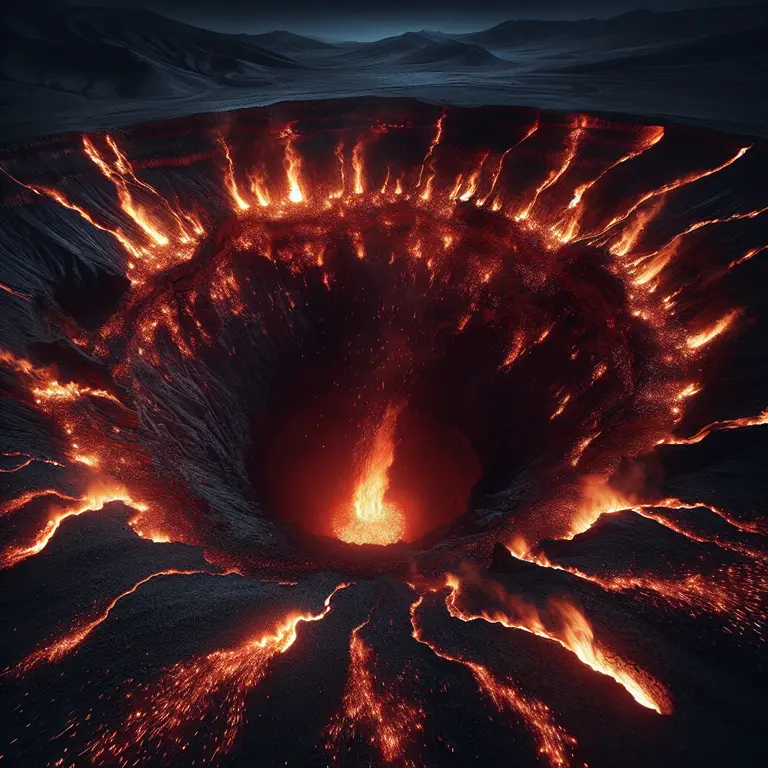
In the heart of Turkmenistan’s Karakum Desert, one of the world’s most arid and desolate landscapes, lies an extraordinary phenomenon that has captured the imagination of locals and adventurers alike: the Darvaza gas crater, famously nicknamed the “Door to Hell.” This massive, fiery pit has been burning continuously for over five decades, offering an awe-inspiring and genuinely otherworldly spectacle to anyone willing to make the journey to witness it. Its relentless flames, visible from miles away both day and night, draw visitors from around the globe, cementing the site’s place as one of Central Asia’s most enigmatic and discussed natural attractions. But beyond its visual drama, the crater tells a deeper story about Soviet ambition, geological surprise, environmental consequence, and the complicated relationship between human civilization and the planet beneath our feet.
Historical Background
The origins of the Darvaza gas crater date back to 1971, during the Soviet Union’s aggressive push to explore energy resources across Turkmenistan’s resource-rich territory. Soviet geologists, tasked with exploiting the region’s vast natural gas reserves as part of broader Cold War-era industrial ambitions, began drilling at a promising site near the small village of Darvaza in the Ahal Province. What initially appeared to be a routine, manageable operation quickly turned into an unexpected disaster when the ground beneath their drilling rig collapsed without warning.
The collapse created a vast sinkhole, approximately 230 feet wide and 65 feet deep, swallowing equipment and exposing a substantial underground pocket of natural gas to the open air. Faced with a rapidly deteriorating situation, the scientists and engineers on site feared the potential release of toxic gases that could threaten nearby communities and livestock across the surrounding desert. They made a calculated decision to ignite the escaping gas, a practice considered standard at the time for safely burning off volatile, potentially dangerous substances. Their expectation was straightforward: the flames would consume the available gas within a matter of weeks, and the site would cool and stabilize.
Nature, however, defied their calculations entirely. The inferno continued to rage unabated, and it still does today, more than fifty years after that original ignition. The story of how a Soviet engineering miscalculation became one of the world’s most enduring accidental landmarks is itself a remarkable chapter in the history of industrial exploration. It is a stark and humbling reminder of the sheer vastness of the Earth’s subsurface resources and the profound unpredictability that accompanies human intervention in geological systems we do not fully understand.
It is also worth noting that the precise historical details of the event have been subject to some revision over the years. Some researchers and geologists have suggested the collapse may have occurred earlier than 1971, possibly in the 1960s, and that the ignition may have happened separately at a later date. The Soviet-era tendency toward secrecy and poor record-keeping in remote regions means that the full historical account remains somewhat uncertain, adding yet another layer of mystery to an already enigmatic site.
The Spectacle of the Flames
Nestled in the vast emptiness of the Karakum Desert, the Darvaza gas crater’s fiery glow contrasts sharply with its barren and featureless surroundings. The pit’s roaring flames and searing heat create an almost surreal scene under any conditions, but it is particularly striking at night. As the sun sets and darkness envelops the desert, the flames seem to intensify, dancing against the backdrop of a clear, starlit sky in a region far removed from the light pollution of any major city. Visitors consistently describe the experience as otherworldly, evoking a simultaneous sense of awe, reverence, and unease that few natural spectacles can match.
The crater has become a significant tourist attraction despite its remote location, situated roughly 260 kilometers north of Ashgabat, Turkmenistan’s capital. Reaching the site requires genuine effort. Adventurous travelers must brave harsh desert terrain, typically traveling in rugged four-wheel-drive vehicles across tracks that can barely be called roads. The journey itself becomes part of the experience, with the surrounding Karakum Desert offering its own austere and humbling beauty. Many visitors choose to camp near the crater overnight, watching the ethereal glow shift and pulse through the hours of darkness.
The site has also become a sought-after destination for photographers and filmmakers who recognize its singular visual qualities. The combination of intense orange and yellow flame against the black desert night, with the circular geometry of the crater itself, produces images that seem almost computer-generated. Several documentary productions and adventure travel programs have prominently featured the crater, and footage of it circulates widely on social media, driving curiosity and inspiring new generations of visitors to make the trek.
The Science Behind the Eternal Fire
The perpetual blaze of the Darvaza gas crater is fueled primarily by methane, a highly flammable hydrocarbon gas that is abundant in the subsurface layers beneath the Karakum Desert. Turkmenistan is home to some of the world’s largest proven natural gas reserves, ranking consistently among the top five nations globally. The Galkynysh gas field, located not far from the Darvaza crater, is considered one of the largest natural gas deposits ever discovered anywhere on Earth. The crater’s unending fire is, in a very literal sense, a visible surface expression of this immense underground wealth.
When methane continuously escapes from underground reservoirs through the fractured rock and sediment exposed by the original collapse, it rises to the surface and encounters atmospheric oxygen. The resulting combustion sustains the flames at a relatively stable intensity, with the rate of gas flow from below matching or exceeding the rate at which it is consumed. This self-sustaining dynamic explains why the fire has not diminished meaningfully over decades. The combustion process releases heat along with carbon dioxide and water vapor, and the thermal energy produced is substantial enough to be felt by visitors standing at the crater’s rim.
Geologists note that the crater also contains areas of boiling mud and smaller gas vents that do not burn, suggesting a complex subsurface network of gas migration pathways. The temperature at the base of the crater, where the flames burn most intensely, has never been precisely measured under controlled conditions, but estimates based on the flame characteristics suggest it exceeds several hundred degrees Celsius in the most active zones.
Environmental Concerns and Political Dimensions
While the Darvaza gas crater is undeniably a visual marvel, it raises significant and growing environmental concerns that are difficult to dismiss. Methane is a potent greenhouse gas, with a warming potential many times that of carbon dioxide over a 20-year period. The ongoing combustion does convert methane to carbon dioxide and water vapor, which is technically less harmful in the short term than releasing raw methane directly into the atmosphere. However, the carbon dioxide emissions from more than fifty years of continuous combustion still represent a measurable and entirely unnecessary contribution to global climate change.
Efforts to address the environmental impact have been discussed at various levels of government and in scientific circles. Turkmenistan’s government, under former President Gurbanguly Berdimuhamedow, announced in 2022 that the country intended to extinguish the crater, citing both environmental concerns and the economic waste of burning off valuable natural gas that could otherwise be captured and sold. Whether that intention will be translated into action remains uncertain, as the technical challenges of extinguishing such a large and deeply rooted fire are considerable, and the logistical demands of operating heavy equipment in such a remote desert location are substantial.
There is also a genuine tension between environmental responsibility and economic interests, such as tourism. The crater draws international attention to Turkmenistan, a country that rarely appears in global travel itineraries and that has historically been one of the world’s most isolated and closed nations. The crater's visibility has measurable value for the country’s image and its modest but growing tourism sector.
Tourism, Cultural Identity, and What the Crater Represents
Despite its entirely unintended origins, the Darvaza gas crater has become a symbol of Turkmenistan recognized far beyond its borders. It attracts thousands of visitors annually, offering an experience that cannot be replicated anywhere else on Earth. Tour operators now routinely include the crater as a centerpiece of desert expeditions, combining visits to the site with excursions to other natural and historical landmarks in the region, including nearby salt lakes and the ruins of ancient Silk Road settlements.
For the people of Turkmenistan, the crater holds a layered place in their national consciousness. Known locally as the Shining Crater or the Gate to Hell, depending on the translation, it functions simultaneously as a source of national pride, a tourist asset, and a reminder of a Soviet-era industrial mishap that the country has chosen to embrace rather than conceal. In a nation with limited international exposure, the crater’s global fame gives it an outsized cultural significance.
Conclusion
The Darvaza gas crater is a captivating and genuinely instructive convergence of science, history, environmental consequences, and natural wonder. Its unending flames continue to illuminate the Karakum night sky, drawing curious travelers from around the world to stand at the edge of a hole that was never meant to exist and watch a fire that was never meant to last. At the same time, the crater functions as a cautionary tale about the gap between human confidence and geological reality, and about the long-lasting consequences that can follow from decisions made in moments of industrial urgency.
As the flames continue to burn, they remind us not only of the immense power stored beneath the Earth’s surface, but of our ongoing responsibility to reckon honestly with the environmental costs of how we access and manage those resources. The Door to Hell is not merely a tourist attraction. It is a living, burning question about what we owe the planet and how carefully we should proceed when we reach into it.