
Ancient Worm Unlocks Secrets of Brain Evolution and Healing
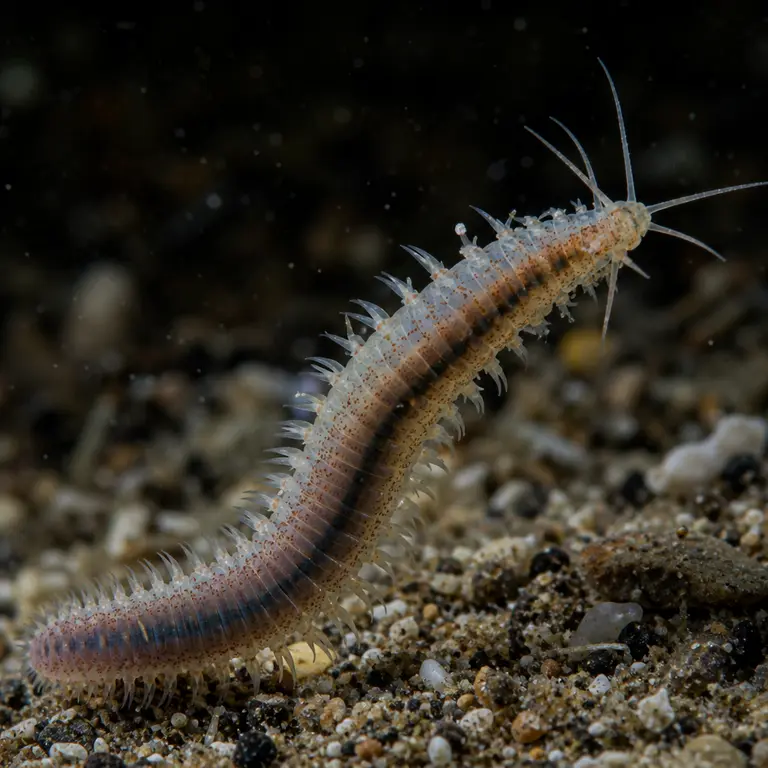
The marine worm Platynereis dumerilii can regenerate not just its body but restructure its entire nervous system after injury — offering a living window into the evolutionary origins of the vertebrate brain.
 Watch on YouTube
 Watch on Rumble
Introduction
At first glance, Platynereis dumerilii looks unremarkable — a slender, iridescent marine annelid no longer than a few centimeters, drifting through shallow coastal waters across the Atlantic and Mediterranean. It has no skeleton, no obvious behavioral complexity, and no particular reputation outside of a narrow circle of zoologists. Most beachgoers would walk past a tide pool containing thousands of them without a second thought. Yet this creature has become one of the most scientifically prized animals in modern neuroscience and evolutionary biology, quietly upending decades of assumptions about the origins and workings of complex nervous systems.
Platynereis belongs to a lineage that has changed remarkably little in over 600 million years, making it a kind of living fossil of nervous system design. While other animal lineages have undergone dramatic genomic and anatomical reorganization, Platynereis has retained molecular features that most other invertebrates lost long ago. Researchers have discovered that it shares more genetic and neural circuitry similarities with vertebrates — including humans — than many far closer relatives do. This fact has fundamentally disrupted older assumptions about how complex nervous systems evolved, pushing the origin of sophisticated neural architecture much deeper into geological time than the textbooks once suggested. The worm, in other words, is not a primitive dead end. It is a messenger from a biological past that vertebrate animals, including humans, have never entirely left behind.
An Ancient Genome With Surprisingly Familiar Contents
The worm’s genome contains homologs of genes that govern neurotransmitter systems in the human brain, including genes involved in dopamine signaling, serotonin regulation, and even the molecular architecture of the eye. Its brain, while microscopic, is organized into distinct functional regions that parallel the segmented architecture of the vertebrate hindbrain. This convergence is not a coincidence — it reflects deep evolutionary conservation, suggesting that the last common ancestor of annelids and vertebrates already possessed a surprisingly sophisticated neural toolkit, one that predates the Cambrian explosion by a significant margin.
What makes this especially striking is that annelids and vertebrates diverged from one another somewhere between 550 and 600 million years ago, in the Precambrian or earliest Cambrian period. The standard expectation would be that the nervous systems of animals separated by that vast a stretch of time would share only the most rudimentary features. Instead, the molecular comparison reveals an unexpected intimacy. The genes that tell neurons what kind of cell to become, how to connect with one another, and which chemicals to use as signals are recognizably the same across the two lineages. This suggests that the ancestor common to both was already operating with a neural control system of considerable sophistication — not a simple nerve net, but something with regional organization, dedicated sensory processing, and the beginnings of centralized coordination.
This finding has forced a revision in how scientists think about the Cambrian explosion itself. Rather than representing the moment when complex nervous systems appeared, the Cambrian may instead represent the moment when animals with already-complex nervous systems began leaving the kinds of hard-bodied fossils that preserve well. The true origin of neural complexity may lie in the soft-bodied Precambrian world, a period from which Platynereis offers a rare and invaluable biological window.
Regeneration as Neural Rewiring
What makes Platynereis truly extraordinary beyond its evolutionary significance is its capacity for neural regeneration — and the precision with which that regeneration occurs. When the worm’s posterior body segments are amputated, it does not simply regrow tissue in a generic or disorganized way. It regenerates a complete, functional nervous system from scratch, including sensory neurons, motor circuits, and interneurons, all reconnecting with the existing anterior nervous system with extraordinary fidelity. The process is guided by molecular signals that researchers have only recently begun to map in detail, and what they are finding is as surprising as anything else about this animal.
Studies published in journals including Current Biology and eLife have shown that during regeneration, Platynereis activates a cascade of transcription factors — proteins that switch genes on and off — that are strikingly similar to those governing spinal cord repair in vertebrates. One key player is a family of genes called Wnt signaling molecules, which are known to pattern the anterior-posterior axis in everything from fruit flies to mice. In Platynereis, Wnt signals appear to act as positional coordinates, telling regenerating neural progenitor cells exactly where they are in the body and what type of neuron they should become. The regenerating nervous system does not guess or approximate. It reads its molecular address and builds accordingly.
This is not passive regrowth. The worm actively remodels existing neural architecture during regeneration, pruning some connections while establishing new ones — a process that closely resembles synaptic plasticity in the mammalian brain. The implication is profound: the molecular machinery underlying learning and memory in vertebrate brains may have deep roots in the regenerative biology of ancient invertebrates. What the mammalian brain uses to update itself in response to experience, Platynereis uses to rebuild itself after injury. The two processes, operating in radically different contexts, may be drawing on the same ancestral molecular vocabulary.
The Connectome of an Ancient Brain
In 2021, a landmark study led by Gáspár Jékely at the Living Systems Institute in Exeter published the first complete connectome — a full wiring diagram of every neuron and synapse — of the Platynereis larval brain. The map documented 71 neurons connected by 1,054 synapses, a level of detail previously achieved only for the nematode Caenorhabditis elegans. Where the nematode connectome had revealed a relatively stereotyped and modular wiring pattern, the Platynereis connectome revealed something more architecturally interesting: circuit motifs, meaning repeating patterns of neural connectivity, that appear almost identically in the visual processing circuits of vertebrate brains.
One particularly striking finding involved the worm’s ciliary photoreceptors, light-sensitive cells that use the same molecular machinery as the rods and cones of the vertebrate retina. These cells feed into a neural circuit that controls the worm’s vertical migration in the water column — it descends during daylight and ascends at night, a behavior driven by direct light detection in the brain. The circuit controlling this behavior is a miniaturized but recognizable precursor of vertebrate visual processing pathways, preserved across more than half a billion years of evolution. The fact that it still functions essentially the same way in a worm as in a fish or a mammal speaks to how deeply conserved the core logic of visual processing truly is.
The connectome also revealed the presence of what researchers termed a mushroom body homolog — a brain region in insects associated with learning and memory — suggesting that associative learning circuits may have originated even earlier than previously thought, in the common ancestor of annelids, arthropods, and possibly deuterostomes. If confirmed, this would mean that the capacity for associative learning is not an innovation of complex animal lineages but a feature inherited from a much more ancient common ancestor, one that lived before the major animal phyla had fully diverged from one another.
Implications for Regenerative Medicine
Beyond evolutionary biology, Platynereis is attracting serious attention from researchers working on spinal cord injury and neurodegenerative disease. The worm’s ability to regenerate functional neural circuits in adulthood — something mammals largely cannot do — depends on a population of pluripotent cells called neoblasts that persist throughout the animal’s life. These cells remain in a state of developmental readiness that mammalian stem cells largely abandon after early development. Understanding the signals that activate and guide these cells could offer a genuine blueprint for stimulating similar processes in the human nervous system, a goal that has eluded medicine for generations.
A 2023 study from the Max Planck Institute for Neurobiology of Behavior identified a specific neuropeptide secreted at the wound site in Platynereis that appears to be a master regulator of neural regeneration, suppressing scar formation while promoting axon regrowth. Intriguingly, a structurally similar peptide exists in mammals, where it plays a role in modulating inflammation — but its regenerative potential has been largely suppressed through evolution, possibly as a trade-off against cancer risk. The same molecular signal that tells a worm to rebuild its nervous system may be sitting dormant in human tissue, silenced by evolutionary pressures that had nothing to do with healing and everything to do with cellular proliferation control.
Research groups across Europe and North America are now using Platynereis as a platform to screen compounds that might reactivate latent regenerative programs in mammalian neurons — a therapeutic frontier that, until recently, seemed entirely out of reach. The worm that nobody notices in a tide pool may thus hold one of medicine’s most sought-after secrets: how to coax a damaged human nervous system into rebuilding itself.
Conclusion
Platynereis dumerilii is a reminder that significance in biology does not scale with size or visibility. This small, largely overlooked marine worm has preserved, across hundreds of millions of years, a record of neural organization that vertebrates have elaborated upon but never entirely abandoned. Its genome carries the fingerprints of a common ancestor that was already performing recognizable brain functions long before the first fish appeared in the seas. Its capacity for regeneration points toward biological mechanisms that mammalian evolution has suppressed but not erased. And its connectome offers a map of neural circuit logic that turns out to be far older and far more universal than anyone expected.
The deeper lesson may be about the nature of biological innovation itself. Evolution rarely invents from scratch. It inherits, modifies, repurposes, and occasionally silences. The circuits that allow a human to see, learn, and recover from injury were not assembled de novo in the vertebrate lineage. They were handed down, in recognizable form, from ancestors that looked far more like Platynereis than like anything with a spine. Understanding that inheritance — tracing it back through the living fossils that have preserved it — may prove to be one of the most consequential projects in twenty-first century biology.
Sources & Further Reading
- Jékely, G. et al. Connectome of the Platynereis larval brain. Nature, 2021. https://doi.org/10.1038/s41586-021-03778-8
- Arendt, D. et al. The evolution of nervous system centralization. Philosophical Transactions of the Royal Society B, 2008. https://doi.org/10.1098/rstb.2007.2242
- Veraszto, C. et al. Ciliary and rhabdomeric photoreceptor-cell circuits form a spectral depth gauge in marine zooplankton. eLife, 2018. https://doi.org/10.7554/eLife.36440
- Schmidt, A. et al. Wnt signaling coordinates neural regeneration in Platynereis dumerilii. Current Biology, 2022.