
How Toxoplasma Influences Global Human Behavior and Culture
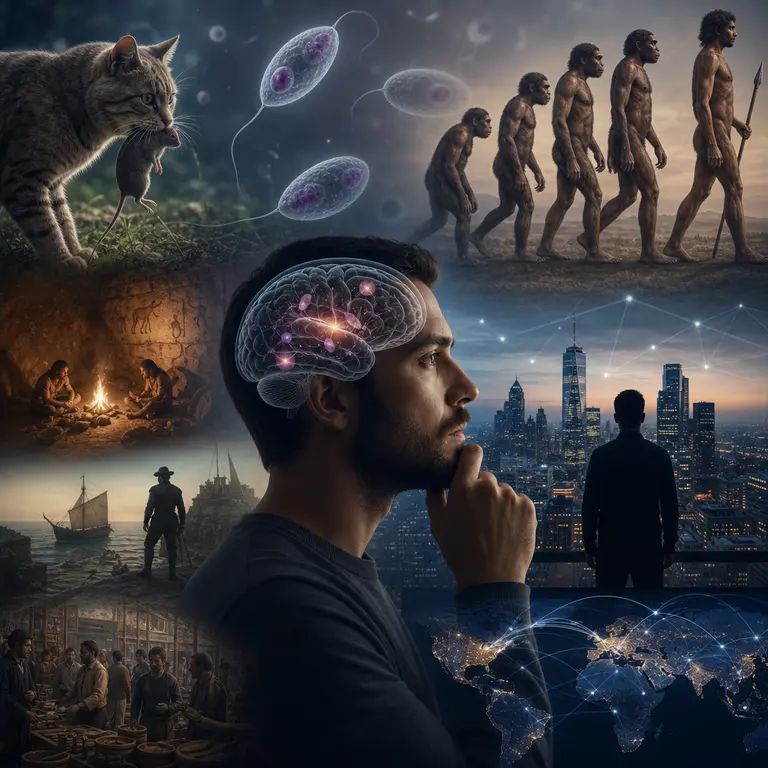
Toxoplasma gondii is well-known for influencing animal behavior, but emerging research suggests the parasite may have quietly shaped human cultural evolution, risk-taking economies, and even the geographic distribution of entrepreneurship across nations.
 Watch on YouTube
 Watch on Rumble
A Parasite With a Planetary Footprint
Toxoplasma gondii infects roughly 2 billion people worldwide — approximately one-quarter of the global human population — making it one of the most successful parasitic organisms on Earth. Most carriers never know they harbor it. The parasite, which completes its sexual reproduction exclusively inside the intestines of cats, spreads to intermediate hosts, including rodents, livestock, and humans, through contact with contaminated soil, undercooked meat, or cat feces. In rodents, its behavioral manipulation is spectacular and well-documented: infected mice lose their innate fear of cat urine and are actually attracted to it, dramatically increasing the likelihood of predation and thus returning the parasite to its feline host. What researchers have only recently begun to appreciate is that in humans, the manipulation may be subtler, slower, and civilization-scale.
The implications of this possibility are difficult to overstate. If a single-celled organism can meaningfully shift the psychological tendencies of a quarter of humanity — nudging risk tolerance, altering social behavior, and influencing entrepreneurial instincts — then some portion of what we think of as human culture, economic history, and even political temperament may have been quietly co-authored by a parasite. This is not a fringe hypothesis floated in speculative corners of the internet. It is a hypothesis being rigorously tested with statistical methods by researchers at respected institutions across multiple continents, and the results, while not yet definitive, are consistent enough to warrant serious attention.
The Neurobiology of Subtle Manipulation
In the human brain, Toxoplasma gondii forms microscopic cysts primarily in the amygdala, the prefrontal cortex, and the striatum — regions governing fear response, impulse control, and reward processing. The parasite elevates dopamine production in infected neurons and suppresses the enzyme that degrades it, effectively nudging the brain’s reward circuitry toward novelty-seeking and reduced threat appraisal. Studies published in journals including Proceedings of the Royal Society B have found that infected men score measurably higher on scales of risk tolerance and rule-breaking, while infected women tend toward increased sociability and warmth. Crucially, infected individuals of both sexes show statistically elevated rates of traffic accidents, consistent with reduced threat perception. A 2018 study published in Proceedings of the Royal Society B found that entrepreneurship — specifically the willingness to start a business rather than seek employment — correlated significantly with Toxoplasma seropositivity among business students at the University of Colorado Boulder.
What makes these findings neurobiologically credible rather than merely statistically suggestive is the known mechanism by which the parasite interacts with neural tissue. Toxoplasma cysts are not passive structures. They actively produce an enzyme called tyrosine hydroxylase, which is the rate-limiting enzyme in dopamine synthesis, and they do so in quantities sufficient to measurably alter local neurochemistry. The amygdala, where cysts preferentially accumulate, is the brain’s primary threat-detection hub. Disrupting its function even modestly would be expected to produce exactly the pattern of reduced fear response and elevated risk tolerance that researchers observe in infected populations. The parasite is not rewiring the brain in any dramatic, visible sense. It is making microadjustments to chemical gradients—the neurological equivalent of turning a thermostat down by 2 degrees. The individual rarely notices. The population-level signal, however, becomes detectable when you examine thousands of subjects simultaneously.
There is also emerging evidence that Toxoplasma interacts with testosterone pathways, which may explain the divergent effects observed in men and women. Some studies have found that infected men show elevated testosterone levels, which correlate with the increased assertiveness and rule-breaking tendencies documented in those populations. Infected women, by contrast, may experience different hormonal interactions that produce the observed increases in sociability. These findings remain preliminary, but they suggest the parasite’s influence on behavior is not a blunt instrument. It appears to operate through multiple biochemical channels simultaneously, producing effects that are context-dependent and shaped by the host’s existing hormonal environment.
When Geography and Infection Rates Align
The most provocative dimension of Toxoplasma research involves cross-national comparisons. Infection rates vary enormously by country: France and Brazil show rates exceeding 60 percent of the adult population, while South Korea and the United Kingdom hover around 7 to 10 percent. Researchers, including Jaroslav Flegr at Charles University in Prague, have mapped these prevalence rates against national-level indices of uncertainty avoidance — a psychological metric developed by organizational sociologist Geert Hofstede that measures how much a society tolerates ambiguity and risk. Countries with higher Toxoplasma prevalence tend to score lower on uncertainty avoidance, meaning their populations are more comfortable with ambiguity and less likely to demand rigid social rules. The correlation is statistically significant even after controlling for confounding variables like GDP, climate, and urbanization. This does not establish causation, but the pattern is consistent enough to have generated serious academic debate about whether a parasite has been quietly nudging cultural evolution for millennia.
The geographic variation in infection rates is itself worth examining carefully, because it does not follow obvious intuitive patterns. One might assume that wealthier, more hygienic countries would uniformly show lower infection rates, but while sanitation does play a role, the relationship is complicated by dietary culture and cat-ownership practices. France, one of the wealthiest nations in Europe, has among the highest infection rates in the developed world, likely attributable in part to a culinary tradition that includes lightly cooked and raw meat preparations. South Korea, by contrast, has a food culture centered on thoroughly cooked dishes and has historically lower rates of cat ownership, which may partly explain its unusually low prevalence. These cultural factors interact with the parasite’s epidemiology in ways that make simple explanations inadequate.
Flegr’s work has attracted both significant attention and significant criticism. Some researchers argue that cross-national correlations, while intriguing, are vulnerable to the ecological fallacy—the error of inferring about individuals from population-level data. Others point out that Hofstede’s cultural dimensions, though widely used, are themselves contested measures. What keeps the hypothesis alive in serious academic discourse is not any single study but the convergence of multiple independent lines of evidence pointing in the same direction: neurobiological plausibility, individual-level behavioral data, and cross-cultural statistical patterns all telling a coherent, if not yet conclusive, story.
The Evolutionary Logic of Behavioral Manipulation
From an evolutionary standpoint, the idea that a parasite could influence human behavior at the population level is not as outlandish as it first appears. Behavioral manipulation of hosts is extraordinarily common in nature. The hairworm Spinochordodes tellinii hijacks the nervous system of grasshoppers and compels them to leap into water, where the worm can complete its aquatic life cycle. The lancet liver fluke Dicrocoelium dendriticum causes ants to climb to the tops of grass blades each morning, maximizing the probability of ingestion by grazing sheep. The fungus Ophiocordyceps unilateralis infects carpenter ants and drives them to bite into plant tissue at a precise height above the forest floor — the optimal altitude for fungal spore dispersal — before killing them. Toxoplasma’s manipulation of rodents is so precise that it specifically targets fear responses to feline odor while leaving other fear responses largely intact — a degree of neurological specificity that implies millions of years of co-evolutionary refinement.
Whether humans are incidental hosts whose behavioral modification serves no adaptive purpose for the parasite, or whether infected humans who interact more boldly with cats somehow benefit Toxoplasma’s transmission, remains an open and genuinely fascinating question. The conventional view holds that humans are evolutionary dead ends for the parasite — accidental hosts who cannot transmit Toxoplasma back to cats through any natural behavioral pathway, and whose behavioral modification is therefore an artifact of mechanisms evolved for rodent manipulation. This view may be correct. But it is worth noting that boldness, reduced hygiene anxiety, and increased sociability — all traits associated with infection — could plausibly increase the frequency of contact with cats and cat-contaminated environments, creating at least a weak transmission advantage. The parasite does not need to engineer a perfect pathway. It only needs a marginal improvement in transmission probability across millions of hosts over thousands of generations.
What This Means for Medicine and Society
The clinical implications of chronic Toxoplasma infection are only beginning to be mapped. Beyond the well-established danger to immunocompromised individuals and fetuses — for whom acute toxoplasmosis can be fatal — chronic latent infection has been associated in multiple studies with elevated rates of schizophrenia, bipolar disorder, and obsessive-compulsive disorder. A 2016 meta-analysis in Schizophrenia Bulletin found that Toxoplasma seropositivity was associated with a 2.7-fold increased risk of schizophrenia. Researchers are cautious about overstating these findings, given the difficulty of establishing causality in retrospective studies, but the neurobiological plausibility is high given the parasite’s documented effects on dopamine and serotonin pathways, both of which are centrally implicated in schizophrenia’s pathophysiology.
Meanwhile, no approved treatment exists for latent infection in otherwise healthy adults, and the parasite’s cysts are largely impervious to current antiparasitic drugs. The medications used to treat acute toxoplasmosis — pyrimethamine and sulfadiazine — are effective against the rapidly replicating tachyzoite form of the parasite but cannot penetrate the cyst wall that shields the dormant bradyzoite form residing in neural tissue. This pharmacological limitation means that the two billion people currently harboring latent infection have no available medical intervention, and most will never be offered one, because current clinical guidelines do not consider latent infection in healthy adults to be a treatable condition. That calculus may need to be revisited as evidence accumulates regarding the parasite’s long-term neurological and psychiatric effects.
As global cat ownership rises and urbanization alters soil-contact patterns, the question of how Toxoplasma has shaped — and continues to shape — human cognition, culture, and economic behavior may be one of the most consequential and underappreciated in all of medicine. There is something genuinely vertiginous about the possibility that a microorganism with a genome roughly 400 times smaller than our own has been participating, uninvited, in the making of human civilization — influencing which societies tolerate risk, which individuals start companies, and which brains develop the neurochemical imbalances we classify as psychiatric illness. We tend to think of culture as something humans create. The Toxoplasma research asks us to consider whether, in some small but measurable fraction, culture is also something that creates us — or more precisely, something that a parasite has been quietly creating through us, one cyst at a time.
Sources & Further Reading
- Flegr, Jaroslav. Frozen Evolution. Charles University Press, 2008.
- Johnson, Stefanie K. et al. 'Risky Business: Linking Toxoplasma gondii Infection and Entrepreneurship.' Proceedings of the Royal Society B, 2018. https://royalsocietypublishing.org/doi/10.1098/rspb.2018.0822
- Hofstede, Geert. Cultures and Organizations: Software of the Mind. McGraw-Hill, 2010.
- Torrey, E. Fuller and Yolken, Robert H. 'Toxoplasma gondii and Schizophrenia.' Emerging Infectious Diseases, 2003. https://wwwnc.cdc.gov/eid/article/9/11/03-0143_article